Indoor cycling workouts don’t have to be boring, soul-crushing slogs on a stationary bike.
In fact, one of the most effective training sessions takes just 15 minutes and packs seven high-intensity efforts into a compact, results-driven format.
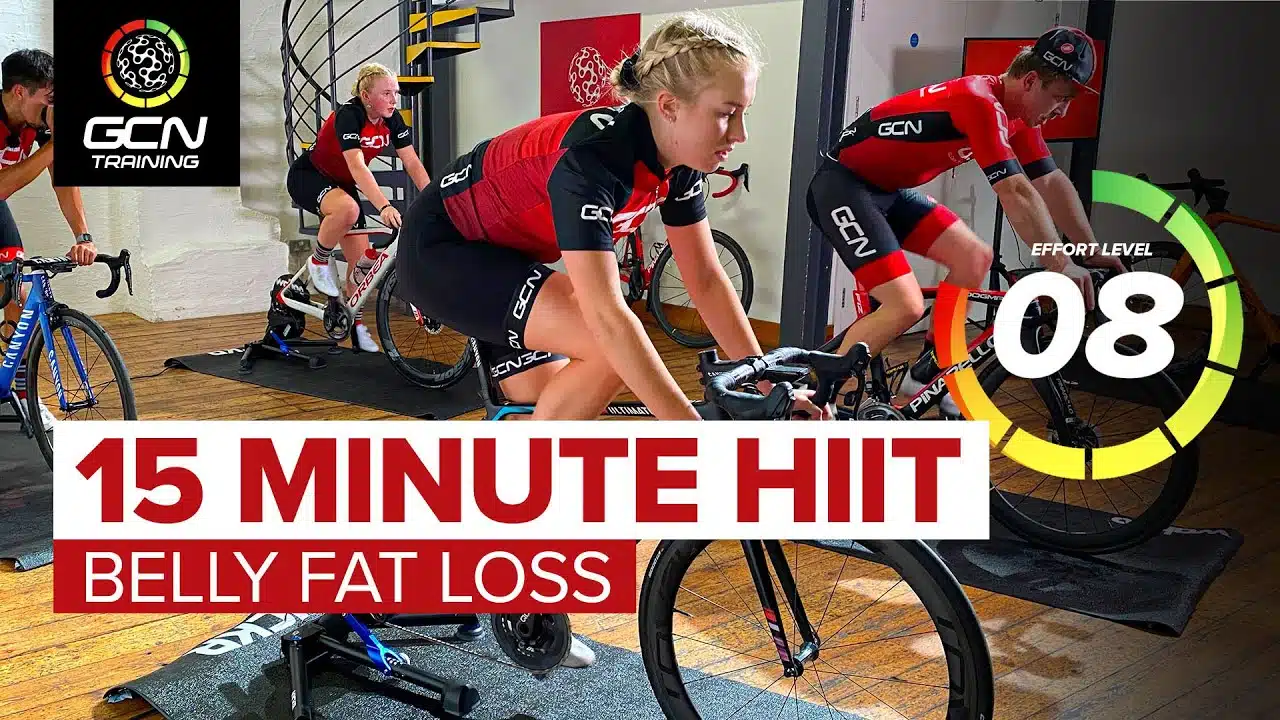
Global Cycling Network recently released an indoor training session that’s getting attention for its efficiency and brutal effectiveness.
The workout combines two-minute efforts, one-minute intervals, and 30-second sprints with minimal rest—a recipe for cardiovascular improvement and metabolic conditioning that doesn’t require hours of saddle time.
Jump to:
- What Makes This 15-Minute Cycling Workout Different
- The Workout Structure: Seven Efforts That Build Progressive Fatigue
- Why Minimal Rest Periods Create Maximum Results
- Technical Execution: Cadence and Power Management
- Pacing Strategy for Mixed-Duration Intervals
- The Science Behind Short, Intense Training Sessions
- Recovery Protocols for Maximum Adaptation
- Who Benefits Most From This Training Approach
- Practical Implementation and Equipment Considerations
What Makes This 15-Minute Cycling Workout Different
This isn’t your typical steady-state cardio session. The GCN workout uses varied interval lengths to challenge different energy systems simultaneously.
By mixing longer two-minute efforts with explosive 30-second sprints, cyclists force their bodies to adapt to different metabolic demands within a single session.
The instructor emphasizes proper preparation before starting:
At the moment just get on your bikes make sure you’ve got a water bottle a fan and a towel because it’s going to be a sweaty one.
Those aren’t casual recommendations. High-intensity interval training generates significant heat and fluid loss, making proper hydration and cooling essential for both performance and safety.
The Workout Structure: Seven Efforts That Build Progressive Fatigue
After a warm-up consisting of easy spinning followed by two minutes at an 8-out-of-10 effort, the main set begins with deliberate variety.
First Phase: Maximum Effort Intervals
The session opens with a one-minute maximum effort at 10-out-of-10 intensity. Just 30 seconds of recovery follows before athletes launch into a 30-second all-out sprint.
Another 30-second sprint comes next, with only brief recovery periods between efforts.
This initial sequence depletes glycogen stores quickly while elevating heart rate to near-maximum levels. The minimal rest creates cumulative fatigue that makes subsequent efforts progressively more challenging.
Second Phase: Building Duration Under Fatigue
Following the explosive opening, athletes face another one-minute maximum effort. This is where mental toughness becomes as important as physical capacity.
The instructor acknowledges the challenge:
Now this is a really tough session and the rest is going to go really quickly and it’s going to feel like you need a little bit more rest but fight through the session and make sure you complete it.
Next comes the longest interval: two full minutes at maximum sustainable power. This effort requires pacing strategy that shorter sprints don’t demand.
Final Phase: The Last Push
When fatigue peaks, the workout delivers two final blows: a 30-second sprint followed by a one-minute maximum effort to finish.
By this point, lactate accumulation makes maintaining power output significantly harder. That’s exactly the adaptation stimulus that drives improvement.
Why Minimal Rest Periods Create Maximum Results
The 30-second recovery intervals between efforts might seem inadequate—because they are, intentionally.
Research on high-intensity interval training shows that incomplete recovery between efforts forces the cardiovascular system to work harder than fully rested intervals would.
This approach triggers several physiological adaptations:
- Improved lactate clearance: Your body becomes more efficient at processing metabolic byproducts
- Enhanced mitochondrial density: More cellular energy production capacity develops
- Increased anaerobic threshold: You can sustain higher intensities before fatigue sets in
- Greater stroke volume: Heart efficiency improves with repeated high-demand intervals
The cumulative fatigue also builds mental resilience. Pushing through discomfort when recovery feels insufficient trains psychological toughness that transfers to race situations.
Technical Execution: Cadence and Power Management
Throughout the session, the instructor provides specific technical cues for maximizing effectiveness.
Target cadence sits around 100 RPM during warm-up and easier recovery periods. This relatively high leg speed promotes blood flow without creating excessive muscular tension.
During maximum efforts, athletes receive guidance on when to stand versus when to remain seated:
Up up up up out of the saddle get on top of that gear great work get that power out settle into it.
Standing allows for higher peak power output during the initial seconds of an interval. Once up to speed, settling back into the saddle conserves energy for longer efforts.
For two-minute intervals, dropping into the handlebar drops can provide aerodynamic advantage and different muscle recruitment patterns that help distribute fatigue.
Pacing Strategy for Mixed-Duration Intervals
One of the workout’s hidden challenges is mentally switching between different pacing approaches.
Thirty-second sprints demand immediate all-out effort. There’s no reason to conserve energy—it’s pure explosive output from the first pedal stroke.
One-minute efforts require slightly more restraint. Going too hard in the first 15 seconds leads to premature fatigue and declining power throughout the interval.
The two-minute effort presents the greatest pacing challenge. The instructor emphasizes consistency:
Don’t go off too hard you want to pace it really well consist the power throughout.
Power meter users should aim for relatively steady output rather than dramatic fluctuations. Heart rate-based training becomes less useful during short intervals due to cardiac lag time.
The Science Behind Short, Intense Training Sessions
Fifteen minutes might sound too brief for meaningful adaptation, but research consistently shows otherwise.
Studies comparing high-intensity interval training to moderate-intensity continuous exercise find that HIIT produces similar or superior cardiovascular improvements in significantly less time.
One mechanism involves excess post-exercise oxygen consumption. After intense interval work, metabolic rate remains elevated for hours as the body repairs tissue, replenishes energy stores, and clears metabolic byproducts.
This workout’s structure also creates significant muscle fiber recruitment. Maximum efforts activate fast-twitch fibers that moderate-intensity training leaves largely dormant.
Over time, this comprehensive fiber recruitment leads to improvements in both sprint power and endurance capacity—a combination difficult to achieve with single-intensity training.
Recovery Protocols for Maximum Adaptation
The workout concludes with a cooldown period that shouldn’t be rushed or skipped.
Easy spinning helps clear lactate more effectively than complete rest. Blood continues circulating through fatigued muscles, carrying away metabolic waste while delivering oxygen and nutrients for recovery.
The instructor emphasizes this point:
So make sure you make the most of this cool down spin your legs so you’re nice and recovered to go again.
Beyond the immediate post-workout period, proper recovery between training sessions becomes crucial. High-intensity interval work creates significant physiological stress that requires adequate rest for adaptation.
Most athletes benefit from limiting sessions of this intensity to 2-3 times weekly, with easier recovery rides or rest days between high-stress workouts.
Who Benefits Most From This Training Approach
This workout format suits cyclists with established base fitness looking to improve high-end power and lactate tolerance.
Time-constrained athletes gain particular advantage. Achieving significant training stimulus in just 15 minutes makes consistent training feasible even with busy schedules.
Competitive cyclists preparing for criteriums, cyclocross, or mountain bike events will find this interval structure directly applicable to race demands that require repeated surges above threshold power.
However, complete beginners should approach cautiously. The maximum-effort nature leaves little room for technique correction mid-workout, and the minimal recovery doesn’t accommodate significant fitness limitations.
Building aerobic base fitness through longer, moderate-intensity rides creates the foundation necessary to handle and benefit from high-intensity interval work.
Practical Implementation and Equipment Considerations
This workout translates to various indoor cycling setups, from basic trainers to smart trainers and stationary bikes.
Smart trainers offer advantages through resistance adjustment and power measurement, but aren’t strictly necessary. Perceived exertion remains a valid intensity guide when technological tools aren’t available.
Environmental setup matters significantly. Adequate airflow from fans prevents dangerous core temperature elevation during maximum efforts in the heat-accumulating indoor environment.
Hydration strategy should include fluid intake before starting and during recovery periods between efforts. Even 15 minutes of high-intensity work generates substantial sweat loss.
Athletes can modify the workout by adjusting effort intensities rather than durations. Targeting 8-out-of-10 instead of maximum effort maintains the interval structure while reducing overall training stress.
Progressive overload occurs by gradually increasing power output during intervals or reducing recovery time between efforts over weeks of training.