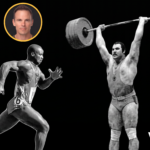
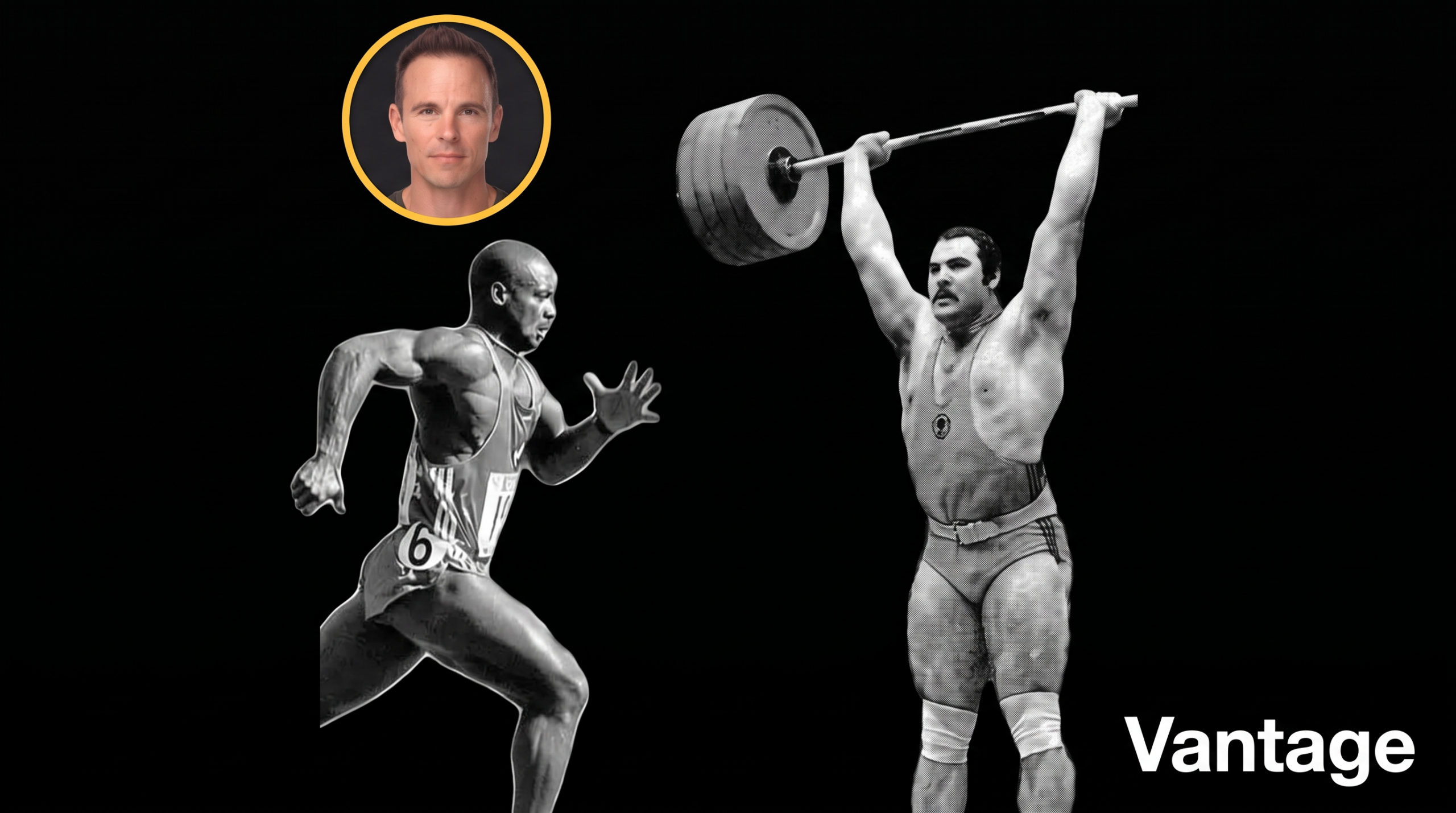
Watching elite athletes explode into motion—a sprinter launching off the blocks, a boxer delivering a devastating hook, or a weightlifter hoisting massive loads overhead—reveals something extraordinary about human performance.
That snap, that twitch, is what separates good athletes from great ones.
It’s called explosive power, and while genetics play a significant role, the right training approach can unlock levels of performance most people never thought possible.
Understanding how to develop this quality requires looking beyond simple strength and into the mechanics of force, speed, and timing.
Jump to:
- Strength Versus Power: Understanding The Difference
- Explosive Power: The Speed Component
- Genetics: The Starting Line Nobody Chose
- Building The Foundation: Maximum Strength Development
- Plyometrics: Harnessing Elastic Energy
- Olympic Lifting Variations: Training Power Production
- Ballistic Training: Extending Movement Beyond Traditional Ranges
- The Universal Law: Quality Trumps Quantity
- Programming Power Training: Practical Implementation
- Periodization: The Long-Term Blueprint
- The Path Forward
Strength Versus Power: Understanding The Difference
Strength and power are frequently confused, yet they describe fundamentally different physical qualities.
Strength refers to the maximum force someone can generate, regardless of how long it takes. Think of a powerlifter grinding through a heavy squat—pure force, minimal concern for speed.

If you want something simple that actually works, this is one of the most effective tools I’ve used to build strength, conditioning, and endurance without needing a full gym setup.
- Full-body training with one weight using swings, squats, and presses
- Solid cast iron build that feels stable and lasts for years
- Comfortable grip that makes high-rep workouts easier to handle
Power, however, combines force and velocity. It’s the ability to produce significant force in minimal time.
The mathematical relationship is straightforward: power equals force multiplied by velocity. This equation reveals that identical power outputs can come from vastly different combinations of strength and speed.
High Force, Low Velocity Athletes
Strongmen and powerlifters exemplify this category. They move tremendous loads, but the velocity is necessarily slow due to the massive resistance.
Despite the slower movement speed, their power output remains impressive because of the sheer force involved.
Low Force, High Velocity Athletes
Sprinters and jumpers represent the opposite end. They overcome relatively minimal resistance—gravity and body weight—but move at blistering speeds.
Their power comes primarily from velocity rather than absolute force.
If you want something simple that actually works, this is one of the most effective tools I’ve used to build strength, conditioning, and endurance without needing a full gym setup.
- Full-body training with one weight using swings, squats, and presses
- Solid cast iron build that feels stable and lasts for years
- Comfortable grip that makes high-rep workouts easier to handle
Balanced Force And Velocity
Olympic weightlifters, track and field throwers, and many combat athletes occupy this middle ground. They display exceptional power through a near-perfect marriage of force and speed.
Explosive Power: The Speed Component
Being powerful doesn’t automatically mean being explosive. The distinction lies in something called rate of force development—how quickly maximum force is reached.
Consider two legendary boxers: George Foreman was immensely powerful, delivering devastating punches through raw strength. Mike Tyson was equally powerful but also explosive, generating tremendous force in a fraction of the time Foreman required.
That rapid force generation defines explosiveness, and it’s the quality most athletes seek when they think about improving power.
Genetics: The Starting Line Nobody Chose
Explosive power has substantial genetic components that create natural advantages for some individuals. While this reality might seem discouraging, understanding these factors helps clarify what can be improved through training.
Muscle Fiber Composition
Human muscles contain both fast-twitch and slow-twitch fibers. Fast-twitch fibers contract rapidly and powerfully, making them essential for explosive movements.
If you want something simple that actually works, this is one of the most effective tools I’ve used to build strength, conditioning, and endurance without needing a full gym setup.
- Full-body training with one weight using swings, squats, and presses
- Solid cast iron build that feels stable and lasts for years
- Comfortable grip that makes high-rep workouts easier to handle
Unfortunately, fiber type distribution is largely predetermined by genetics and cannot be substantially altered through training.
Neuromuscular Efficiency
The nervous system coordinates muscle activation through electrical signals from brain to muscle. Genetics establish baseline efficiency, but training can significantly enhance signal speed and coordination.
This represents one of the most trainable aspects of explosive performance.
Tendon Stiffness
Tendons function like biological springs, storing and releasing elastic energy during movement. Stiffer tendons store more energy and contribute to greater explosive power.
Tendon properties have strong genetic influences, giving some athletes an inherent mechanical advantage.
Leverage And Bone Structure
Bone length, joint angles, and overall skeletal structure affect how efficiently force transfers through the body. These structural factors are almost entirely genetic and determine why certain individuals excel at specific movements.
If you want something simple that actually works, this is one of the most effective tools I’ve used to build strength, conditioning, and endurance without needing a full gym setup.
- Full-body training with one weight using swings, squats, and presses
- Solid cast iron build that feels stable and lasts for years
- Comfortable grip that makes high-rep workouts easier to handle
However, genetic predisposition sets a ceiling, not a floor. Just as someone wouldn’t abandon education because a classmate learns faster, there’s no reason to avoid explosive power training simply because others start with advantages.
Everyone can improve their explosive capacity substantially through proper training.
Building The Foundation: Maximum Strength Development
Explosive power requires a base of absolute strength. Without sufficient strength, attempts to move quickly result in minimal force—speed without substance.
The most effective approach involves compound exercises targeting major movement patterns:
- Pushing movements: Bench press variations, overhead presses
- Pulling movements: Rows, pull-ups, deadlift variations
- Squatting patterns: Back squats, front squats, goblet squats
- Hip hinge movements: Deadlifts, Romanian deadlifts, hip thrusts
Both bilateral (two-limb) and unilateral (single-limb) variations have value, though bilateral movements provide more efficiency for those with limited training time.
Progressive Overload: The Non-Negotiable Principle
Biological adaptation requires progressive stress. Bodies exposed to identical stimuli stop changing because there’s no reason to adapt further.
If you want something simple that actually works, this is one of the most effective tools I’ve used to build strength, conditioning, and endurance without needing a full gym setup.
- Full-body training with one weight using swings, squats, and presses
- Solid cast iron build that feels stable and lasts for years
- Comfortable grip that makes high-rep workouts easier to handle
Strength development demands systematically increasing resistance at a pace that challenges without overwhelming. Countless methods exist for implementing progressive overload—adding weight, increasing volume, or manipulating tempo—each with context-specific advantages.
Rep Ranges: Context Matters More Than Charts
Internet fitness culture loves simplistic rep range prescriptions: “1-5 reps for strength, 8-12 for hypertrophy.” Reality is far more nuanced.
Rep ranges don’t determine outcomes in isolation. The combination of rep range and intensity determines adaptation. Lower reps with heavier loads build strength. Higher reps with appropriate intensity also build strength, though through different mechanisms.
Training Fresh: The Power Prerequisite
Power training must occur in a non-fatigued state. Fatigue and power production are fundamentally incompatible.
Rest intervals between sets should be long enough to ensure full recovery—often 3-5 minutes or more for heavy compound movements. Rushing through sets for efficiency sacrifices the very quality being developed.
Plyometrics: Harnessing Elastic Energy
In the 1960s, Soviet scientist Yuri Verkhoshansky observed that elite athletes generated more force by utilizing stored elastic energy in muscles and tendons. This observation led to exploring the stretch-shortening cycle—the rapid transition between lengthening (eccentric) and shortening (concentric) muscle actions.
If you want something simple that actually works, this is one of the most effective tools I’ve used to build strength, conditioning, and endurance without needing a full gym setup.
- Full-body training with one weight using swings, squats, and presses
- Solid cast iron build that feels stable and lasts for years
- Comfortable grip that makes high-rep workouts easier to handle
Verkhoshansky discovered that minimizing ground contact time between these phases maximized elastic energy utilization, producing greater power output. He developed what he initially called the “shock method,” now universally known as plyometrics.
Plyometric exercises range from simple to advanced:
- Basic: Squat jumps, box jumps, medicine ball throws
- Intermediate: Broad jumps, single-leg hops, lateral bounds
- Advanced: Depth jumps, hurdle jumps, reactive box jumps
Depth jumps particularly exemplify Verkhoshansky’s principles: standing on an elevated surface, stepping off, and immediately exploding upward upon landing channels tremendous elastic energy.
The Most Universal Plyometric Exercise
If forced to choose one plyometric movement applicable to virtually every athlete, the answer might be surprising: sprinting.
Though sometimes categorized separately, sprinting perfectly fits plyometric criteria. Each ground contact involves explosive force production through rapid stretch-shortening cycles. It’s accessible, scalable, and directly applicable to countless sports.
Other excellent options include depth jumps, hurdle jumps, and broad jumps, but sprinting offers unmatched versatility.
If you want something simple that actually works, this is one of the most effective tools I’ve used to build strength, conditioning, and endurance without needing a full gym setup.
- Full-body training with one weight using swings, squats, and presses
- Solid cast iron build that feels stable and lasts for years
- Comfortable grip that makes high-rep workouts easier to handle
Quality Over Quantity In Plyometric Training
Plyometrics demand maximal effort on every repetition. Volume guidelines vary by exercise complexity, but generally fall between 3-10 reps per set for jumps and 20-200 meters for sprints.
Trust physiological feedback. If power output noticeably decreases within a set, end it. If neural fatigue becomes apparent, rest longer between sets.
Quality repetitions always trump fatigued volume.
Olympic Lifting Variations: Training Power Production
Olympic weightlifters rank among the most explosive athletes across all sports. Research has documented extraordinary power outputs during the second pull—the explosive hip and knee extension that propels the barbell upward.
Olympic lifts involve distinct phases:
- The lift-off: Initial pull from the floor
- The second pull: Explosive extension generating peak power
- The transition: Dropping under the bar at high speed
- The catch: Absorbing load in a deep position
The catching phase offers an underappreciated benefit: training the body to absorb force rapidly, potentially improving injury resilience.
If you want something simple that actually works, this is one of the most effective tools I’ve used to build strength, conditioning, and endurance without needing a full gym setup.
- Full-body training with one weight using swings, squats, and presses
- Solid cast iron build that feels stable and lasts for years
- Comfortable grip that makes high-rep workouts easier to handle
The Greatest Advantage: Built-In Incentive
Olympic lifts possess a unique characteristic that may be their most valuable training feature: they inherently demand maximal power production.
To successfully catch a clean or snatch, athletes must generate tremendous power. Insufficient power means missing the lift entirely. This built-in feedback creates natural incentive for maximum effort.
Compare this to a trap bar jump or squat jump. Athletes can complete these movements with submaximal power, potentially developing poor training habits. Olympic lifts eliminate that option.
Managing Complexity
The primary drawback of Olympic lifting is technical complexity. Full snatches and clean and jerks require extensive coaching and practice to perform safely and effectively.
Solutions exist for those without access to expert coaching:
- Focus on simpler variations like power cleans rather than full squat cleans
- Use hang positions (starting from mid-thigh) instead of floor pulls
- Implement block pulls from elevated platforms
- In severe cases, use clean pulls without the catch phase
These simplified versions retain most benefits while dramatically reducing technical barriers.
If you want something simple that actually works, this is one of the most effective tools I’ve used to build strength, conditioning, and endurance without needing a full gym setup.
- Full-body training with one weight using swings, squats, and presses
- Solid cast iron build that feels stable and lasts for years
- Comfortable grip that makes high-rep workouts easier to handle
Programming Olympic Lifts
Olympic lifts work best at intensities above 55% of one-repetition maximum for developing high-velocity strength. Below that threshold, plyometrics become more appropriate for training maximal velocity.
The Prilepin Chart, developed by Soviet weightlifting coaches analyzing thousands of lifts, provides general guidance for optimal volume and intensity relationships. While imperfect, it remains the most comprehensive model available.
Common sense applies: higher intensities require lower volumes, and vice versa.
Ballistic Training: Extending Movement Beyond Traditional Ranges
Ballistic exercises involve throwing or jumping with resistance, creating a flight phase where the load (or athlete) becomes projectile-like.
Standard exercises like squats or bench presses require deceleration at the end range to control the weight safely. This necessary deceleration reduces velocity in the final portion of movement.
Ballistic variations eliminate this deceleration phase. Jump squats don’t stop at full extension—they continue upward. Medicine ball chest passes don’t slow at lockout—the ball releases at peak velocity.
If you want something simple that actually works, this is one of the most effective tools I’ve used to build strength, conditioning, and endurance without needing a full gym setup.
- Full-body training with one weight using swings, squats, and presses
- Solid cast iron build that feels stable and lasts for years
- Comfortable grip that makes high-rep workouts easier to handle
Research suggests that because many sports involve ballistic actions (throwing, jumping, striking), training with ballistic movements may offer superior transfer compared to traditional strength exercises that require deceleration.
Appropriate Application
Every training tool has optimal applications. Ballistic training excels for high-velocity strength and maximal velocity development but becomes dangerous at intensities exceeding 70% of one-repetition maximum.
For maximal strength development, traditional compound exercises remain superior. For speed-strength qualities, ballistic methods shine alongside Olympic lifts and plyometrics.
The Universal Law: Quality Trumps Quantity
Regardless of training method—Olympic lifts, plyometrics, ballistics, or heavy strength work—one principle supersedes all others: five quality repetitions beat ten mediocre ones.
Quality, in power training context, means maximal intensity and effort concentrated into each repetition. This relates directly to motor unit recruitment—the number of muscle fibers activated during contraction.
Neural signals travel from the central nervous system through the spinal cord into muscles. Signal strength determines power output. Stronger signals recruit more motor units and generate greater force.
If you want something simple that actually works, this is one of the most effective tools I’ve used to build strength, conditioning, and endurance without needing a full gym setup.
- Full-body training with one weight using swings, squats, and presses
- Solid cast iron build that feels stable and lasts for years
- Comfortable grip that makes high-rep workouts easier to handle
Motor unit recruitment is a learnable skill. Genetics provide starting points, but years of intentional training substantially improve voluntary power production.
Explosive power training is, to considerable extent, brain training—developing neural pathways that enable maximum-effort muscular contractions on demand.
Creating Incentives For Maximum Effort
Humans naturally prefer minimal effort—the principle of least resistance applies universally across physical training, cognitive work, and daily activities.
How can athletes force themselves to exert maximum effort on every power training repetition? Through strategic use of incentives and benchmarks.
Setting a hurdle at specific height creates pass-fail feedback. Missing the hurdle hurts pride, creating motivation to generate necessary power. Velocity-based training devices provide objective power output data, turning each rep into measurable performance.
Perhaps the most powerful tool is imagination. When Eddie Hall broke the deadlift world record, he visualized his child trapped beneath the bar. The mind struggles to distinguish vivid fantasy from reality, allowing visualization to create genuine urgency.
If you want something simple that actually works, this is one of the most effective tools I’ve used to build strength, conditioning, and endurance without needing a full gym setup.
- Full-body training with one weight using swings, squats, and presses
- Solid cast iron build that feels stable and lasts for years
- Comfortable grip that makes high-rep workouts easier to handle
This psychological technique—imagining life-or-death stakes—can unlock effort levels otherwise reserved for true emergencies.
Programming Power Training: Practical Implementation
Integrating various power training modalities requires answering critical questions before designing programs:
- What sport and what are its specific demands?
- What are individual athletic needs and current weaknesses?
- What is competency level in different training modalities?
- How much time is available for power-focused training?
- What training season or phase is approaching?
Answers to these questions determine program structure.
Two Primary Integration Strategies
Strategy One: Separate Sessions
Training different attributes (maximum strength, high-velocity strength, maximal velocity) in dedicated sessions allows for higher quality and better recovery between modalities.
This approach is time-intensive but maximizes adaptation to each stimulus.
If you want something simple that actually works, this is one of the most effective tools I’ve used to build strength, conditioning, and endurance without needing a full gym setup.
- Full-body training with one weight using swings, squats, and presses
- Solid cast iron build that feels stable and lasts for years
- Comfortable grip that makes high-rep workouts easier to handle
Strategy Two: Combined Sessions
Integrating multiple qualities within single training sessions saves substantial time and suits athletes using power training as supplementary to sport-specific practice.
Most athletes benefit from this approach due to practical time constraints.
Sequencing Within Combined Sessions
When combining training qualities, two effective sequencing options emerge:
Option One: Velocity-First Progression
Begin with highest-velocity demands (plyometrics, sprints) when the nervous system is freshest, then transition to strength work.
If you want something simple that actually works, this is one of the most effective tools I’ve used to build strength, conditioning, and endurance without needing a full gym setup.
- Full-body training with one weight using swings, squats, and presses
- Solid cast iron build that feels stable and lasts for years
- Comfortable grip that makes high-rep workouts easier to handle
Option Two: Contrast Training
Pair heavy strength exercises with explosive movements in supersets or sequences. Performing a heavy squat followed immediately (or after brief rest) by depth jumps creates what’s known as post-activation potentiation.
French contrast training extends this concept across multiple exercises at different velocity points. This method is exceptionally time-efficient for busy athletes.
Periodization: The Long-Term Blueprint
Periodization sounds intimidating but describes simple progressive planning toward performance goals.
Macrocycle: The overarching goal and timeline, such as peaking for national championships one year away.
Mesocycles: Intermediate phases within the macrocycle, each emphasizing specific qualities. One mesocycle might prioritize maximum strength, followed by another focusing on high-velocity strength, then maximal velocity.
If you want something simple that actually works, this is one of the most effective tools I’ve used to build strength, conditioning, and endurance without needing a full gym setup.
- Full-body training with one weight using swings, squats, and presses
- Solid cast iron build that feels stable and lasts for years
- Comfortable grip that makes high-rep workouts easier to handle
Mesocycles rarely involve abandoning other qualities entirely. Emphasizing maximum strength doesn’t mean eliminating speed work—it means temporarily prioritizing force development while maintaining velocity qualities.
Mesocycle duration varies from several weeks to multiple months depending on goals and athlete development level.
Microcycles: Weekly training structures within mesocycles, detailing rep ranges, set volumes, and intensities.
Individual Sessions: Daily training plans specifying exact exercises, loads, and volumes.
This hierarchical structure provides clarity while maintaining flexibility for adjustments based on progress and recovery.
The Path Forward
Developing explosive power isn’t mysterious or reserved for genetic elites. It requires understanding the relationship between force and velocity, building foundational strength, implementing appropriate training methods, and maintaining unwavering commitment to quality over quantity.
If you want something simple that actually works, this is one of the most effective tools I’ve used to build strength, conditioning, and endurance without needing a full gym setup.
- Full-body training with one weight using swings, squats, and presses
- Solid cast iron build that feels stable and lasts for years
- Comfortable grip that makes high-rep workouts easier to handle
Genetics determine starting points, not destinations. Everyone can substantially improve their explosive capacity through intelligent, progressive training that respects biological principles.
The athletes who excel aren’t necessarily those born with every advantage—they’re the ones who consistently apply maximum intent to quality training over months and years.
Train smart. Train hard. Train explosively.