

Looking for a deceptively simple move that targets the often-overlooked rear delts and boosts your overall shoulder health?
Enter the Spider Crawl — a movement that’s gaining attention for its effectiveness in firing up the scapular muscles, improving shoulder stability, and lighting up those posterior deltoids.
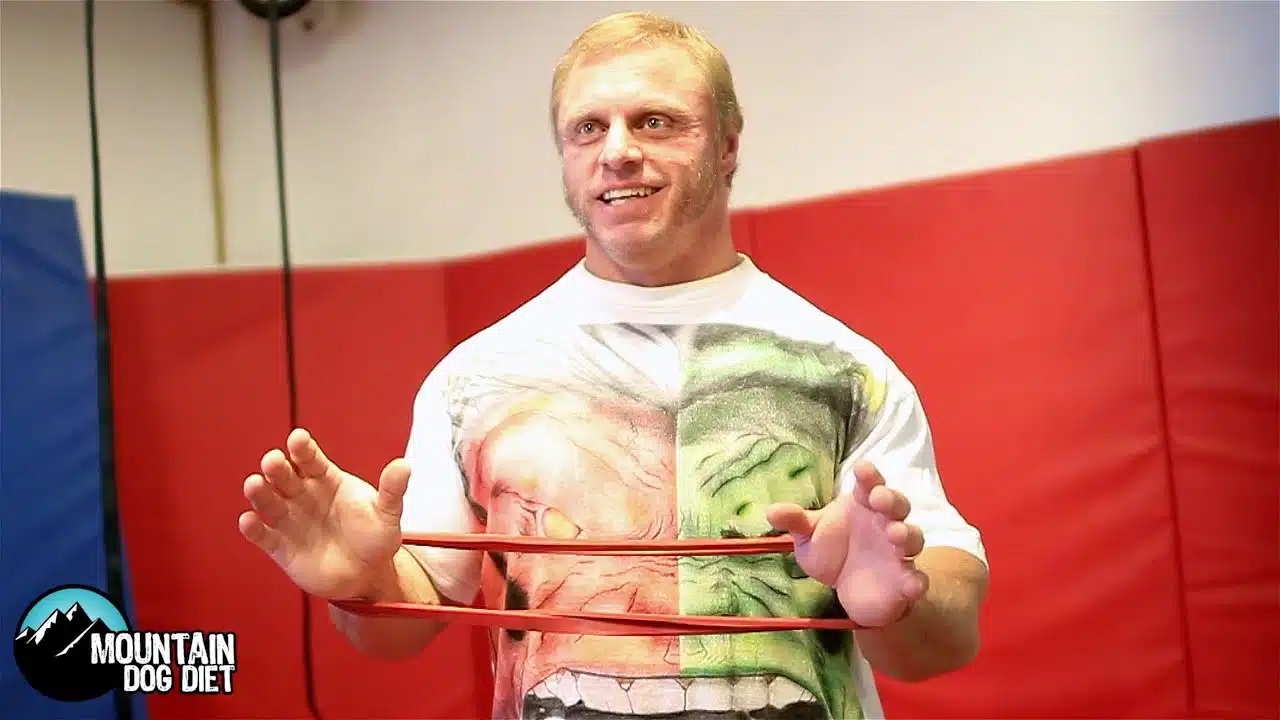
In a recent video demonstration, the exercise was endorsed by Dave Kay, who praised it as a game-changer for scapular control and rear delt activation.
Even if you’re skipping conventional rear delt work, this wall-based movement might just be your secret weapon for stronger, more functional shoulders.
Here’s everything you need to know to master it — and feel it.
Jump to:
What Is a Spider Crawl?
The Spider Crawl is a resistance band-based shoulder stability exercise performed against a wall. You’re essentially “walking” your hands up and down — like a spider — while keeping constant lateral tension on the band.
According to Dave Kay, the magic of this move lies in its ability to light up the scapula stabilizers while dialing in the rear delts. It’s a great finisher or warm-up to support pressing movements and prevent shoulder injuries.
Why It Works Your Rear Delts So Well
Unlike isolation rear delt flys or reverse pec deck machine exercises, the Spider Crawl challenges your rear delts through active scapular control and constant band tension.
You’re not just pulling the band — you’re resisting the pull to bring your hands together, forcing your posterior delts to stabilize every inch of the way.
This is especially useful on days when rear delts might be skipped or under-trained. One or two rounds of Spider Crawls can be all it takes to fire up the area and complete your shoulder activation.
How to Perform the Spider Crawl
Before beginning, grab a light to medium resistance loop band and find a clear wall space.
Here’s a step-by-step breakdown:
- Loop the resistance band around both wrists.
- Stand facing the wall, about two feet away — don’t get too close.
- Place your hands against the wall at shoulder level, forming a “Y” shape. Keep the band under tension by spreading your hands apart.
- Begin the movement by “crawling” your hands up the wall — one at a time — maintaining constant outward tension.
- Climb 3 steps up, then reverse and take 3 steps back down.
- Don’t let your hands drift closer together — fight to keep them pulled wide throughout the set.
One full rep is going up and back down once. Complete 3 up-and-down crawls per set.
Tips for Best Results
- Stay back from the wall: If you’re too close, you’ll lose tension — and the effectiveness.
- Watch your wrist position: Keep wrists in line with shoulders, not too low or too wide.
- Use light resistance: Form matters more than band strength. A heavier band isn’t better if it compromises control.
- Control every rep: Don’t rush. Slower crawling activates your rear delts and scapular muscles more deeply.
How Many Sets and When to Do It
In the video, viewers are encouraged to start with 2 sets of three climbs up and down the wall. That’s enough to feel the burn, especially if rear delts haven’t already been targeted in your workout.
This can be performed:
- As part of your shoulder day warm-up or mobility routine.
- As a finisher to squeeze out extra rear delt work.
- In rehab or prehab work for rotator cuff and scapula stability.
Benefits Beyond the Rear Delts
Though it’s a favorite for rear delt activation, the Spider Crawl also strengthens muscles that are critical for posture and overhead pressing stability:
- Middle and lower traps — During upward and downward motion.
- Serratus anterior — Steadies your scapula against the rib cage.
- Rotator cuff muscles — Provide joint integrity and rotatory control.
When integrated regularly, the exercise may help reduce nagging shoulder discomfort, protect against impingement, and improve shoulder longevity for lifters, athletes, and weekend warriors alike.
The Bottom Line
Spider Crawls are one of those rare exercises that deliver far more than you’d expect at first glance. With just a resistance band and a wall, you get a comprehensive rear delt burn and shoulder prehab session rolled into one.
As Dave Kay recommends, start by feeling the movement, not forcing it. Once your technique is dialed in, these crawls might become one of your go-to shoulder build-and-burn tools.










