Lifting weights might do more than build muscle and boost strength.
According to a groundbreaking new study published in Sports Medicine Open, resistance training triggers significant changes in gut bacteria—especially for those who gain strength fastest.
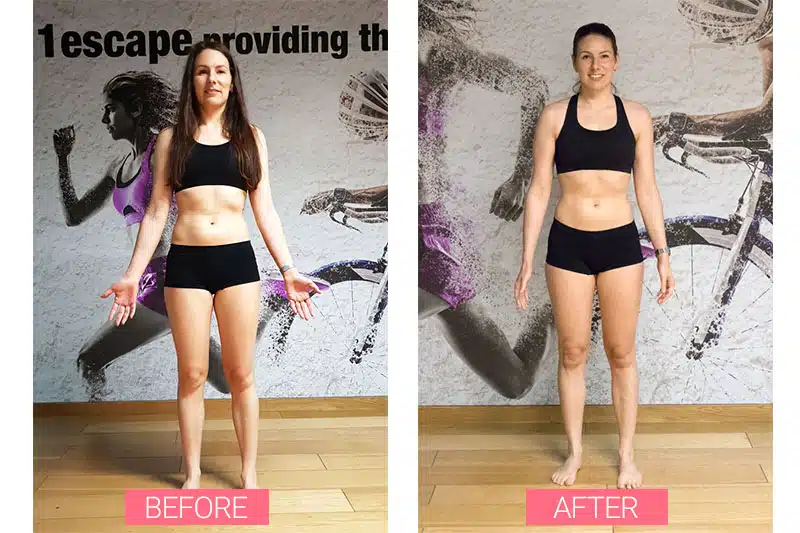
Researchers from the University of Tübingen in Germany tracked 150 previously sedentary adults through an 8-week supervised resistance training program, collecting fecal samples and strength measurements throughout.
What they discovered could reshape how we think about strength training’s impact on overall health.
Jump to:
- Strength Gains Correlate with Microbiome Changes
- High Responders Show Remarkable Bacterial Shifts
- Time-Dependent Microbial Evolution
- Why Previous Research Showed Minimal Changes
- Diet Remained Stable Throughout Training
- Implications for Healthy Aging
- Study Design and Methodology
- No Changes in Overall Diversity
- Training Volume and Compliance
- Future Research Directions
- Practical Takeaways
Strength Gains Correlate with Microbiome Changes
The study enrolled participants between 24 and 61 years old—85 women and 63 men—conducting supervised resistance training sessions between May 2022 and July 2023.
Every training session was meticulously documented. Researchers recorded weights, repetitions, load metrics, and compliance rates to ensure precision.

If you want something simple that actually works, this is one of the most effective tools I’ve used to build strength, conditioning, and endurance without needing a full gym setup.
- Full-body training with one weight using swings, squats, and presses
- Solid cast iron build that feels stable and lasts for years
- Comfortable grip that makes high-rep workouts easier to handle
Participants provided fecal samples at baseline, week 4, and week 8 for advanced microbiome analysis using 16S rRNA gene sequencing.
While overall microbial diversity remained stable across all participants, something fascinating emerged when researchers examined individual responses. The degree of microbiome change within each person correlated significantly with their strength improvements.
Participants who gained strength faster showed more dramatic shifts in their gut bacterial communities.
High Responders Show Remarkable Bacterial Shifts
Researchers divided participants into three groups based on strength gains: low responders (under 12.2% improvement), medium responders, and high responders (over 33% gains).
High responders experienced significantly stronger microbiome shifts compared to low responders. By week 8, differential abundance analysis revealed 27 specific bacterial taxa that were either enriched or depleted in those with greatest strength improvements.
Two bacteria stood out as particularly significant: Faecalibacterium and Roseburia hominis.
If you want something simple that actually works, this is one of the most effective tools I’ve used to build strength, conditioning, and endurance without needing a full gym setup.
- Full-body training with one weight using swings, squats, and presses
- Solid cast iron build that feels stable and lasts for years
- Comfortable grip that makes high-rep workouts easier to handle
Both organisms are associated with healthier, anti-inflammatory gut environments. Previous research has linked these bacteria to improved metabolic health and reduced inflammation.
Many differentially abundant bacteria belonged to the Lachnospiraceae family—a group known for producing short-chain fatty acids that support gut barrier function and systemic health.
Time-Dependent Microbial Evolution
Changes didn’t happen overnight.
The study revealed time-dependent patterns in bacterial composition. Certain species gradually increased or decreased over the 8-week training period, suggesting adaptation rather than random fluctuation.
This temporal aspect mirrors findings from endurance training studies, where consistent exercise progressively reshapes gut communities.
The longer participants trained, the more pronounced these beneficial bacterial changes became.
If you want something simple that actually works, this is one of the most effective tools I’ve used to build strength, conditioning, and endurance without needing a full gym setup.
- Full-body training with one weight using swings, squats, and presses
- Solid cast iron build that feels stable and lasts for years
- Comfortable grip that makes high-rep workouts easier to handle
Why Previous Research Showed Minimal Changes
Earlier studies examining resistance training’s effect on gut bacteria often reported minimal or no changes.
This research suggests why: individual response matters tremendously.
When analyzing all participants collectively, significant patterns disappeared. Only when researchers separated high responders from low responders did dramatic microbiome shifts become visible.
The correlation between strength improvement and microbiome change (Pearson correlation coefficient r = 0.167, p = 0.0004) was statistically significant despite being modest in magnitude.
Diet Remained Stable Throughout Training
Researchers carefully tracked dietary patterns to rule out nutrition as a confounding variable.
Participants reported consumption of fruits, vegetables, fish, meat, eggs, dairy, grains, sweets, salty snacks, water, tea, coffee, juice, lemonade, and alcohol at multiple timepoints.
If you want something simple that actually works, this is one of the most effective tools I’ve used to build strength, conditioning, and endurance without needing a full gym setup.
- Full-body training with one weight using swings, squats, and presses
- Solid cast iron build that feels stable and lasts for years
- Comfortable grip that makes high-rep workouts easier to handle
Diet distances within participants showed no significant changes across responder types. This suggests observed microbiome shifts resulted from exercise itself rather than dietary modifications.
Implications for Healthy Aging
The enrichment of Faecalibacterium and Roseburia hominis carries particular significance for longevity and disease prevention.
Previous research has established that gut microbiome patterns reflect healthy aging and predict survival in humans. Bacterial communities rich in anti-inflammatory species correlate with better health outcomes across multiple metrics.
The study authors note these resistance training-induced changes mirror effects previously documented with endurance exercise. Both training modalities appear to promote similar beneficial bacterial profiles.
This convergence suggests fundamental mechanisms linking physical activity—regardless of type—to improved gut health.
Study Design and Methodology
The research employed rigorous scientific methods to ensure validity.
If you want something simple that actually works, this is one of the most effective tools I’ve used to build strength, conditioning, and endurance without needing a full gym setup.
- Full-body training with one weight using swings, squats, and presses
- Solid cast iron build that feels stable and lasts for years
- Comfortable grip that makes high-rep workouts easier to handle
- Sample size: 150 participants completing the full protocol (from 205 initially enrolled)
- Duration: 8 weeks of supervised resistance training
- Microbiome analysis: Three fecal samples per participant using 16S rRNA gene amplicon sequencing
- Metabolomics: Two samples per participant to evaluate microbial metabolic activity
- Strength testing: Three fitness assessments at weeks 0, 4, and 8
- Session tracking: Detailed recording of weights, repetitions, and compliance
Statistical analyses included multiple approaches: Friedman tests, Pearson correlations, Kruskal-Wallis rank sum tests, and ANCOM-BC2 differential abundance testing.
No Changes in Overall Diversity
Interestingly, total microbial diversity remained unchanged across all participants.
Alpha diversity—measuring species richness within individual samples—showed no significant variation from baseline through week 8 (Friedman test, p = 0.5).
However, composition changed dramatically in high responders, even though diversity stayed constant. This distinction matters: having the same number of bacterial species doesn’t mean having the same balance or proportions.
The shift toward beneficial bacteria like Faecalibacterium occurred without reducing overall microbial richness.
Training Volume and Compliance
Researchers tracked number of training days per participant across responder categories.
If you want something simple that actually works, this is one of the most effective tools I’ve used to build strength, conditioning, and endurance without needing a full gym setup.
- Full-body training with one weight using swings, squats, and presses
- Solid cast iron build that feels stable and lasts for years
- Comfortable grip that makes high-rep workouts easier to handle
While high responders showed greater microbiome changes, training frequency alone didn’t fully explain differences. Participants across all response categories maintained similar attendance patterns.
This suggests individual physiological variation—rather than simply effort or compliance—drives differential responses to resistance training.
Future Research Directions
The study opens numerous avenues for further investigation.
Questions remain about mechanisms: Does resistance training directly influence gut bacteria through hormonal changes, immune modulation, or metabolic shifts? Do altered bacterial communities contribute to strength gains, or simply correlate with them?
Longer intervention periods could reveal whether microbiome changes plateau or continue evolving with extended training.
Understanding why some individuals respond more dramatically than others could inform personalized exercise prescriptions.
If you want something simple that actually works, this is one of the most effective tools I’ve used to build strength, conditioning, and endurance without needing a full gym setup.
- Full-body training with one weight using swings, squats, and presses
- Solid cast iron build that feels stable and lasts for years
- Comfortable grip that makes high-rep workouts easier to handle
Practical Takeaways
For previously sedentary adults, this research provides compelling motivation to start resistance training.
Benefits extend beyond visible muscle growth or measurable strength increases. Resistance training reshapes internal biology at the microbial level, potentially enhancing metabolic health, reducing inflammation, and supporting healthy aging.
The 8-week timeframe demonstrates that meaningful changes don’t require years of commitment. Two months of consistent training produced statistically significant bacterial shifts in high responders.
The supervised nature of this study underscores proper technique and progressive overload’s importance. Working with qualified trainers ensures safe, effective programming that maximizes both strength and potentially microbiome benefits.
Whether building muscle, preventing age-related decline, or optimizing gut health, resistance training offers multidimensional rewards.