Stress doesn’t just make you tired or cause weight gain.
It may be quietly shutting down your metabolism at a hormonal level—specifically by suppressing thyroid hormone production, even when your labs look normal.
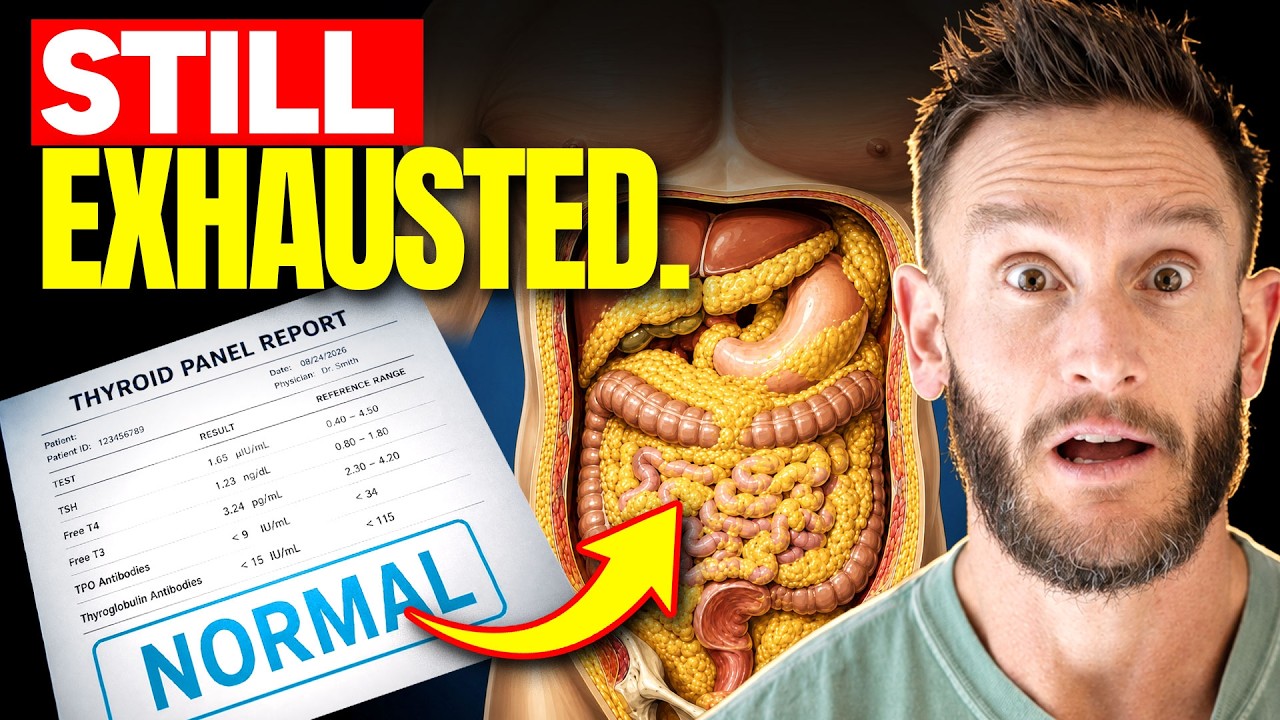
The result? Persistent fatigue, stubborn fat, brain fog, and a body that feels like it’s stuck in survival mode no matter how much you sleep or how little you eat.
In a recent breakdown, fitness educator Thomas DeLauer explained how chronic stress through elevated cortisol can turn down T3—the active thyroid hormone that controls metabolic output—and why this explains symptoms most people blame on age, genetics, or lack of willpower.
Jump to:
Thyroid Hormone: The Real Metabolic Control Dial
Metabolism isn’t just about burning calories. It’s a communication system, and at its center sits thyroid hormone.
Your thyroid releases mostly T4, which is largely inactive. T4 must be converted into T3 by enzymes called deiodinases—and T3 is what actually tells your cells how fast to burn energy.

If you want something simple that actually works, this is one of the most effective tools I’ve used to build strength, conditioning, and endurance without needing a full gym setup.
- Full-body training with one weight using swings, squats, and presses
- Solid cast iron build that feels stable and lasts for years
- Comfortable grip that makes high-rep workouts easier to handle
Think of T3 like a volume knob on your metabolism. Calories are the fuel, but T3 decides how loudly that fuel gets used.
It controls heat production, insulin sensitivity, brain activity, and even heart function. When T3 is low, everything downstream starts to shift.
How Cortisol Suppresses Active Thyroid Hormone
Cortisol is designed to keep you alive during acute stress. But when it stays elevated chronically, it doesn’t just affect fat storage—it disrupts hormone signaling.
A study published in JRSM Cardiovascular Disease compared patients with cardiovascular disease to healthy controls and measured both cortisol and circulating T3 levels. The findings were striking: nearly 40% of cardiovascular patients had elevated cortisol, and nearly 38% had reduced T3.
This isn’t animal data or theory. It’s real human physiology showing that chronic stress is associated with suppressed active thyroid hormone—the very signal metabolism depends on.
When cortisol stays high, your body downregulates metabolic output.
Cortisol essentially tells your body: We’re under threat. Preserve energy. T3 tells your body: We’re safe. Burn energy. Those two signals don’t coexist peacefully.
If you want something simple that actually works, this is one of the most effective tools I’ve used to build strength, conditioning, and endurance without needing a full gym setup.
- Full-body training with one weight using swings, squats, and presses
- Solid cast iron build that feels stable and lasts for years
- Comfortable grip that makes high-rep workouts easier to handle
What Low T3 Actually Feels Like
When T3 drops, the symptoms are systemic—and often dismissed as normal aging or laziness.
Persistent Fatigue That Sleep Doesn’t Fix
This isn’t “I had a long day” tired. It’s deep, unshakable exhaustion that doesn’t match your sleep quality.
A study in the European Journal of Endocrinology found that hypothyroid patients had significantly higher fatigue scores across physical fatigue, mental fatigue, reduced motivation, and reduced activity. Thyroid hormone regulates mitochondrial energy production, so when T3 drops, cells don’t convert fuel into usable energy efficiently.
You’re eating calories, but your body isn’t extracting energy from them properly.
Feeling Cold All the Time
Thyroid hormone directly regulates thermogenesis—heat production. A study published in Thyroid showed that people with hypothyroidism had seriously reduced cold-induced thermogenesis. After thyroid hormone replacement, their heat production nearly doubled.
When T3 is low, your body doesn’t generate heat efficiently. That’s why hands and feet feel cold, why sweaters don’t help, why winter feels unbearable.
If you want something simple that actually works, this is one of the most effective tools I’ve used to build strength, conditioning, and endurance without needing a full gym setup.
- Full-body training with one weight using swings, squats, and presses
- Solid cast iron build that feels stable and lasts for years
- Comfortable grip that makes high-rep workouts easier to handle
Insulin Resistance and Stubborn Fat
Thyroid hormone regulates how muscles and tissues respond to insulin. A study in Integrative Obesity and Diabetes found that obese women with subclinical hypothyroidism had nearly double the rate of insulin resistance compared to obese women with normal thyroid function.
Obesity alone wasn’t the full story. Low thyroid signaling made insulin resistance worse.
Mechanistically, T3 helps insulin move glucose into cells. When T3 is low, glucose stays in the bloodstream, insulin rises, and fat storage increases. That’s why stress-driven thyroid suppression can make fat loss feel impossible even with a calorie deficit.
Brain Fog and Memory Issues
Thyroid plays a critical role in memory, attention, and cognitive speed. A study in Current Health Sciences found that over one-third of hypothyroid patients experienced memory loss or impaired concentration.
But it goes deeper. The American Thyroid Association showed that adults with hypothyroidism had on average a 12% smaller hippocampus—the part of your brain responsible for memory.
This isn’t just fog. This is altered brain structure. When T3 is low, your brain doesn’t get the energetic signal it needs to maintain synaptic function, so it atrophies.
If you want something simple that actually works, this is one of the most effective tools I’ve used to build strength, conditioning, and endurance without needing a full gym setup.
- Full-body training with one weight using swings, squats, and presses
- Solid cast iron build that feels stable and lasts for years
- Comfortable grip that makes high-rep workouts easier to handle
Slower Heart Rate and Reduced Cardiac Output
Thyroid hormone directly affects heart rate and cardiac output. A massive study in BMJ Open involving 130,000 people found that hypothyroidism triggered slower heart rate and significant ECG changes, mostly in women.
When T3 drops, the heart doesn’t receive the signal to beat as strongly or frequently. That’s why low resting heart rate, fatigue, and reduced exercise tolerance show up together.
Why This Gets Missed
Most thyroid screening focuses on TSH, which rises after symptoms have been present for a long time. T3 is often the last marker to change on a standard panel, but it’s the first signal your body actually feels.
People are told “your labs look fine” while their metabolism is quietly being turned down.
Simple Takeaways You Can Apply
Chronic Stress Changes How Metabolism Operates
When cortisol is elevated, your body doesn’t just store extra fat—it turns down thyroid signaling, especially T3. That means fewer calories burned, less heat produced, slower energy turnover, and reduced metabolic flexibility.
If fat loss feels impossible and energy feels capped, the issue isn’t your effort. The output is being deliberately limited.
If you want something simple that actually works, this is one of the most effective tools I’ve used to build strength, conditioning, and endurance without needing a full gym setup.
- Full-body training with one weight using swings, squats, and presses
- Solid cast iron build that feels stable and lasts for years
- Comfortable grip that makes high-rep workouts easier to handle
Your Metabolism Isn’t Broken—It’s Downregulated
Your body isn’t malfunctioning. It’s adapting to what it perceives as a long-term stress environment.
You don’t fix a protective response by pushing harder. You fix it by making space and changing the signal.
Protecting Thyroid Function Means Protecting Recovery
Start with sleep—not just time in bed, but uninterrupted, high-quality sleep that lowers cortisol overnight. Keep blood sugar stable so your body doesn’t interpret every day as a metabolic emergency. Train in a way you can actually recover from, because excessive volume without recovery looks like stress to your nervous system.
More isn’t always better when thyroid signaling is involved. Smarter is what turns metabolism back on.
Symptoms Show Up Before Diagnosis
Fatigue that doesn’t match your sleep, feeling cold when everyone else is comfortable, brain fog, low motivation, stubborn fat that doesn’t respond—these aren’t random. They’re early signs that signaling is being turned down, even if your labs haven’t crossed a clinical threshold yet.
What You Can Do to Lower Cortisol and Support Thyroid Function
Sleep is the foundation. Consider supplementing with three grams of glycine before bed, which acts as a neurotransmitter and has a calming, GABA-like effect. L-serine can help reset circadian cues. Cut blue light exposure at night, but more importantly, dim all light in your house—studies show that light level alone affects cortisol and melatonin production.
If you want something simple that actually works, this is one of the most effective tools I’ve used to build strength, conditioning, and endurance without needing a full gym setup.
- Full-body training with one weight using swings, squats, and presses
- Solid cast iron build that feels stable and lasts for years
- Comfortable grip that makes high-rep workouts easier to handle
Get outside during the day. Adequate light exposure creates sleep pressure and regulates cortisol rhythms. Ground yourself in the evening—research shows that standing barefoot on grass or dirt can lower salivary cortisol levels.
Train smarter, not longer. High-intensity workouts should be short—under 30 minutes—with adequate rest between sets. Volume days have their place, but chronic high-volume training without recovery keeps cortisol elevated and thyroid signaling suppressed.
Other supportive options include kava and nicotinyl GABA, which crosses the blood-brain barrier and promotes calm.
The Big Picture
Stress doesn’t just make you store fat. It changes how your metabolism communicates.
Cortisol suppresses active thyroid hormone. Low T3 slows energy production, heat generation, insulin sensitivity, brain function, and heart activity. It’s not motivation or discipline—it’s a hormonal dial.
A stressed state is a fat storage state. Period. If cortisol stays elevated at night, it disrupts sleep and keeps thyroid signaling suppressed the next day, locking metabolism in conservation mode.
If you want something simple that actually works, this is one of the most effective tools I’ve used to build strength, conditioning, and endurance without needing a full gym setup.
- Full-body training with one weight using swings, squats, and presses
- Solid cast iron build that feels stable and lasts for years
- Comfortable grip that makes high-rep workouts easier to handle
The goal isn’t to fight your body. It’s to give it permission to turn metabolism back up.