Conventional wisdom says certain exercises are non-negotiable for muscle growth.
But IFBB Pro John Jewett is challenging that assumption head-on.
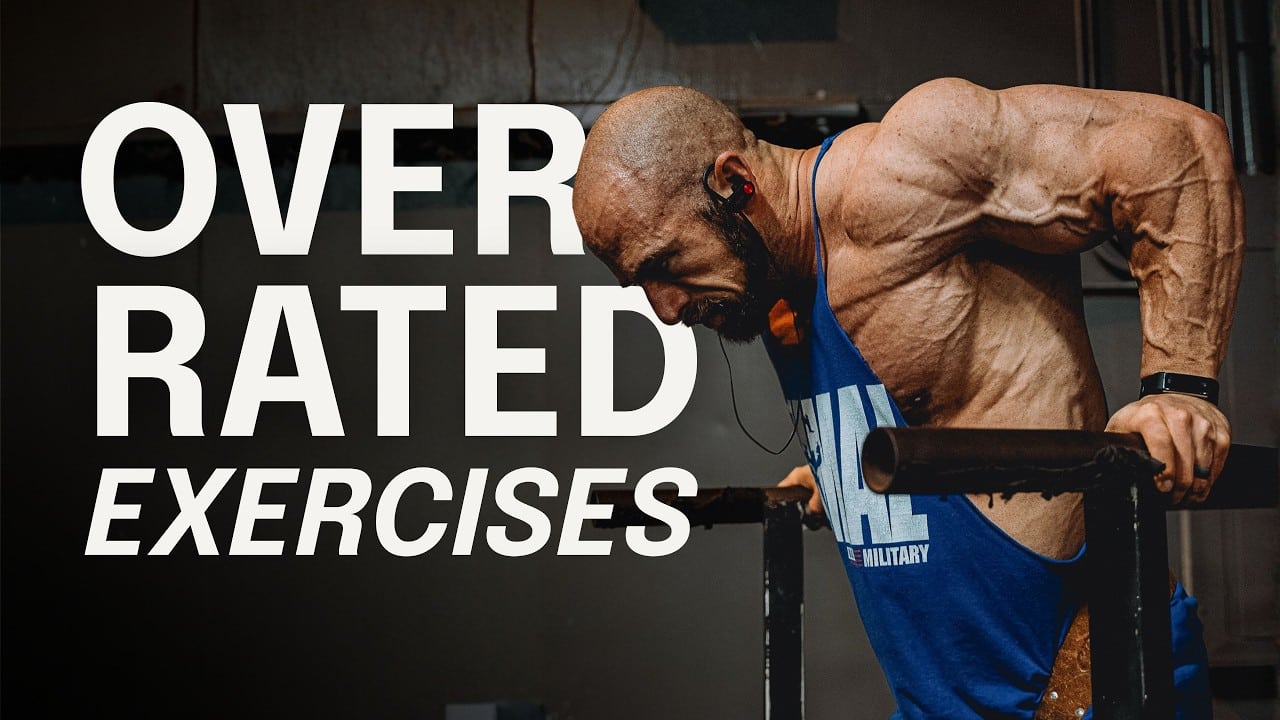
In a recent video, the founder of J3 University revealed which popular lifts might be holding back your physique goals—and what to do instead.
His message is clear: training smarter matters just as much as training harder.
Jump to:
- The Hard Truth About “Hardcore” Lifts
- Rack Pulls: Ego Lifts in Disguise
- Barbell Back Squats Aren’t Always King for Quads
- Landmine Rows Miss the Mark for Lat Development
- V-Bar Pushdowns Create More Problems Than Tricep Growth
- Upright Rows Risk Shoulders for Mediocre Delt Stimulus
- Precision Beats Intensity for Bodybuilding Progress
The Hard Truth About “Hardcore” Lifts
Jewett has extensive experience with heavy compound movements. He’s performed rack pulls, squats, deadlifts, and every major lift associated with serious muscle building.
Through coaching hundreds of competitors and his own competitive career, he discovered something critical: the hardest exercises aren’t always the most effective.
I know some exercises look totally brutal and cool. There’s an emotional tie to just picking some weight off the ground, hearing some metal clank, and letting out a scream when you’re lifting, right? The problem becomes is when that lift isn’t actually achieving the goal we want as effectively as we could be.
He emphasizes these lifts aren’t inherently bad. They absolutely build muscle. But many lifters use them for wrong reasons or when better alternatives exist for targeting specific muscle groups.
Rack Pulls: Ego Lifts in Disguise
Rack pulls often serve as go-to posterior chain exercises. They provide stimulus to traps, erectors, glutes, and quads.
The mechanical positioning allows moving significant load, which appeals to many lifters. However, they don’t provide direct tension to any specific muscle group.
Additionally, none of those muscle groups move through full range of motion. Everything stays in partial ranges.
The Better Alternative
For posterior chain development, Jewett recommends Romanian deadlifts or stiff-leg deadlifts instead.
- Longer muscle lengths: Both variations allow glutes and hamstrings to stretch more completely
- Full range of motion: These movements take target muscles through their entire contractile range
- Better erector loading: The more bent-over position loads spinal erectors more effectively
Yes, you’ll use less weight than rack pulls. And trap stimulus decreases.
But traps and lats function mainly isometrically during rack pulls anyway. Better lifts exist for directly training those muscle groups through their active ranges.
Barbell Back Squats Aren’t Always King for Quads
The back squat remains a staple for many lifters. Yet it’s not always optimal for quad development.
Mechanically, back squats can be very hip-dominant. Lifters with longer femurs or those who pitch their torso forward end up sitting back into glutes more.
It doesn’t make it a bad lift. However, if the goal is biasing the quad, might not be the best choice.
Some modifications help—safety squat bars, trap bars, or heel elevation can shift emphasis toward quads. For many lifters, though, that’s insufficient.
Superior Quad Builders
Jewett suggests hack squats or pendulum squats for serious quad development.
Both movements keep the torso more upright and allow knees to travel farther forward over toes. This biomechanical position directly targets quadriceps rather than dispersing tension across multiple muscle groups.
Landmine Rows Miss the Mark for Lat Development
Loading up landmine rows with multiple plates looks impressive. The reality? They’re suboptimal for lats.
Most lifters use V-handles, which severely shortens range of motion. The upright positioning and arm path emphasizes upper back and traps instead of lats.
Sure, lats feel engaged because elbows stay tight to the torso. But lats function across enormous ranges—from overhead all the way to hip level.
Maximizing Lat Range
For true lat development, Jewett recommends chest-supported rows with hands starting at 90 degrees to the torso.
Driving elbows down to hips creates larger range of motion for lat engagement. Chest support eliminates momentum and erector fatigue, which often limits range in landmine variations.
Without chest-supported equipment? Single-arm cable rows work excellently. Loading shouldn’t exceed what you can stabilize unilaterally anyway.
V-Bar Pushdowns Create More Problems Than Tricep Growth
V-bar pushdowns suffer from multiple issues. Narrow grip internally rotates arms excessively and shortens range of motion.
This often transforms extensions into presses, removing long head involvement. That’s problematic since the long head represents the largest portion of tricep mass.
Overhead Extensions Win
Getting arms overhead prioritizes long head development while still engaging medial and lateral heads.
Overhead positions also achieve full muscle length, which research suggests may produce superior hypertrophy outcomes compared to shortened positions.
If overhead positioning bothers elbows, crossbody variations work well. Just stabilize upper arms and prevent pressing motion that reduces long head involvement.
Upright Rows Risk Shoulders for Mediocre Delt Stimulus
Upright rows present awkward mechanics for many lifters. Starting internally rotated, the top position often causes shoulder impingement.
This limits range of motion. Bicep involvement also dilutes intended side delt focus.
Lateral Raises Done Right
Cable lateral raises or lateral raise machines provide better applications for side delt development.
While straight-out-to-side works, Jewett prefers movement in the scapular plane—approximately 15 degrees forward of body.
I’ve had a lot of higher level guys that are very strong in this movement start running into just a lot of trap involvement going out to the side. Also, we can get better stabilization moving about 15 degrees in front of the body in that scapular plane where the rotator cuff can work a little bit more effectively to stabilize that upper arm.
Precision Beats Intensity for Bodybuilding Progress
When putting in serious work without seeing expected growth, most lifters assume they need more intensity.
Jewett argues otherwise. Progress stalls often signal misalignment between exercise selection and specific goals.
Instagram-worthy lifts might look hardcore. But bodybuilding demands precision in directing tension to target muscles, not sloppy execution with maximum weight.
Remember harder doesn’t always mean more effective. If you’re putting in the work, but you’re not seeing the growth that you expected, a lot of times it’s not about more intensity, it’s about aligning more with the right exercises for the goal that you’re trying to achieve.
Understanding biomechanics and applying that knowledge to individual programming creates results. Training smarter alongside training harder separates lifters who plateau from those who continue progressing long-term.