Professional bodybuilding has become a dangerous sport where young athletes are willing to sacrifice their health—and potentially their lives—for the chance at becoming the next champion.
The reality is sobering: cardiac arrest remains the number one killer in competitive bodybuilding, with professionals facing more than five times the risk of sudden cardiac death compared to amateur athletes.
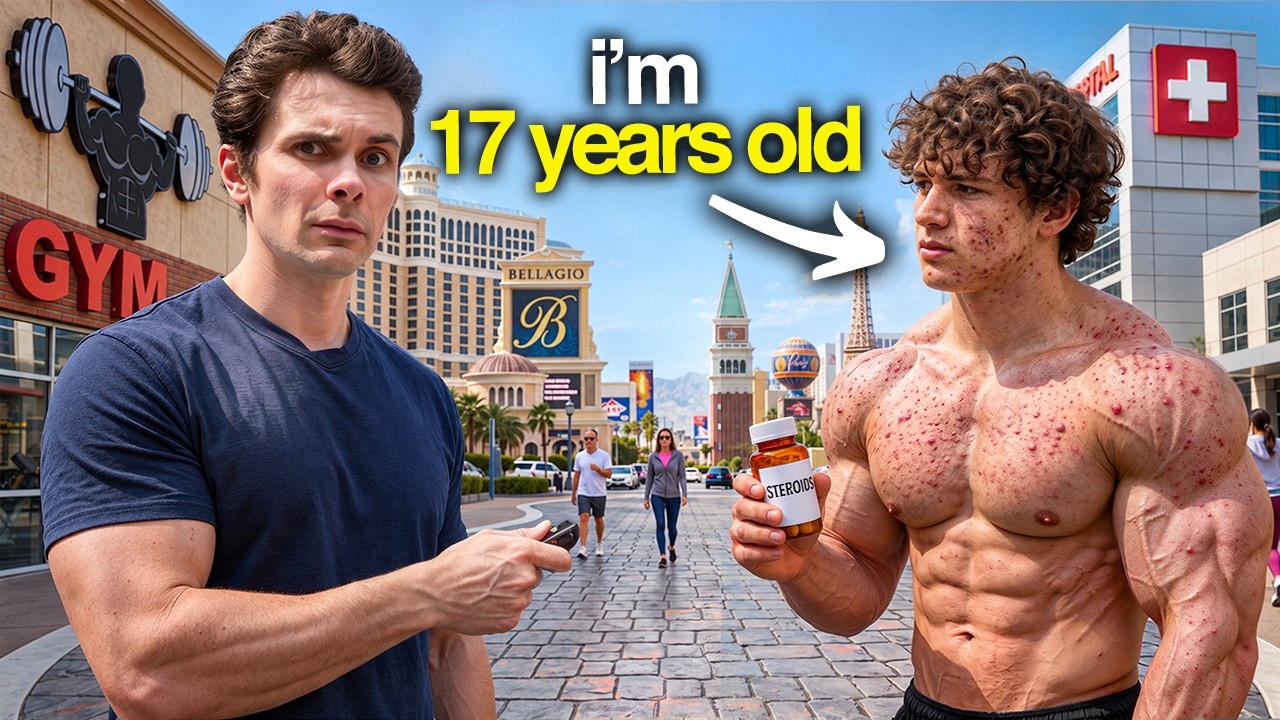
But what’s even more alarming is how young competitors are starting—some as early as 16 or 17—injecting steroids and extreme dieting in pursuit of a physique that may cost them decades of their life.
This is the dark side of modern bodybuilding that nobody wants to talk about.
Jump to:
- When Dreams Begin: The Teen Bodybuilder Pipeline
- The Most Controversial Case: Show Rybak
- A Question That Reveals Everything
- The Underground Market: How Easy Access Fuels the Problem
- What Happens to the Heart: Expert Medical Analysis
- Life at the Top: What Professional Bodybuilders Sacrifice
- Why a Champion Walked Away
- The Silent Epidemic: Disordered Eating in Bodybuilding
- Post-Competition: When the Real Battle Begins
- The Financial Reality Nobody Mentions
- Standing Among the Best: The Olympia Experience
- The Advice Veterans Give to Young Competitors
- The Pattern That Keeps Repeating
- The Impossible Choice
- Understanding the Passion
- The Warning That Needs to Be Heard
When Dreams Begin: The Teen Bodybuilder Pipeline
Logan Dushman started his bodybuilding journey like many young men—watching his father train and admiring physiques on social media. But what began as innocent inspiration quickly escalated into something far more extreme.
I was like, if that’s the top, then I want to do what it takes to get there. And I made that promise to myself when I was like 11, 12 years old.
By 17 and a half, Logan was already using performance-enhancing drugs. At approximately 260 pounds, he represents a growing trend of teenagers entering competitive bodybuilding with pharmaceutical assistance before their bodies have fully matured.
During competition preparation, his steroid regimen included multiple compounds at doses that would concern most medical professionals. His testosterone levels peaked at 3,000 ng/dL—roughly ten times the upper limit of normal for adult men.
The Mental Toll Nobody Discusses
Beyond the physical risks, Logan experienced severe psychological side effects that disrupted every aspect of his life.
Especially in the beginning, I had a lot of side effects. Mental, crazy mental side effects. It would get to the point where like I was hearing voices. It was so, so, so bad. Couldn’t sleep at all.
These weren’t minor inconveniences. The drugs interfered with his relationships, his finances, and his overall quality of life. Yet he continued, driven by an unshakeable belief that the sacrifice would be worth it.
The Most Controversial Case: Show Rybak
If Logan’s story seems extreme, Show Rybak takes it to another level entirely. His approach to bodybuilding has made him one of the most controversial figures in the sport.
Show’s peak steroid dosage reached 4,700 milligrams per week—a staggering amount that included multiple compounds stacked together. He openly admits to using these substances as a teenager, sourcing them easily online for as little as 10-20 euros per bottle.
The most I’ve ever taken is 4,700 mg. I was taking 100 mg pre-workout, so that’s 700 already, and then 2,000 mg and 2,000 mg.
Living on cream of rice, cucumbers, and nicotine vapes to suppress his appetite, Show’s daily existence 11 days before competition was nothing short of miserable. Everything hurt. Simple tasks became struggles. Yet he considered this suffering a necessary part of the process.
Visible Damage: The Scars of Accutane
Show’s chest tells a story that statistics cannot. Severe scarring covers the area—permanent damage from a combination of steroid-induced acne and Accutane treatment gone wrong.
When asked if he regretted the scarring, Show’s response was telling: he believes the sacrifice will be worth it when he becomes a professional bodybuilder. The damage is permanent, but to him, so is the legacy he’s chasing.
A Question That Reveals Everything
Both Logan and Show were asked the same hypothetical question: Would you accept dying at 40 or 45 if it meant winning Mr. Olympia?
Both answered yes without hesitation.
If my goal in life was to win the Olympia, yes, I would be willing to die for that. Yes, I would do that.
This mentality isn’t unique to these two young men. It represents a broader cultural problem within competitive bodybuilding—a “whatever it takes” attitude that prioritizes achievement over survival.
The Underground Market: How Easy Access Fuels the Problem
Part of what makes teenage steroid use so prevalent is accessibility. Meeting with an anonymous steroid dealer in Las Vegas revealed just how simple the process has become.
Operating through burner phones and word-of-mouth referrals, dealers move six figures monthly in product. The youngest customers? Kids as young as 13 or 14 years old.
Their dad’s getting a shot of testosterone every week at the clinic. They just want to be like their dad.
The dealer showed no concern about health consequences, comparing steroid risks to peanut allergies and dismissing any personal responsibility for what customers do with the products.
The Counterfeit Crisis
Black market steroids carry an additional danger most users never consider. Research has found that a significant portion of underground market drugs are either counterfeit or substandard.
Users have no reliable way to verify what they’re actually injecting. Contamination, incorrect dosing, or completely different compounds than advertised all pose serious risks. As one professional bodybuilder noted, if a manufacturer makes even a single decimal point error in certain compounds, the result can be fatal.
What Happens to the Heart: Expert Medical Analysis
To understand the cardiovascular risks, celebrity cardiologist Dr. Ernst von Schwarz provided detailed insight into how bodybuilding affects the heart.
Testosterone and growth hormone cause heart muscle cells—cardiomyocytes—to enlarge. This thickening of the ventricular walls creates a dangerous situation where the heart’s blood supply struggles to reach the inner layers of the muscle.
The thicker the muscle is, the more problems the blood vessels have to perfuse the inner layers of the heart with appropriate oxygen supply. And lack of oxygen theoretically can lead to sudden cardiac death.
Multiple Pathways to Sudden Death
Dr. von Schwarz emphasized three critical areas of concern in bodybuilders:
- Electrical activity: Arrhythmias can develop when the heart’s electrical system is disrupted by structural changes or electrolyte imbalances.
- Contractile strength: As the heart muscle thickens, pumping efficiency can decrease, leading to heart failure over time.
- Blood vessel supply: Heavy lifting creates enormous strain on the aorta and other major vessels, particularly when combined with high blood pressure.
Dr. von Schwarz revealed a particularly disturbing pattern: many bodybuilders experience aortic rupture in the bathroom, where the combination of constipation and straining creates catastrophic pressure on already-weakened blood vessels.
He has personally treated two young bodybuilders in their late 20s who died from growth hormone overdoses. Another patient died after injecting growth hormone intended for racehorses.
Competition Week: The Most Dangerous Time
Dr. von Schwarz explained why so many bodybuilders die in the week leading up to competition. Extreme dehydration combined with severe electrolyte imbalances creates the perfect conditions for life-threatening arrhythmias.
Magnesium, potassium, calcium, and sodium levels can all become dangerously abnormal. Even with a structurally normal heart, these imbalances alone can trigger sudden cardiac arrest.
Life at the Top: What Professional Bodybuilders Sacrifice
Speaking with professional and Olympia-level competitors revealed the full scope of what this sport demands.
One competitor described doing two hours of machine cardio plus 28,000 to 30,000 steps daily during prep. Another talked about legs feeling like concrete, making even climbing stairs exhausting.
Living in a three-story house, having to walk up the stairs all the time. Oh yeah. It’s true.
Physical Side Effects Professionals Experience
The list of negative effects reported by elite bodybuilders includes:
- Bad health markers: Dangerous cholesterol ratios, elevated liver enzymes, and hormonal disruption
- Water retention: Severe bloating and discomfort from certain compounds
- Higher blood pressure: Chronic hypertension that stresses the cardiovascular system
- Facial changes: Growth hormone can permanently alter facial structure, expand the jaw, and thin hair
- Body changes: Organ enlargement and structural alterations that may be irreversible
Many of these effects improve after discontinuing certain drugs, but some changes are permanent. One competitor noted that while most side effects resolved after stopping certain compounds, the question of organ growth remained uncertain.
The Relationship Casualties
Beyond physical health, relationships suffer tremendously. Multiple professionals described how the obsessive nature of competitive bodybuilding destroyed connections with family and friends.
You’re so selfish, you’re thinking about yourself, you push people away because you just want to focus on yourself and bodybuilding.
One competitor described feeling “more muted” during prep—emotionally unavailable to loved ones who were trying to support him. The sacrifice wasn’t just personal; it affected everyone around him.
Why a Champion Walked Away
One of the most revealing conversations came from a seven-time Olympia competitor who chose to retire despite having more victories in him.
His reasoning cuts to the heart of bodybuilding’s cost-benefit analysis.
If I look back on my life and I had seven Olympias, or I had more time with my family or health, I’d pick that all day.
He described the sport’s obsessive nature and how it required sacrificing many other aspects of life. With two daughters now, he realized that no amount of additional titles would compensate for missing their childhoods.
His perspective offers a stark contrast to the young competitors willing to die at 40 or 45 for an Olympia title. Experience taught him what they haven’t yet learned: there’s more to life than being the best at one thing.
The Silent Epidemic: Disordered Eating in Bodybuilding
One of bodybuilding’s darkest secrets is how commonly it triggers eating disorders—even among men who would never identify as having one.
I think most people in this sport likely have some sort of disordered eating pattern.
One professional described doing zero-carb diets for weeks at a time as a natural competitor. He would chew Fig Newtons and spit them in the trash just to taste sweetness without consuming calories.
These behaviors escalate. What starts as chewing and spitting progresses to full binge-and-purge cycles for some competitors. The patterns develop silently, often unrecognized as disordered eating because they’re normalized within the sport.
The Birthday That Meant Nothing
Another competitor shared a particularly painful moment from his contest prep. On his birthday, he felt absolutely nothing emotionally. The deprivation had numbed him completely.
I had to feel something. So a few days after my birthday, I went out and I got myself a Reuben sandwich by myself, table for one at a restaurant. I ate it. Told my coach the next day but I felt good. Just needed to feel something.
This moment captures the psychological toll of extreme dieting—when basic human experiences like birthdays become meaningless, and eating a single sandwich feels like a desperate grasp at normalcy.
Post-Competition: When the Real Battle Begins
For many bodybuilders, the period after competition proves more challenging than the preparation itself.
Wesley Vissers, fresh off a fourth-place Olympia finish in classic physique, explained why post-show becomes so difficult.
Before the show you have a goal to work towards, even though you’re hungry, it’s very easy to ignore. But the hunger increases after the show. And there’s no direct goal to say to yourself, ‘I’m hungry, but I’m still not going to eat.’
The Dangerous Rebound
Many bodybuilders gain 20 to 40 pounds in the two to three weeks following competition—not gradual weight gain, but explosive rebound driven by uncontrollable hunger and metabolic adaptation.
This rapid weight gain isn’t just aesthetic backsliding. It creates dangerous strain on the cardiovascular system through a condition called edema—fluid buildup that can overwhelm the heart and lungs.
The body interprets months of deprivation as famine. When food becomes available again, survival mechanisms kick in, driving insatiable hunger even when physically full.
You’re like, now it’s here, I’m going to take this before it’s gone again. Because your body knows for months you didn’t have this. Who knows I’m going to be in another famine mode again.
Body Dysmorphia: The Mental Aftermath
Beyond binge eating, bodybuilders face another psychological challenge: watching the physique they worked months to achieve disappear as they return to healthier body fat levels.
Wesley noted that competitors who do multiple shows per year never truly enter an off-season, staying perpetually close to stage weight. While this prevents extreme rebounds, it also means never allowing the body to fully recover.
The mental toll of always being “on” takes its toll. Some professionals struggle with severe body image distortion, unable to see themselves accurately and constantly feeling inadequate compared to their stage condition.
The Financial Reality Nobody Mentions
Wesley, who owns his own gym and trains other professionals, sees the financial struggle firsthand.
Many pro bodybuilders barely break even on competition, with travel expenses, food costs, drugs, and prep coaching fees far exceeding any prize money. Some are literally going broke pursuing their dream.
No matter how much prize money they might win, it pales in comparison to what it cost them. Not only money-wise, but also relationship-wise.
He emphasized that very few bodybuilders achieve success in both their competitive career and their overall life happiness. The sport demands such singular focus that other dimensions of life atrophy.
Standing Among the Best: The Olympia Experience
Witnessing the Mr. Olympia competition in person reveals the full magnitude of what these athletes accomplish.
Backstage, the air is thick with spray tan and nervous energy. These bodybuilders stand moments from the stage after months of hell, and it shows on their faces. Every one of them is hungry, exhausted, thirsty, and possibly on the verge of passing out.
Yet they must pose—flexing every muscle, holding their breath under scorching lights, making it all look effortless while their bodies scream for relief.
The physiques on display are truly otherworldly. These represent peak genetics combined with peak pharmaceutical enhancement, creating bodies that look like comic book characters brought to life.
The New Champion’s Perspective
Speaking with Nick Walker, the new Mr. Olympia champion, provided perhaps the most honest assessment of what it takes to reach the pinnacle.
You sacrifice like everything you have. Bodybuilding is not a sport you can do half the day. It’s all day, every day.
He described missing countless family events and parties, staying home to remain locked in on his goal. As he’s gotten older, he’s become more aware of time passing—his parents aging, opportunities lost.
But when his entire family witnessed his Olympia victory, sharing that moment together, he felt it justified every sacrifice.
The Advice Veterans Give to Young Competitors
Nearly every professional interviewed offered the same core advice to teenagers considering following their path.
Stay natural as long as possible. Let your body develop fully before introducing exogenous hormones. Train hard, eat well, and enjoy the process without drugs.
Think long-term. Your 20s are not just about tomorrow’s gains. The decisions you make now affect your health for decades.
Maintain relationships. Don’t let bodybuilding consume everything. The people who support you deserve your time and presence, not just the leftovers after training and eating.
Be honest about what you want. If professional bodybuilding is truly your goal, accept that it requires enormous sacrifice. But make sure that’s really what you want, not just what social media has convinced you to pursue.
Take your time. We live in a social media world where everybody wants to look like someone tomorrow. You got to run your own race and you have to take your time. Stay natural as long as possible. Let your body do what it do naturally.
The Pattern That Keeps Repeating
Every year, more young bodybuilders die unexpectedly. Dallas McCarver passed away at just 26. Jo Lindner, Gabriel Ganley, Dwayne Quamina—the list continues growing.
The common factors remain consistent: massive body weight, extreme drug protocols, rapid weight fluctuations, severe cardiovascular stress, and electrolyte imbalances during competition prep.
Despite these tragedies, the sport continues attracting teenagers willing to take the same risks. Social media glorifies enhanced physiques while hiding the suffering behind them. Online steroid markets make drugs accessible to 13-year-olds. And the “whatever it takes” mentality persists as a badge of honor rather than a warning sign.
Why It Won’t Stop
Wesley identified a crucial truth about why bodybuilding’s dangers continue despite mounting evidence.
There’s a lot more experimenting going on. This is kind of a gray area in bodybuilding, and I think in a few years, things will become more clear. But for now, strange things are happening.
People buy compounds online without knowing what’s actually in them. Manufacturers without medical oversight produce products where a single decimal point error could mean death. And young athletes inject these substances without proper medical monitoring, blood work, or understanding of long-term consequences.
The Impossible Choice
At its core, professional bodybuilding forces an impossible choice: health or glory, longevity or legacy.
For Logan and Show, both still teenagers, the choice seems clear. They would accept dying at 40 or 45 if it meant achieving their dream. That conviction is both inspiring in its dedication and terrifying in its implications.
But veterans like the seven-time Olympia champion who walked away tell a different story. After achieving everything the sport offers, he recognized that no trophy collection compensates for missing your children’s lives or sacrificing your health.
The truth is that you can’t know which path you’ll choose until you’re standing at that crossroads. When you’re 17, dying at 45 seems like an acceptable tradeoff for glory. When you’re 35 with a family, that calculation changes dramatically.
Understanding the Passion
Despite everything—the deaths, the health risks, the sacrifices—bodybuilding continues because for those who truly love it, nothing else compares.
The passion of these athletes is undeniable. They’re willing to risk everything for a single goal because bodybuilding isn’t just what they do—it’s who they are.
Watching competitors backstage before going on stage, seeing their families support them through months of suffering, witnessing the community celebrate together after the show—these moments reveal why people keep doing it.
It’s not just about building muscle or winning trophies. It’s about pushing human potential to its absolute limit. It’s about discipline, sacrifice, and achieving something that 99.9% of people could never accomplish.
For some people, that pursuit justifies the cost. For others, it doesn’t. There’s no universal right answer.
The Warning That Needs to Be Heard
If you’re young and considering competitive bodybuilding, understand this clearly:
The physiques you see on social media required years of training, specific genetics, and pharmaceutical assistance that comes with serious health risks. Those same drugs are easily accessible online, often impure or counterfeit, and can kill you even if you do everything “right.”
The preparation required to compete will strain every relationship you have, potentially trigger eating disorders, and likely cause psychological side effects ranging from mood swings to hallucinations. You will sacrifice your 20s—birthday parties, family gatherings, spontaneous adventures—for a goal that may never materialize.
Even if you succeed at the highest level, you may look back and wonder if it was worth it.
But here’s what makes it complicated: some people will pursue this path anyway and never regret it. For them, bodybuilding provides meaning, purpose, and fulfillment that nothing else can match.
The question you must answer honestly—without the influence of social media, gym culture, or peer pressure—is whether you’re actually one of those people, or whether you’ve simply been seduced by the image of what a bodybuilder looks like.
Because there’s a massive difference between loving bodybuilding and loving the idea of being a bodybuilder.
One will sustain you through years of suffering. The other will leave you broken, damaged, and wondering how you got there.
Choose wisely. Your life depends on it.