
Fatigue, low energy, and a fading libido send plenty of men searching for answers.
Is low testosterone the culprit, or something far less obvious?
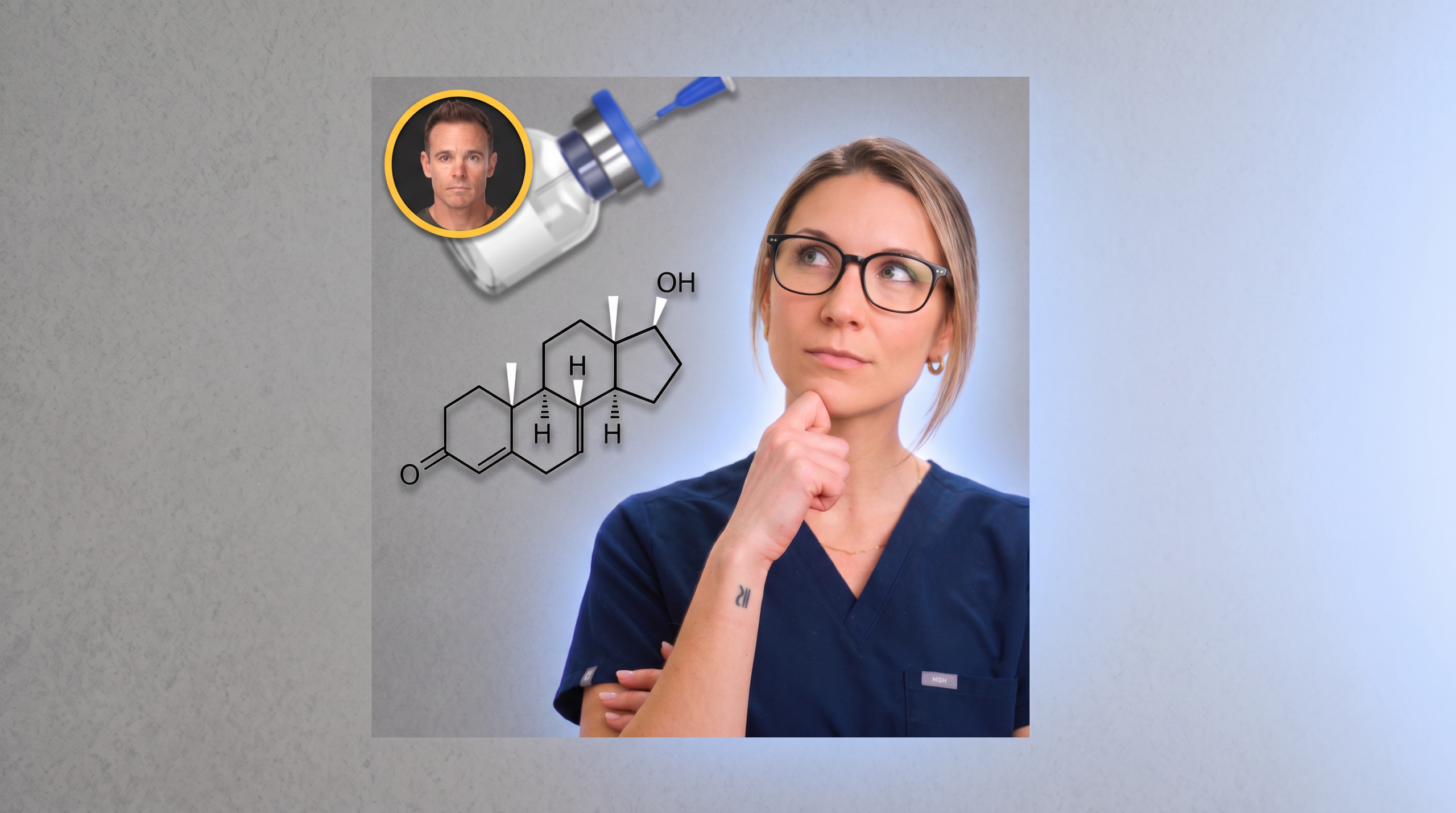
In a recent video from a Men’s Health Center, physician assistant Kristen Gump sat down with Dr. Tatum to unpack the question.
Their blunt verdict: treatment can transform some men’s lives, yet it is no miracle cure.
Keep reading for a lab-timing trap, a fertility surprise, and straight talk on prostate and heart worries.
Jump to:
Low Testosterone Is a Syndrome, Not Just a Number
A low lab value alone does not equal a diagnosis. Doctors call the true condition hypogonadism, and it needs both a measurable deficit and symptoms.
It is the existence of a low testosterone level on testing combined with clinical symptoms.
Classic signs include low sex drive, erectile dysfunction, muscle loss, fat gain, and exhaustion. Some men show low numbers yet feel fine, so they do not have the condition.
The reverse happens too. Plenty of men with every symptom turn up with normal levels.
There are a million different things. I have two small kids that don’t let me sleep and that’s what makes me tired.
Sleep quality, exercise habits, and other lifestyle factors all shape energy.
Who Should Get Tested?
Anyone with symptoms can reasonably get checked, at any age. Curious younger men can test too, purely for baseline information.
Screening becomes a priority for men over 40 with symptoms, or those with specific risk factors:
- Diabetes
- History of opioid use
- Metabolic disorders
- Transplant recipients
Why Timing Matters: Two Early Morning Draws
Testosterone follows a daily rhythm, so the bare minimum is two early morning tests, drawn before roughly 11 a.m. or noon. Younger men almost universally dip in the afternoon, which is normal and healthy.
Many clinics add estrogen, hematocrit, FSH, LH, and prolactin to rule out other causes.
The Teen Who Needed a Rest Week
One 17-year-old arrived jacked, exhausted, and stuck at gym plateaus, with a total testosterone near 90. Dr. Tatum suspected overtraining and prescribed a week off.
He comes back with repeat set of labs and he’s stone cold normal.
Once his routine allowed real recovery, he progressed again. Two measurements exist for exactly this reason.
Total Versus Free Testosterone
Roughly 98% of testosterone sits bound to proteins, mainly sex hormone binding globulin, leaving it inactive. Only free testosterone can attach to androgen receptors.
Yet guideline thresholds rest on total levels, because measuring free testosterone accurately is complex and costly. This clinic checks both, since free levels can break ties in borderline cases around 420 with strong symptoms.
Your total testosterone’s like 850, man, I feel pretty confident that testosterone is not the reason you’re tired.
The Fertility Trap Many Men Miss
Here is the shocker: testosterone does the opposite of boosting fertility. Dr. Tatum says even some doctors get this wrong.
Your testicles only have two jobs: make testosterone and make sperm.
Flood the bloodstream with outside testosterone and the pituitary stops sending FSH and LH. Testicles go idle, like a plant nobody waters.
Long-term users without add-on therapy such as HCG may notice testicular shrinkage. Penis size, the doctors stress, stays unchanged.
One patient, started elsewhere without fertility counseling, later showed zero sperm on analysis. Anyone hoping for children should discuss alternatives first, including clomiphene, enclomiphene, or HCG.
Treatment Options and Realistic Expectations
Choices span gels and creams, injections, oral formulas, slow-release pellets, and long-acting office injections. Injectables are the most common pick, balancing cost and convenience against needle phobia.
Testosterone is not magic, it’s not perfect.
A few months’ trial is fine, but most men who benefit stay on treatment indefinitely. Good sleep, exercise, diet, and management of other conditions still matter.
The real “silver bullet” moments, Dr. Tatum noted, come when men have already nailed lifestyle basics and still struggle.
What Improvements Look Like
- Energy: feeling “like myself again”
- Libido: renewed interest in sex
- Recovery: bouncing back faster after workouts
- Mood and clarity: reported often, though data conflict
Expect a follow-up at six to eight weeks, another at three months, then visits twice yearly with labs. Testosterone is a Schedule III substance in the United States, so prescriptions require renewal within six months.
Boosting Testosterone Naturally
Resistance training typically delivers the best natural bump. Whole foods rich in zinc and vitamin D support it.
If it comes in a can, a box or a drive-through, you probably shouldn’t be eating it.
Sunshine-starved regions like Indiana make vitamin D deficiency common, and some men need prescription-strength doses. Supplements patients ask about include boron, ashwagandha, and tongkat ali.
The doctors call the last two most promising, yet admit “big question marks” remain about long-term use. Their suggestion: two to three months as a catalyst alongside healthier habits.
Helping the Body Make Its Own
Clomiphene citrate, a selective estrogen receptor modulator, tricks the brain into releasing more LH and FSH. Testicles then produce more testosterone and sperm.
Enclomiphene has been hailed as a “Holy Grail” version, but clinical experience suggests it is less estrogenic only by a very small margin. Aromatase inhibitors can tame excess estrogen, yet overshooting causes low-testosterone-like symptoms and sexual dysfunction.
Estrogen, in short, matters for men just as testosterone matters for women.
Safety: Side Effects, Prostate, and Heart
Monitoring covers blood thickness (hematocrit), estrogen conversion, and PSA. Annoyances include hair loss, acne on shoulders and back, fluid retention, and occasional mood changes while doses get dialed in.
You start taking it on your own and you’re going to catch side effects. It’s just a matter of what and when.
Does It Cause Prostate Cancer?
Dr. Tatum is emphatic: testosterone does not cause prostate cancer. Studies he cites show no higher incidence, nor more aggressive disease, in treated men.
Only advanced cases requiring androgen deprivation call for stopping. Many urologists now continue treatment during care for localized disease.
What About Heart Attacks?
Older trials sparked alarm. Dr. Tatum argues that data were badly flawed, with women included and group assignments mixed up.
The newer TRAVERSE trial examined gels and creams and found no increased major cardiac events. He adds that men with untreated low testosterone were more likely to suffer heart attacks.
Important limits apply: TRAVERSE did not study injections, and findings cover prescribed doses, not gym-style super-physiologic use or other anabolics.