Another day, another headline claiming CrossFit is “dangerous” and “causes muscles to explode.” This time, the so-called “experts” are warning people about the Murph Challenge, a workout that has been a CrossFit tradition for years.
According to the Daily Mail, Michael Congdon, a former World’s Strongest Man competitor, and Jessica Johnson, a 25-year-old fitness enthusiast, were both hospitalized with rhabdomyolysis after attempting the workout. The reports describe agonizing pain, swollen limbs, and dangerously high levels of muscle breakdown. In Congdon’s case, doctors feared kidney failure, while Johnson nearly required surgery to relieve muscle pressure.
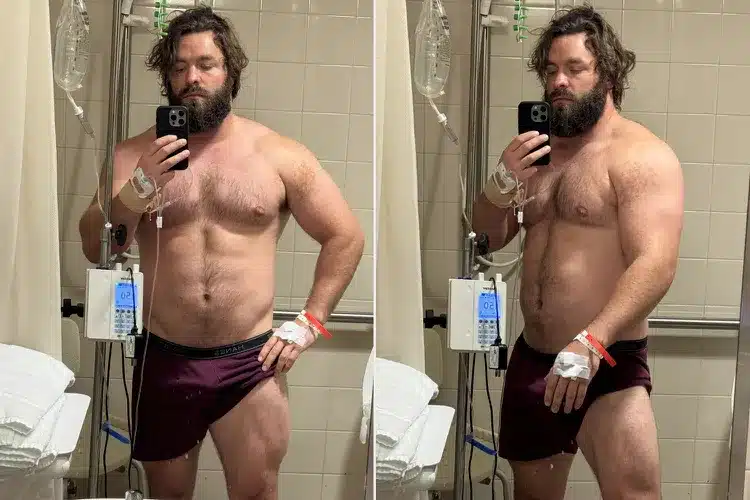
Scary? Yes. But does this mean the Murph Challenge is dangerous? Absolutely not. These cases aren’t about CrossFit—they’re about lack of preparation, improper scaling, and pushing too hard without knowing your limits.
And yet, the media is running with another sensationalist fitness horror story, ignoring the real lessons behind these incidents.
Jump to:
What Is the Murph Challenge, Really?
The Murph Challenge is not some reckless workout designed to hurt people. It’s a tribute to Lt. Michael Murphy, a Navy SEAL who was killed in Afghanistan. It’s a grueling test of endurance and mental strength:
- 1-mile run
- 100 pull-ups
- 200 push-ups
- 300 air squats
- 1-mile run
For those who are conditioned and prepared, Murph is tough but manageable. But like any challenging physical feat, it requires proper training, scaling, and respect for your own fitness level.
Yet, mainstream media loves a sensationalist fitness horror story.
Rhabdomyolysis: Rare, But Preventable
The fear-mongering headlines make rhabdomyolysis sound like something that happens to every CrossFitter. It doesn’t.
Yes, rhabdomyolysis (or “rhabdo”) is a real condition that occurs when muscle tissue breaks down too quickly, releasing toxic proteins into the bloodstream. But it’s extremely rare when people train smart.
It’s not just a “CrossFit problem.” Rhabdo has been reported in:
- Marathon runners
- Triathletes
- Football players in preseason training
- Military recruits going through boot camp
Does that mean running is dangerous? Should we stop playing football? Of course not. Context matters.
Dr. Raeeda Gheewala, a sports nephrologist, warns that rhabdo is a medical emergency. And she’s right. But her statement that the Murph Challenge is “high risk” is misleading. It’s only a risk if people fail to prepare, ignore warning signs, and don’t scale the workout properly.
What Really Happened to Congdon and Johnson?
Now let’s talk about Michael Congdon and Jessica Johnson, the two athletes at the center of this story.
Congdon, a former World’s Strongest Man competitor, admitted he had done only four CrossFit workouts before attempting Murph. Let’s put that into perspective:
- He’s built for strength, not endurance.
- He didn’t train for high-rep bodyweight exercises.
- He jumped straight into an elite-level workout without adaptation.
He even said, “I came in unprepared.” That’s the key takeaway—not that Murph is dangerous, but that he wasn’t ready for it.
Johnson’s story is similar. She did 50 strict pull-ups in one session, which is an extreme workload for someone not conditioned for it. The next day, her arms were swollen and painful—classic signs of doing too much, too soon.
Both cases could have been prevented with proper scaling, hydration, and listening to their bodies.
How to Do Murph Safely (Like Thousands of CrossFitters Do Every Year)
The Murph Challenge isn’t going away. It’s a symbol of discipline and perseverance. But if you’re going to do it, do it the right way:
- Scale it to your level – If 100 pull-ups are too much, do banded pull-ups or ring rows. Can’t run a mile? Walk.
- Train properly – Don’t jump into Murph if you haven’t been practicing high-rep bodyweight movements.
- Stay hydrated – Rhabdo risk increases when you’re dehydrated and overtrained.
- Listen to your body – If your muscles feel abnormally swollen, stiff, or painful, stop. Dark urine? Get checked immediately.
- Work with a coach – A good CrossFit coach will not let you overdo it.
Dr. Milica McDowell, a CrossFit trainer and exercise physiologist, puts it best:
“Any good workout coach knows how to modify this workout to keep people safe.”
That’s the truth. Murph is only dangerous when ego gets in the way of smart training.
Final Thoughts: Don’t Let Fearmongering Stop You From Training
The Murph Challenge isn’t dangerous. CrossFit isn’t dangerous. Irresponsible training is.
If the media actually talked to experienced CrossFitters, they’d know that thousands of people complete Murph safely every year. But that story doesn’t generate clicks, does it?
The takeaway is simple: Respect the workout. Train smart. Scale when needed. Listen to your body. Do that, and you’ll be fine.
But if you jump into an extreme workout without preparation? That’s not CrossFit’s fault. That’s yours.