Most adults have lost nearly half of their hip mobility without even realizing it.
That’s according to movement specialists who’ve noticed a troubling pattern: everyday tasks like squatting down, picking something up off the floor, or even playing with kids start feeling harder than they should.
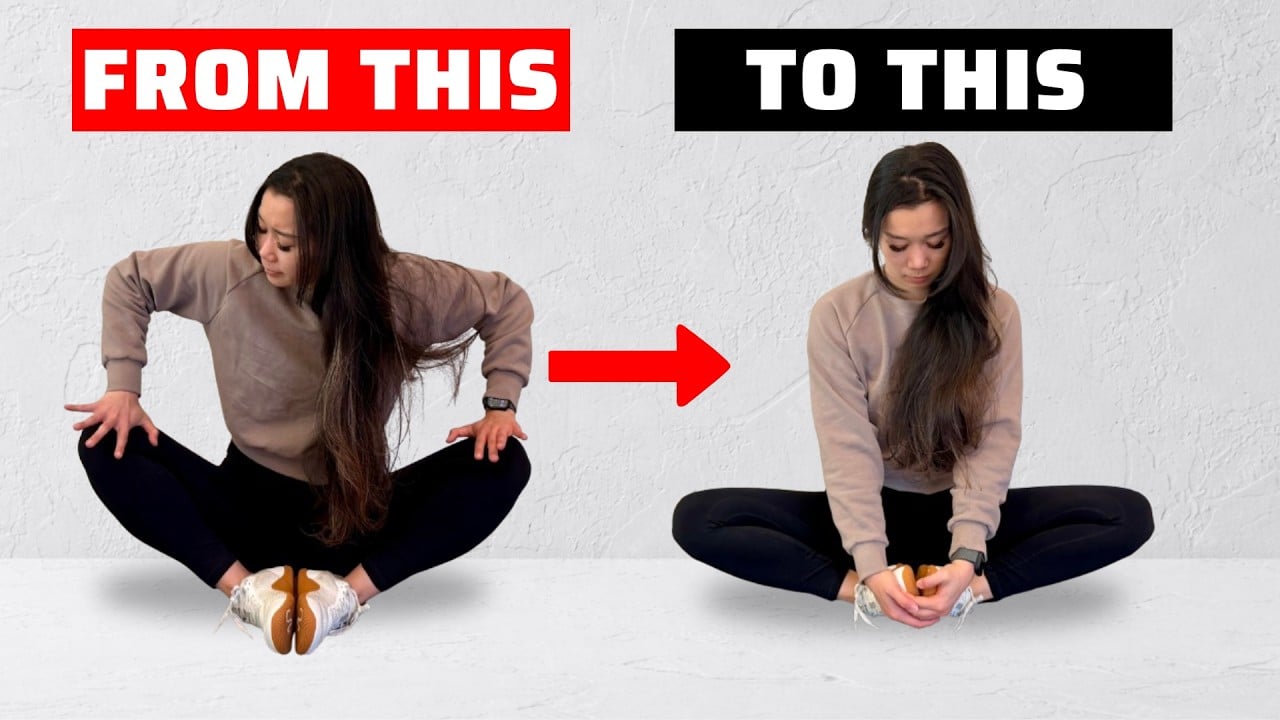
The problem isn’t just tight hips—it’s that most people are stretching the wrong way.
Stretching alone rarely fixes the issue because hips need to move in three specific directions to stay healthy, and most movement routines ignore at least two of them.
Jump to:
The Quick Test That Reveals Hidden Hip Dysfunction
There’s a simple way to check if hip mobility has started slipping away.
Sit down and try placing one ankle over the opposite knee. If that position feels stiff or uncomfortable, the hips are probably missing external rotation—one of the first movements many adults lose.
External rotation is what allows crossing an ankle over the knee when sitting. Internal rotation enables the hip to rotate inward during walking, running, or squatting. Most adults are extremely limited in both.
Movement Pattern #1: Restoring Hip Rotation
Hip rotation—both external and internal—forms the foundation of healthy hip function.
External Rotation: The Incline Bench Drill
One effective method uses an incline bench or even the arm of a couch.
Place the outside of one knee on the edge and hinge forward through the hips while keeping the back tall. From there, gently push the knee into the surface and come back up using the glutes—not the lower back.
The work should be felt deep in the hip and glutes. Moving slowly through about 8 to 10 controlled reps helps rebuild this lost movement pattern.
Internal Rotation: The PNF Technique
Internal rotation is actually what most people are missing, according to movement experts.
To restore it, lie on the stomach and place a heavy resistance band around one foot. Pull the band so the hip rotates inward toward end range, then hold that position for 30 seconds.
Next, gently press against the band for about 10 seconds. After relaxing, there will be noticeably more range of motion available.
Hold the new position for another 30 seconds and repeat the process two more times. This works because it uses a technique called PNF (proprioceptive neuromuscular facilitation), which essentially tricks the nervous system into allowing more range of motion.
Movement Pattern #2: Opening Hip Flexion
Hip flexion allows deep squatting, stair climbing, and bringing knees toward the chest.
But when sitting all day, the front of the hips becomes stiff and weak—a dangerous combination.
The Extended Lunge Method
Instead of just stretching hip flexors, this drill opens the front of the hip while simultaneously building strength.
Step into a long lunge and bring the back leg as far behind as possible. From there, squeeze the glute of the back leg as hard as possible. The stretch should run through the front of the hip and thigh.
For an added challenge, gently lift the back knee off the ground. This adds strength to the position and teaches the hip to control that extended range.
Starting with 8 to 10 reps per side provides noticeable benefits within just a few sessions.
Movement Pattern #3: Building Strength in Open Positions
Most people stop after restoring rotation and opening hip flexion, but this third step is actually what makes mobility improvements stick long-term.
The Horse Stance: Where Mobility Meets Strength
Once rotation is restored and the front of the hips are opened, the final step involves building strength in positions that open hips even further.
The horse stance accomplishes exactly that.
Start by taking a wide stance and turning toes slightly outward. Slowly sit down between the hips while trying to stay as tall as possible through the torso.
Focus on keeping knees tracking in line with feet as you lower down.
Settling into this position creates a stretch along the inner thighs and hips—specifically the adductors. For many people, these muscles become extremely stiff from years of sitting.
This position opens those muscles while simultaneously building strength in hips and legs.
Progression Tips for Beginners
If the horse stance feels difficult at first, that’s completely normal.
Holding onto a wall, counter, or doorway allows control over depth. The goal isn’t forcing depth—it’s gradually building strength in the open position.
Starting with 20 to 30-second holds works well, then slowly increasing range of motion as improvement occurs.
Why Strengthening Open Positions Changes Everything
One of the reasons movement specialists favor the horse stance is simple: it doesn’t just stretch hips.
It builds strength while hips are open, which is what helps mobility improvements last.
Many clients have made significant mobility gains simply by practicing this position consistently. The body adapts to positions it spends time in, so strengthening open hip positions literally rewires movement patterns.
The Three-Direction Protocol for Lasting Hip Health
Instead of throwing random stretches at stiff hips, focusing on restoring the movements hips actually need produces far better results:
- Hip rotation (both external and internal)
- Hip flexion (opening the front while building strength)
- Strength in open positions (making mobility permanent)
Practicing these movements just a few times weekly helps most people notice their hips feel looser, stronger, and far less restricted.
When hips move better, everything from squatting to walking tends to feel easier. Daily activities that once felt challenging—getting up from the couch, bending down to tie shoes, playing with children—suddenly require less effort and create less discomfort.
The key isn’t doing more stretching. It’s doing the right movements in the right sequence, then building strength to lock in those gains for good.