Ancient Tibetan monks practiced five simple movements multiple times daily, believing they held secrets to longevity and vitality.
These weren’t grueling exercises or extreme yoga poses.
Instead, they paired deliberate movement with intentional breathing—a practice modern practitioners still claim is key to anti-aging.
While stretching focuses on flexibility, the Five Tibetan Rites emphasize something deeper: energizing and rejuvenating the entire body through breath-synchronized movement.
Jump to:
The First Rite: Spinning for Vestibular Health
The opening movement seems almost childlike in its simplicity—spinning in circles with arms extended wide.
Practitioners traditionally spin clockwise, keeping eyes focused on a single point with each rotation. This stimulates the vestibular system, which controls balance, coordination, and spatial awareness.

If you want something simple that actually works, this is one of the most effective tools I’ve used to build strength, conditioning, and endurance without needing a full gym setup.
- Full-body training with one weight using swings, squats, and presses
- Solid cast iron build that feels stable and lasts for years
- Comfortable grip that makes high-rep workouts easier to handle
Without a strong vestibular system, bodies feel stiff, uncoordinated, and unbalanced. Movement becomes difficult as the nervous system grows fearful of spatial disorientation.
Children naturally develop vestibular function through rolling, crawling, jumping, climbing, and spinning. Yet most adults spend entire days locked in upright positions, neglecting this crucial system.
Tibetan monks discovered spinning restores this lost function remarkably efficiently. Beginners should start conservatively—perhaps five spins—to build tolerance before progressing. Spinning in both directions offers additional benefits once dizziness tolerance increases.
The Second Rite: Lying Leg Raises
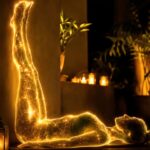
From a supine position with arms alongside the body and chin tucked, practitioners lift straight legs while coordinating breath—inhaling during the ascent, exhaling during descent.
The body’s midline contains tremendous power potential. When hinging at hips from this position, core muscles and hip flexors become primary movers, strengthening the body’s center.
This movement reverses chronically slumped-forward posture while developing active hamstring flexibility.
If you want something simple that actually works, this is one of the most effective tools I’ve used to build strength, conditioning, and endurance without needing a full gym setup.
- Full-body training with one weight using swings, squats, and presses
- Solid cast iron build that feels stable and lasts for years
- Comfortable grip that makes high-rep workouts easier to handle
The breathing component may deliver the most significant benefits. James Nestor, author of Breath, reports that pairing Tibetan Rites with intentional breathing completely transformed his lung volume and posture.
The Third Rite: Kneeling Back Bend
Kneeling with hands positioned on hips or lower back, practitioners lift their chin and arch backward—breathing in during the backbend, exhaling upon return.
Ancient wisdom held that spinal health determines youthfulness. Stiffness there creates rigidity throughout all movements.
Whether sitting at computers or performing physical labor, modern life keeps bodies constantly in spinal flexion. This movement provides the exact opposite—a reverse hip hinge gently encouraging torso opening in rarely-explored directions.
The chest and ribcage expand, creating additional space for breathing. Neck and jaw muscles finally relax. Hip flexors, where most people harbor tension, receive much-needed relief.
The Fourth Rite: Reverse Tabletop
Starting seated with legs extended and hands beside hips, practitioners lift their hips while pressing hands into the ground, allowing heads to drop backward. Breathing coordinates with movement—inhaling while rising, exhaling while lowering.
If you want something simple that actually works, this is one of the most effective tools I’ve used to build strength, conditioning, and endurance without needing a full gym setup.
- Full-body training with one weight using swings, squats, and presses
- Solid cast iron build that feels stable and lasts for years
- Comfortable grip that makes high-rep workouts easier to handle
Daily activities cause the body’s posterior chain to essentially shut down. Reactivating these muscles proves crucial for bodily balance.
Glutes and hamstrings achieve full engagement at peak position. The posterior shoulder—an area that weakens from constant forward arm positioning—activates in ways most people rarely experience.
For those managing shoulder issues, this movement serves as an essential daily practice. It functions like push-ups for the body’s backside, creating the balance modern posture desperately needs.
The Fifth Rite: Upward to Downward Dog
Beginning in upward-facing dog position with hands supporting shoulders and hips low, practitioners transition to downward dog by pressing hips upward and backward while straightening knees maximally.
Breath synchronizes perfectly—inhaling during upward dog, exhaling during downward dog.
While hearts pump blood automatically, lymphatic fluid and cerebrospinal fluid lack their own pumping mechanisms. Rhythmic spinal movement pumps these fluids, removing waste products and lubricating vertebrae.
If you want something simple that actually works, this is one of the most effective tools I’ve used to build strength, conditioning, and endurance without needing a full gym setup.
- Full-body training with one weight using swings, squats, and presses
- Solid cast iron build that feels stable and lasts for years
- Comfortable grip that makes high-rep workouts easier to handle
This explains morning stiffness and lethargy after prolonged sitting. Bodies require movement for survival.
This simple exercise alone can restore energy and vitality during lethargic states.
How Many Repetitions Are Optimal?
Many beginners start with just three repetitions per movement. Traditional practice builds toward 21 repetitions, though nine repetitions per exercise works ideally for most practitioners.
Nine reps deliver complete benefits in approximately five minutes—minimal time investment for maximum return.
The Mind-Body Connection
Performing this routine outdoors without musical distraction amplifies benefits. Just practitioner and breath, moving deliberately through each rite.
This approach de-stresses the nervous system, opens critical joints, and energizes the spirit in ways modern exercise often misses.
If you want something simple that actually works, this is one of the most effective tools I’ve used to build strength, conditioning, and endurance without needing a full gym setup.
- Full-body training with one weight using swings, squats, and presses
- Solid cast iron build that feels stable and lasts for years
- Comfortable grip that makes high-rep workouts easier to handle
The Five Tibetan Rites prove that anti-aging and vitality don’t require extreme measures, expensive equipment, or hours of training. Simple movements paired with intentional breathing create profound physiological changes.
Ancient monks understood something modern science continues validating—that breath-synchronized movement awakens dormant body systems, pumps essential fluids, reverses postural dysfunction, and restores youthful energy.
Perhaps the fountain of youth was never hidden in exotic locations or expensive treatments. Maybe it existed all along in five simple movements, performed with intention, breath, and consistency.