Gregory Nistal just discovered what he calls “the dark side” of kettlebell training—and it humbled him completely.
In a recent unedited training session, the popular kettlebell coach brought in specialist Levi Marquardt to introduce his team to an advanced protocol that made everything else feel like “a walk in the park.”
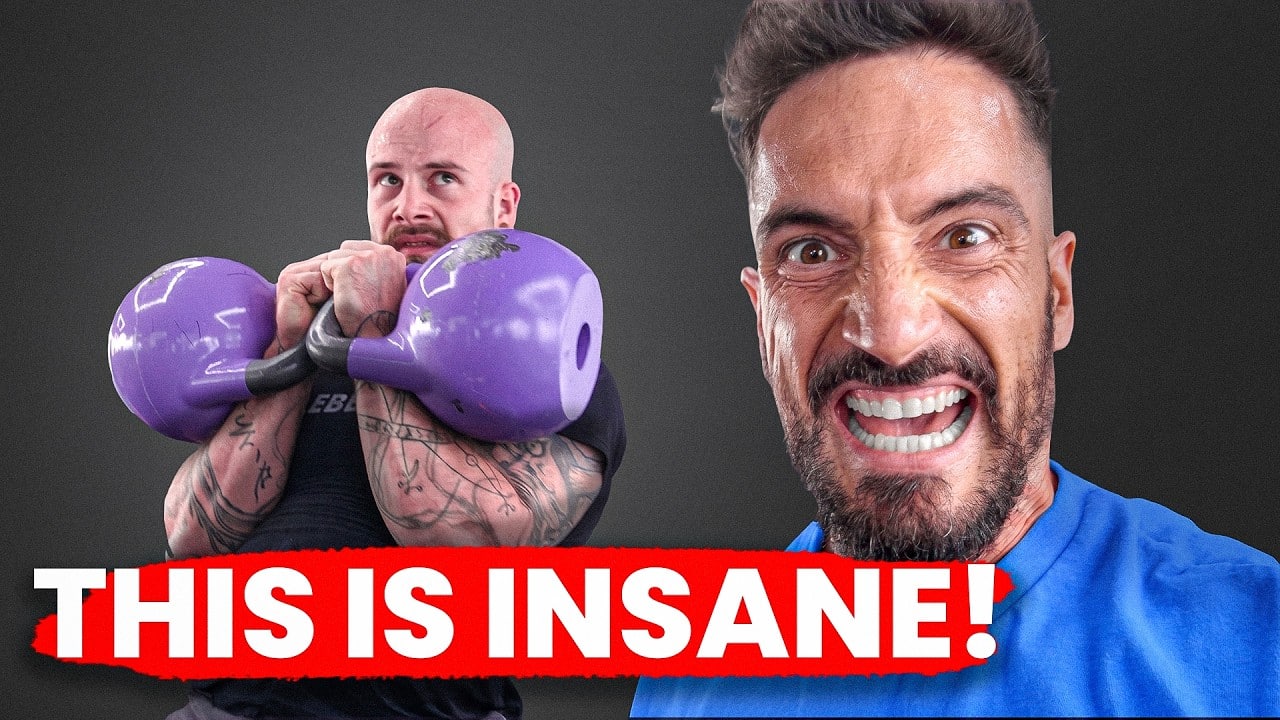
What followed was two minutes of work that left experienced lifters gasping, sweating, and questioning their fitness levels.
This wasn’t your typical kettlebell workout—this was real kettlebell training.
Jump to:
- The Protocol That Changes Everything
- Breaking Down the Brutal Workout
- Placement Economy: The Setup Nobody Talks About
- When Experience Meets Humility
- Why This Approach Differs From Standard Kettlebell Programs
- The Mental Game of Timed Sets
- Rest Strategy: Sitting vs. Walking
- The Finisher: Suitcase Walks
- Key Takeaways From the Session
- Always Seek the Bigger Fish
The Protocol That Changes Everything
Marquardt’s system revolves around time constraints and condensed rep schemes borrowed from kettlebell sport methodology. Unlike traditional strength training, this approach prioritizes pace first, load second.
Nistal explained the core difference during the session.

If you want something simple that actually works, this is one of the most effective tools I’ve used to build strength, conditioning, and endurance without needing a full gym setup.
- Full-body training with one weight using swings, squats, and presses
- Solid cast iron build that feels stable and lasts for years
- Comfortable grip that makes high-rep workouts easier to handle
What’s critical about Levi’s system is the idea of time constraints. You’re focused on working for time as well as condensing reps into that time sequence.
The workout required three pairs of kettlebells: light, moderate, and heavy. Each set lasted one minute with specific rep targets that had to be completed within tight 20-30 second windows.
Breaking Down the Brutal Workout
The training session consisted of alternating half snatches and long cycles across three different bell weights.
Set One: Light Bells
- Four half snatches and two long cycles
- Repeated every 20 seconds
- Completed three times within one minute
Set Two: Moderate Bells
- Three half snatches and two long cycles
- Every 20 seconds
- Three rounds total
Set Three: Heavy Bells
- Three half snatches and three long cycles
- Completed in 30 seconds
- Six total reps condensed into half a minute
Between each set, athletes had exactly two minutes of rest. Those two minutes felt simultaneously too short and desperately needed.
Placement Economy: The Setup Nobody Talks About
Before the workout began, Marquardt emphasized something most lifters overlook: bell placement strategy.
When I go into a set, I want to maximize my work time and my rest time. I’ll hit my first set here. I’m going to rest right here. I’ll hit my second set here. I’m going to rest right here.
This seemingly minor detail becomes critical when you’re working with such condensed time frames. Every second counts, and scrambling to find your bells wastes precious recovery time.
Marquardt continued explaining the rationale behind precise placement.
If you want something simple that actually works, this is one of the most effective tools I’ve used to build strength, conditioning, and endurance without needing a full gym setup.
- Full-body training with one weight using swings, squats, and presses
- Solid cast iron build that feels stable and lasts for years
- Comfortable grip that makes high-rep workouts easier to handle
You got to make sure all your technique is on time, and you are engaged with each rep because you want to complete that within a minute, but finish your reps. If it takes you a minute five, you just get less rest.
When Experience Meets Humility
What made this training session particularly revealing was watching seasoned kettlebell practitioners struggle with the protocol.
Nistal himself had to drop down to double 12kg bells—something he hadn’t done in years. His reaction captured the intensity perfectly.
I can’t believe this. I have to go down to the double 12. I’ve been doing this for a long time now. And I never got back down to the 12. But I’m forced to.
The session revealed an important truth: volume under time constraints is an entirely different beast than traditional strength work.
Why This Approach Differs From Standard Kettlebell Programs
Nistal has extensive experience with popular kettlebell programs—Simple & Sinister, Dan John protocols, and various other systems. Yet this training exposed a gap in his knowledge.
Once you advance from the initial beginner stages, you do all these sorts of workouts, right? You do Simple & Sinister. You do ABC. You do whatever acronym you want from Dan John, from Geoff, from whoever. Once you take it up to this stage, everything else pales in comparison and looks like a walk in the park.
The kettlebell sport methodology Marquardt employs focuses on building resiliency rather than chasing fatigue. You’re not grinding through endless reps to exhaustion—you’re developing the capacity to maintain pace under pressure.
The Mental Game of Timed Sets
Beyond physical demands, this protocol introduces significant psychological challenges.
If you want something simple that actually works, this is one of the most effective tools I’ve used to build strength, conditioning, and endurance without needing a full gym setup.
- Full-body training with one weight using swings, squats, and presses
- Solid cast iron build that feels stable and lasts for years
- Comfortable grip that makes high-rep workouts easier to handle
Athletes must maintain perfect technique while racing the clock. Each rep must be executed correctly, but there’s no time for deliberation or reset between movements.
Nistal reflected on this during a brief rest period.
This is unlike anything I have ever trained. And I know these exercises. Half snatch, long cycle. I use them, too. But this volume approach—this is insane.
The mental fortitude required to push through discomfort while maintaining proper form separates this from casual training.
Rest Strategy: Sitting vs. Walking
An interesting detail emerged during rest periods: different recovery strategies among the athletes.
Marquardt opted to sit completely still and recover passively. Nistal preferred walking around during rest intervals—what he calls “throwing the trash out.”
Neither approach is definitively better. The heavier your working weight, the more complete rest makes sense. For lighter loads, active recovery through walking can help dissipate lactate.
If you want something simple that actually works, this is one of the most effective tools I’ve used to build strength, conditioning, and endurance without needing a full gym setup.
- Full-body training with one weight using swings, squats, and presses
- Solid cast iron build that feels stable and lasts for years
- Comfortable grip that makes high-rep workouts easier to handle
Nistal acknowledged this nuance thoughtfully.
These are minor differences. This is not canon that we’re not agreeing on or that is different. He likes to sit or obviously has heavier weights, but I like to walk around. But maybe if I chose his weights, you can bury me in a casket.
The Finisher: Suitcase Walks
After completing the primary protocol, the team added a simple but effective finisher: one-minute suitcase carries.
This loaded carry variation involves holding a single kettlebell at your side and walking for 60 seconds, then switching sides for another minute.
Benefits of suitcase carries include:
- Core stabilization through anti-lateral flexion
- Grip endurance development
- Postural awareness under load
- Active recovery that promotes blood flow without excessive fatigue
Nistal explained his preference for this particular finisher.
I love that exercise because it’s not taxing. It doesn’t challenge you that much. You don’t have to grab the heaviest bell, but it includes walking, which I’m a big fan of.
Key Takeaways From the Session
This training revealed several important principles for anyone serious about kettlebell development:
If you want something simple that actually works, this is one of the most effective tools I’ve used to build strength, conditioning, and endurance without needing a full gym setup.
- Full-body training with one weight using swings, squats, and presses
- Solid cast iron build that feels stable and lasts for years
- Comfortable grip that makes high-rep workouts easier to handle
- Time constraints change everything – Adding strict time limits transforms familiar exercises into entirely new challenges
- Pace trumps load initially – Focus on maintaining consistent rep speed before increasing weight
- Setup matters more than you think – Strategic bell placement maximizes both work and rest quality
- Volume builds capacity differently – High-rep protocols under time pressure develop unique adaptations
- Humility accelerates learning – Being willing to drop weight and perfect technique leads to faster progress
Always Seek the Bigger Fish
Perhaps the most valuable lesson from this session wasn’t about reps, sets, or specific techniques.
Nistal summarized the broader principle beautifully in his closing remarks.
I think I have a decent enough understanding, but now I was humbled and realized that there’s more to it. There’s always a bigger fish. And that’s exactly what you’re supposed to be hunting for if you become knowledgeable in a subject—always aim for more knowledge.
This mindset—seeking challenge, embracing discomfort, and remaining open to new approaches—separates those who plateau from those who continually improve.
Kettlebell training offers endless depth for those willing to explore beyond beginner protocols. What feels impossible today becomes baseline capacity tomorrow—if you’re brave enough to step into the dark side.