Fitness expert Jeff Cavaliere recently tackled one of strength training’s most thought-provoking questions: if limited to just 10 exercises for life, which ones make the cut?
His selections prioritize longevity, joint health, and functional strength—principles he wishes he’d embraced decades earlier.
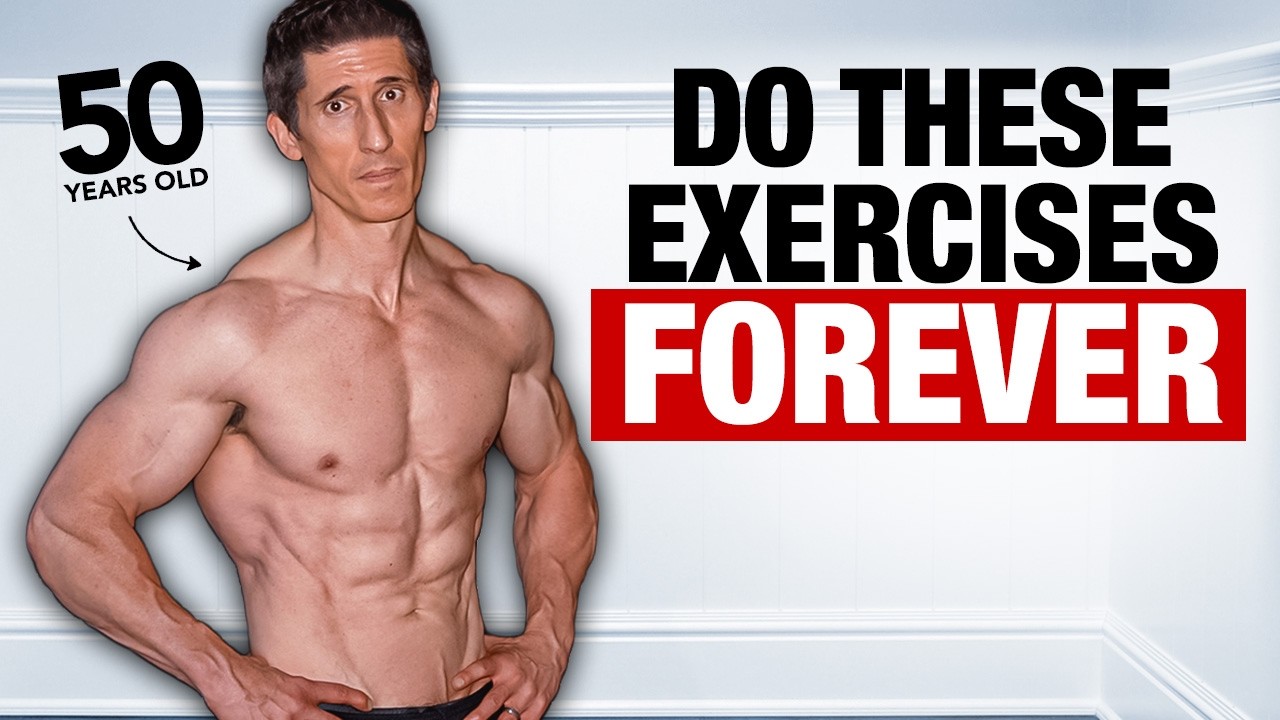
The list isn’t designed for geriatric populations alone.
Instead, it represents exercises that build strength while protecting joints, ensuring pain-free training well into your 50s, 60s, and beyond.
Jump to:
- Box Squats: Confidence Through Safety
- Reverse Lunges: Knee-Friendly Leg Development
- 30-Degree Incline Dumbbell Press: Functional Upper Body Strength
- High Pulls: Not Upright Rows
- Pull-Ups: Lifelong Strength Standard
- Seated Cable Rows: Versatile Back Builder
- Barbell Curls: Maintaining Wrist Mobility
- Lying Tricep Extensions: Dual-Purpose Development
- Cable Pull-Throughs: Automatic Hip Hinge
- Face Pulls: Neglected Muscle Rehabilitation
Box Squats: Confidence Through Safety
Cavaliere’s first pick addresses a common fear among older lifters: getting pinned under heavy weight.
Box squats eliminate this concern while correcting form errors that plague traditional squats.
The box gives you that target point. So, initially, just as you start the rep, if you’re not performing the exercise properly by having some available hinge in your hips, this is going to force you to do that because you have to hinge to actually start to align your butt with the box you’re about to sit on.
The physical target prevents knee-dominant squatting patterns that strain backs and hips. Cavaliere recommends positioning boxes slightly below parallel to ensure proper depth while providing reassurance rather than dependence.
Reverse Lunges: Knee-Friendly Leg Development
Stepping backward instead of forward transforms lunges into a joint-protective exercise.
For those battling knee pain, this directional change proves transformative.
Beyond knee relief, reverse lunges address frontal plane stability—an often-neglected movement pattern. Standing on one leg forces glute medius activation to prevent hip dropping, strengthening muscles that combat lower back pain.
Key execution tips:
- Step back and out, not in a straight line
- Maintain wide base for stability
- Twist torso slightly over forward knee
- Focus on strength, not balance challenges
30-Degree Incline Dumbbell Press: Functional Upper Body Strength
Bench pressing maintains relevance at any age, providing strength needed for fundamental movements like rising from the floor.
Cavaliere favors dumbbells over barbells for superior joint friendliness, particularly regarding shoulder health.
The 30° incline bench press seems to be the best angle for balancing out your ability to use heavy enough weights to continue to get strong, but at the same time being protective enough on your shoulders.
This specific angle allows adequate loading while minimizing shoulder stress. Proper technique includes pulling shoulders down throughout, targeting the lower outer chest, and controlling tempo to eliminate unnecessary joint strain.
High Pulls: Not Upright Rows
Cavaliere clarifies this exercise differs fundamentally from upright rows—a movement he’s long criticized for shoulder health concerns.
High pulls maintain wrists above elbows, creating external rotation instead of the internal rotation that damages shoulders over time. This positioning targets middle and rear deltoids while keeping joints healthy.
The closer dumbbell position reduces moment arm length, allowing heavier loads than lateral raises while maintaining similar muscle activation patterns.
Pull-Ups: Lifelong Strength Standard
Perhaps controversial, Cavaliere insists everyone should perform pull-ups “from now until the day they die.”
The pull-up is that ultimate measuring stick. It’s not easy, but it doesn’t mean that it should be forgotten.
For those unable to complete bodyweight versions, band assistance provides a legitimate progression path. Using bands to offset 60-70% of bodyweight allows proper movement patterns while building toward unassisted performance.
Pull-ups develop comprehensive upper body pulling strength—arms, forearms, grip, and back working synergistically. This coordination counters gravitational forces that literally pull bodies downward with age.
Seated Cable Rows: Versatile Back Builder
Seated variations eliminate lower back limitations that plague barbell rows, especially for those with existing pain or weakness.
Elbow positioning determines muscle emphasis:
- Narrow grip, tucked elbows: Lat development
- Wide elbows, higher position: Rear deltoid targeting
The cable setup accommodates heavier loads than traditional rear delt isolation exercises while maintaining proper shoulder extension throughout the movement.
Barbell Curls: Maintaining Wrist Mobility
Cavaliere’s “vain” selection carries deeper purpose beyond bicep development.
Barbell curls require—and maintain—basic wrist supination mobility that shouldn’t diminish with age. Those struggling with proper positioning often lack shoulder mobility rather than wrist flexibility, as internal shoulder rotation rotates hands inward.
Rather than defaulting to EZ-curl bars as compensation, addressing underlying mobility restrictions preserves functional movement patterns while building arm strength.
Lying Tricep Extensions: Dual-Purpose Development
Overhead tricep work targets the long head—the largest portion of the muscle—more effectively than elbow-extension-only movements.
The overhead position provides unexpected benefits: passive lat stretching. Since lats are powerful internal shoulder rotators that tighten from chronic sitting, this exercise simultaneously builds triceps while improving overhead mobility.
Progressive stretching occurs naturally through consistent training, addressing mobility restrictions without dedicated flexibility work.
Cable Pull-Throughs: Automatic Hip Hinge
Proper hip hinging represents the “ticket to a pain-free low back for the rest of your life,” according to Cavaliere.
If you can allow the glutes to drive hip extension, then your low back won’t be trying to do it all the time and do the job that the glutes aren’t doing for you right now.
Cable pull-throughs teach proper mechanics automatically. Rope tension pulls exercisers into correct positioning without conscious technique focus—simply step far enough away for backward pull, maintain slight arch, and drive forward with glutes.
Unlike Romanian deadlifts, which permit back rounding and technique errors, pull-throughs enforce proper movement patterns mechanically.
Face Pulls: Neglected Muscle Rehabilitation
Cavaliere’s signature exercise addresses muscles receiving “almost zero attention” in most programs.
Face pulls replace light-dumbbell isolation movements—those “pink dumbbell exercises” performing T’s, Y’s, and W patterns—with socially acceptable, heavier-loaded alternatives.
Pulling cables toward the face while raising arms overhead targets:
- Lower trapezius
- Middle trapezius
- Rear deltoids
- Rhomboids
This muscle group receives inadequate stimulus from popular back exercises, creating imbalances that compromise posture and shoulder function. Face pulls blend mobility improvement with strength development, delivering benefits that compound over years.
These 10 exercises represent more than arbitrary favorites—they form a framework for sustainable, joint-protective strength development across decades. Implementation during younger years establishes movement patterns and joint health that pay dividends later, while adoption at any age protects function moving forward.