Jeff Cavaliere, founder of Athlean-X, recently broke down the 12 essential exercises that should form the foundation of every training program.
His list isn’t just about building muscle—it’s about creating a complete, balanced approach to strength and mobility.
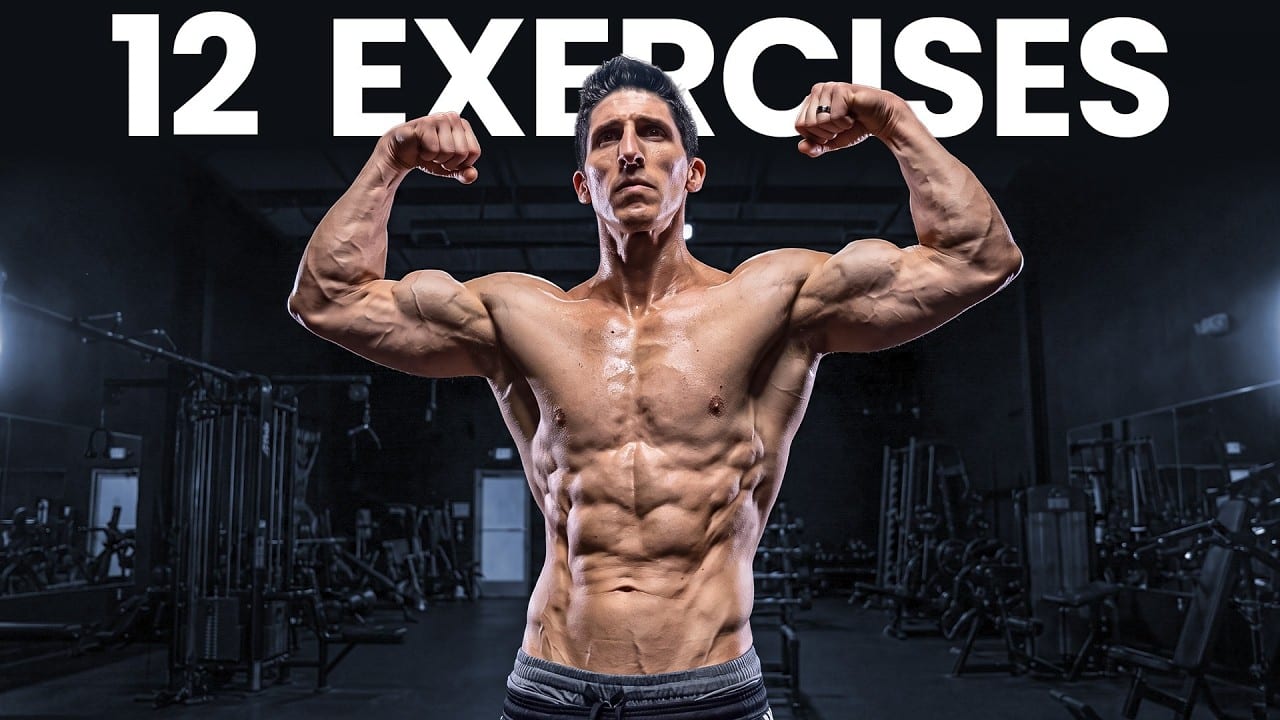
Even better, he addresses the elephant in the room: what to do when orthopedic issues or limitations threaten to derail your progress.
Spoiler alert: there’s always a way forward.
Jump to:
- The King of Lower Body: Squats
- The B-Side: Deadlifts for Posterior Chain Dominance
- Bench Press: The Upper Body Foundation
- Pull-Ups: The Non-Negotiable Back Builder
- Face Pulls: The Upper Body Posterior Chain Solution
- Rotator Cuff Work: The Shoulder Insurance Policy
- Lunges: Multi-Dimensional Lower Body Training
- Push-Ups: Not Your Average Bodyweight Exercise
- Overhead Press: Vertical Plane Pressing
- Lying Triceps Extensions: Targeting Two-Thirds of Arm Size
- Barbell Curls: Simple but Effective Biceps Growth
- Barbell Rows: Horizontal Pulling Perfection
The King of Lower Body: Squats
Cavaliere kicks off his list with what he calls “the king of all lower body exercises”—the squat. This powerhouse movement hits quads, glutes, adductors, and hamstrings while training one of life’s most fundamental movement patterns.
Hell, even getting up and down off the toilet every day is going to require that you know how to squat.
But what if knee or back issues make traditional squats impossible? Cavaliere emphasizes that limitations don’t mean elimination.
Alternative squat variations include:
- Bulgarian split squats for back issues
- Box squats for patellar tendinitis
- Goblet squats or drop squats for those unable to handle heavy loads
The bottom line? You’re not allowed to skip leg day, and you’re definitely not allowed to skip squats—provided you can do at least one variation.
The B-Side: Deadlifts for Posterior Chain Dominance
If squats are the A-side of lower body training, deadlifts represent the crucial B-side. This exercise targets the posterior chain while teaching the essential hinge pattern.
The hinge is not simply bending over at the waist, but letting your hips sit back as you bend over at the waist. That is a key difference because if you can learn how to master this, you not only will become much more efficient in all of your lower body exercises, but you’ll be protecting your low back at the same time.
For those experiencing back pain during deadlifts, Cavaliere suggests mat-elevated versions or trap bar deadlifts. Those few inches can make all the difference.
Bench Press: The Upper Body Foundation
Rounding out the “big three,” the bench press earns its spot as the king of pushing exercises. Beyond chest development, it provides substantial shoulder and triceps stimulation.
Shoulder pain during bench press? Cavaliere reveals a surprisingly simple solution: slow down your reps dramatically.
This approach addresses whether the problem stems from structural issues or stability deficits. Most often, it’s stability that’s lacking.
Pull-Ups: The Non-Negotiable Back Builder
Pull-ups appear in every Athlean-X program for good reason—Cavaliere considers them one of the absolute best back exercises, period.
It demands not only a great amount of strength to pull your entire bodyweight up to the bar, but it requires you to be able to do so with a rigid torso, meaning you have to be able to keep good core stability from your feet all the way up to your fingertips.
The exercise scales beautifully in both directions. Too easy? Add weight around your waist. Too difficult? Use a resistance band for assistance.
Face Pulls: The Upper Body Posterior Chain Solution
Cavaliere’s beloved face pull makes its inevitable appearance on the list, and for excellent reasons. This versatile movement simultaneously trains three commonly neglected areas: upper back, rotator cuff, and scapular retractors.
Equipment flexibility makes face pulls accessible anywhere—cables at the gym, bands at home, or even a towel and weight if that’s all you have available.
Rotator Cuff Work: The Shoulder Insurance Policy
External rotation exercises aren’t just buzzwords in Cavaliere’s programming—they’re essential insurance for shoulder health.
The rotator cuff muscles are the only muscles that externally rotate the shoulder. So, if you’re not making a considered effort to work in some exercise that does this, I don’t care what the rest of your program looks like. This is one muscle imbalance that you’re creating that you’re not going to be able to overcome, at least not at the expense of the health of your shoulder.
Simple banded external rotations or sideline dumbbell external rotations get the job done. It doesn’t have to be sexy—it just has to be effective.
Lunges: Multi-Dimensional Lower Body Training
Lunges complement the sagittal plane exercises already covered by introducing frontal and transverse plane movement.
Cavaliere particularly favors reverse lunges for their kindness toward anterior knee issues. However, side lunges and drop step lunges provide valuable variation.
Body positioning during lunges shifts emphasis between muscle groups. Leaning forward targets the posterior chain more effectively, while maintaining an upright torso emphasizes quad development.
Push-Ups: Not Your Average Bodyweight Exercise
Push-ups earn their spot, but only when performed at the appropriate difficulty level. Knocking out 30-50 regular push-ups? Time to increase the challenge.
The remarkable variability of push-ups makes them programmable in countless contexts—as intense primary exercises or as finishers in drop sets.
Overhead Press: Vertical Plane Pressing
Balancing horizontal pressing with vertical movement, overhead presses complete the pressing equation. For those experiencing shoulder impingement or instability issues, single-arm dumbbell variations often provide pain-free alternatives.
This allows better joint stacking—wrist over elbow over shoulder—which typically introduces the stability necessary for comfortable pressing.
Advanced trainees can incorporate explosive push presses or simply alternate between barbells and dumbbells for variety.
Lying Triceps Extensions: Targeting Two-Thirds of Arm Size
Direct arm work begins with triceps, which comprise two-thirds of upper arm mass. Lying triceps extensions place the long head—the meatiest portion—under significant stretch.
Proper execution requires maintaining arms in a slightly-back-from-vertical position throughout, never allowing full vertical alignment that would reduce triceps tension.
Progressive variations include:
- Skull crushers for moderate overhead stretch
- JM presses for reduced stretch with heavier loading capacity
Barbell Curls: Simple but Effective Biceps Growth
Biceps training doesn’t require complexity. Barbell curls allow heavier loading and advantageous cheat rep options.
I can load the exercise up a little bit heavier than usual, and I get the benefits of the cheat rep option, where I can load up the weight and take advantage of that heavy eccentric overload, which I believe is the number one stimulus that has led to the bicep growth that I have.
Dumbbells, bands, or combination approaches provide variety while addressing different strength curves throughout the movement.
Barbell Rows: Horizontal Pulling Perfection
Complementing vertical pulls with horizontal pulling, barbell rows complete the back development equation. Proper execution demands mastery of the hip hinge to prevent excessive lower back stress.
Cavaliere’s “dead row” variation combines deadlift benefits in the initial portion with explosive rowing, allowing heavier loading while maintaining proper form.
The variation matters less than including some form of horizontal row in your programming.
These 12 exercises create a comprehensive foundation addressing all major movement patterns, muscle groups, and planes of motion—with built-in alternatives ensuring nearly everyone can execute them safely and effectively.