Protein recommendations seem to be all over the map.
One expert says 0.8 grams per kilogram. Another claims you need 400 grams daily. A third insists anything over 20 grams per meal is wasted.
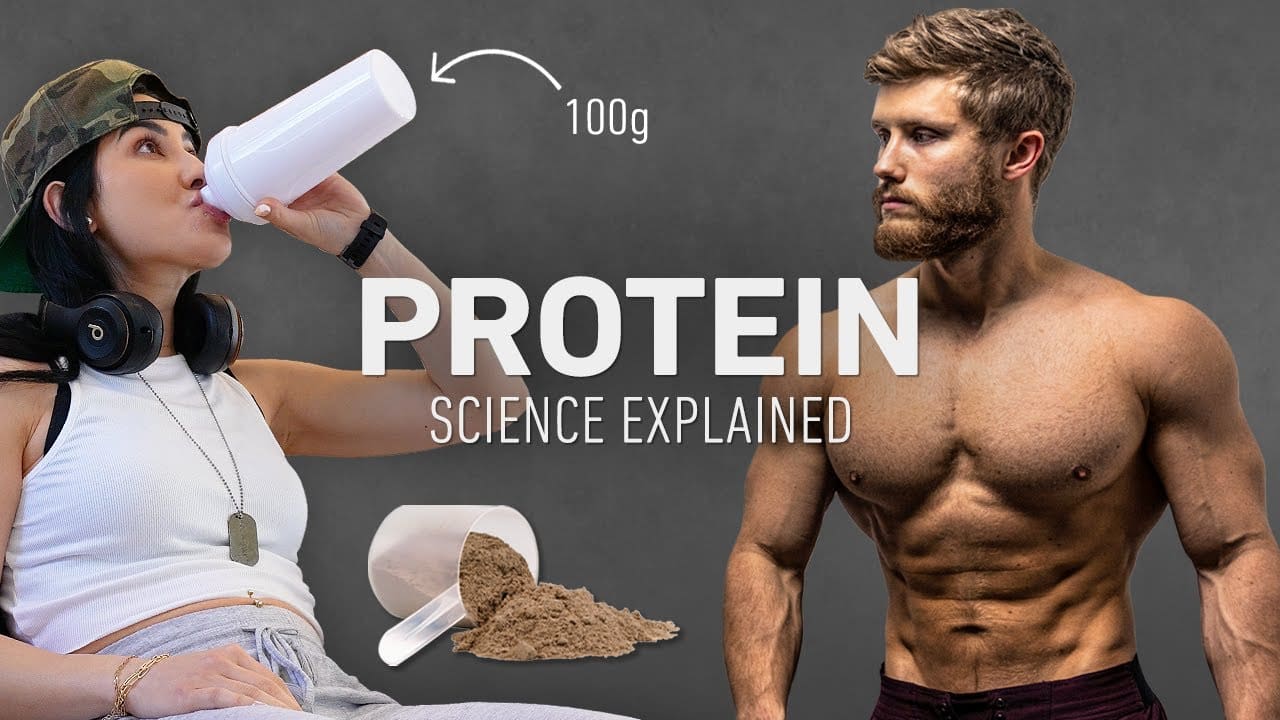
So what does the actual science say about how much protein you really need to build muscle, lose fat, and stay healthy?
Fitness researcher and coach Jeff Nippard recently broke down all the evidence-based answers in a comprehensive video—and the truth might surprise you.
Jump to:
- The Baseline: What General Health Requires
- When You’re Bulking: Lower End Works Fine
- When You’re Cutting: Bump It Up
- Recomping: A Middle Ground
- Can You Absorb All That Protein in One Meal?
- Protein Quality: Does It Really Matter?
- Protein Timing: Does the Anabolic Window Exist?
- Is High Protein Safe?
- What Matters Most
The Baseline: What General Health Requires
The World Health Organization sets the bar low: just 0.8 grams of protein per kilogram of body weight, or about 0.36 grams per pound.
For someone weighing 180 pounds (roughly 80 kilograms), that translates to only 65 grams of protein daily. “This ground turkey and rice bowl with a glass of milk has 65 grams of protein and that would have me covered for the day,” Nippard explains.
But here’s the catch: this recommendation was designed for general health, not muscle growth. It doesn’t account for weight training, athletic performance, or body composition goals.
Many protein researchers have called for higher intakes given mounting evidence of health benefits—especially for those who lift weights.
When You’re Bulking: Lower End Works Fine
During a bulk, your body is well-fed with plenty of calories. Carbs and fats get burned first, meaning muscle tissue is rarely tapped for fuel.
Because of this safety buffer, you can get away with less protein. Sports nutrition research recommends 1.6 to 2.2 grams per kilogram (0.7 to 1 gram per pound) of body weight daily.
For that 180-pound person, that’s roughly 125 to 180 grams per day. Notice how the classic “1 gram per pound” rule sits comfortably at the high end—a reliable guideline that continues to hold up.
When You’re Cutting: Bump It Up
Cutting changes everything.
You’re eating fewer calories, storing less glycogen, and carrying less body fat. Your body becomes far more likely to break down muscle tissue for energy.
To prevent this, the best data suggests increasing protein to 1.8 to 2.7 grams per kilogram (0.8 to 1.2 grams per pound).
The trusty “1 gram per pound” guideline now sits in the middle of the range. If you’re already lean and training hard, aim higher. If you’re carrying more body fat and training recreationally, the lower end will suffice.
Recomping: A Middle Ground
During a recomp phase—building muscle while losing fat at maintenance calories—most lifters can use the same protein targets as bulking.
Since you’re eating at maintenance, muscle loss risk remains low as long as training intensity stays high. However, going slightly higher may offer advantages, especially if you’re in a slight deficit or more advanced.
For those carrying extra body fat, Nippard offers a simpler solution borrowed from researcher Eric Helms: aim for 1 gram of protein per centimeter of height.
Someone who’s 6 feet tall (183 cm) would target around 183 grams of protein. “This works shockingly well especially if you’re at a higher body fat,” he notes.
Can You Absorb All That Protein in One Meal?
Short answer: yes.
The answer to the question how much protein can you absorb in a single meal is all of it.
Your body can absorb enormous amounts of protein—more than you could comfortably eat. But absorption just means nutrients pass from your intestine into your bloodstream.
The real question: how much can you use for muscle growth?
Early research suggested 20 to 25 grams was the ceiling. Anything beyond that supposedly went to waste. But newer studies challenge this notion.
A 2016 study showed higher muscle protein synthesis with 40 grams of whey versus 20 grams after a full-body workout. Another found greater synthesis from 70 grams of beef compared to 35 grams.
Plus, the intermittent fasting crowd—many of whom are quite muscular—regularly consume 50 to 100 grams of protein per meal without issue.
Bottom line: total daily protein matters far more than per-meal amounts. Still, spreading intake across 3 to 5 meals likely optimizes digestion and keeps muscle protein synthesis elevated throughout the day.
Protein Quality: Does It Really Matter?
Protein quality hinges largely on leucine content—the amino acid that triggers mTOR and sparks muscle growth.
To maximize the anabolic response, you want around 3 grams of leucine per meal. Here’s how different sources stack up:
- Whey protein: Just 29 grams delivers 3 grams of leucine for only 145 calories
- Chicken breast: 40 grams of protein hits the mark at roughly 200 calories
- Whole wheat bread: You’d need over 2,000 calories to get 3 grams of leucine
Animal proteins generally contain more leucine per calorie than plant sources. However, vegan protein powders like soy, pea, and brown rice isolates close the gap significantly.
Beyond leucine, the DIAAS score measures how well a protein provides all nine essential amino acids (EAAs). Again, dairy and animal proteins lead—but here’s the key insight:
These tables show isolated proteins. In real life, people eat varied diets. As long as total daily protein is sufficient, you’ll almost certainly get enough leucine and EAAs.
“This isn’t something I personally nitpick over and it’s why I think protein quality is actually much less important than many people realize,” Nippard says.
Vegans should aim toward higher protein ranges or supplement with high-quality blends like pea and brown rice combinations that mimic whey’s amino acid profile.
Protein Timing: Does the Anabolic Window Exist?
Remember the old myth about needing protein within 30 minutes post-workout or your gains disappear?
Debunked years ago.
As long as your pre- and post-workout meals fall within roughly 4 to 6 hours of each other, you’re maximizing the anabolic response. The exception: fasted training. If you train on an empty stomach, consume protein as soon as possible afterward.
A potentially more important timing factor? Pre-sleep protein.
Research from protein scientists Jorn Trommelen and Luc van Loon suggests consuming roughly 40 grams of protein before bed improves overnight muscle protein synthesis.
However, two longitudinal studies comparing casein before bed versus morning found no significant difference after 8 to 10 weeks—though both groups consumed very high protein overall (around 1 gram per pound).
Once again, total daily intake trumps specific timing.
Is High Protein Safe?
Absolutely—at least for healthy individuals.
According to the International Society of Sports Nutrition, there is “no controlled scientific evidence indicating that increased intakes of protein pose any health risks in healthy exercising individuals.”
The amounts recommended here have decades of safety data. Studies testing intakes as high as 4.4 grams per kilogram (2 grams per pound) consistently report no harmful effects.
High protein intakes have actually been linked to various health benefits beyond muscle growth.
What Matters Most
After reviewing mountains of research, here’s the hierarchy:
- Total daily protein is king—this alone drives 90% of results
- Meal distribution (3 to 5 meals) provides mild optimization
- Protein quality matters somewhat, especially for vegans
- Timing offers marginal benefits, mainly for fasted training or overnight fasts
Hit your daily target first. Everything else is fine-tuning.
For bulking, aim for 0.7 to 1 gram per pound. When cutting, bump it to 0.8 to 1.2 grams per pound. Recomping sits somewhere in between, with overweight individuals using the “1 gram per centimeter of height” guideline.
Spread intake across multiple meals when practical. Consider 40 grams before bed if you’re serious about optimization. And if you’re plant-based, lean toward higher ranges or quality protein blends.
Beyond that? Stop overthinking it and focus on consistent training and sleep—the true foundations of muscle growth.