Scientists recently uncovered something remarkable about gut health that challenges everything most people think they know about probiotics and fermented foods.
A new study tested all major nutrients to identify which one has the strongest impact on gut bacteria balance.
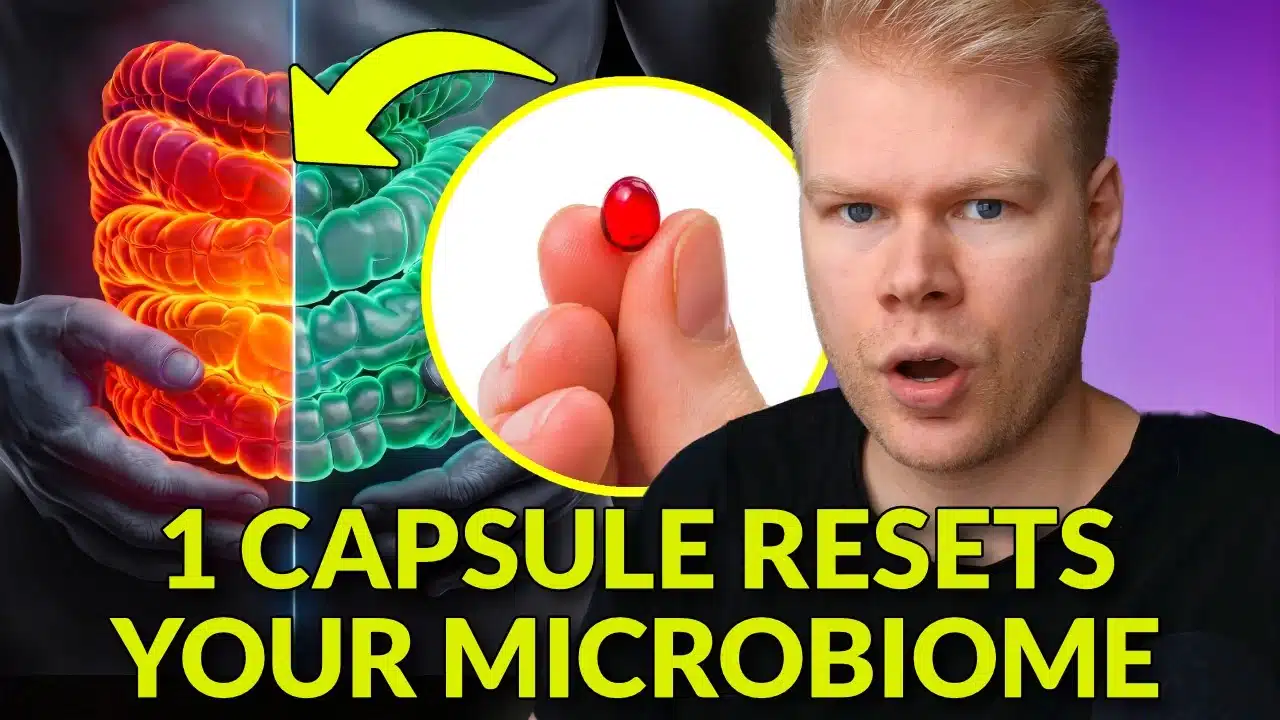
The winner wasn’t zinc, wasn’t magnesium, and wasn’t even one of the trendy supplements flooding Instagram.
It was a common vitamin available at any pharmacy for just a few dollars—and its effects on the microbiome completely dominated every other nutrient tested.
Jump to:
- The Gut Health Myth Most People Believe
- The Vitamin That Controls Your Entire Microbiome
- Three Ways Vitamin A Protects Your Gut
- Food Sources: Where to Get Vitamin A
- The Beta-Carotene Conversion Problem
- The Vitamin D Connection Nobody Talks About
- Should You Supplement Vitamin A?
- The Key Insight From the Research
- The Bottom Line on Vitamin A and Gut Health
The Gut Health Myth Most People Believe
Many assume gut health comes down to good bacteria fighting bad bacteria in an endless microscopic war.
While bacterial competition does occur, that’s not actually how your body maintains microbial balance. Your body operates its own sophisticated management system that goes far deeper than simply adding probiotics.
Intestinal lining produces protective mucus layers. Immune cells release specialized compounds controlling microbial growth. Antimicrobial substances patrol the digestive tract continuously. And the intestinal barrier determines what stays inside the gut and what enters the bloodstream.
When these systems function properly, beneficial bacteria thrive while harmful microbes struggle to take over. But when they break down, the gut ecosystem can shift rapidly—often in dangerous directions.
The Vitamin That Controls Your Entire Microbiome
Researchers discovered that vitamin A plays a central role in regulating virtually all the systems that keep gut bacteria balanced.
This wasn’t a small study looking at one or two bacterial strains. Scientists examined the entire microbiome—analyzing how different nutrients affected both beneficial and harmful bacteria across the board.
Out of every nutrient tested, vitamin A produced the biggest changes in microbiome composition and activity. Removing it from the diet caused the largest negative shifts, while reintroducing it stabilized everything remarkably fast.
Most people know vitamin A supports vision and immune function. Almost nobody connects it to gut bacteria—yet this study shows it has the strongest effect on the microbiome by far.
Three Ways Vitamin A Protects Your Gut
Based on existing research, vitamin A supports gut health through three critical mechanisms that most people never consider.
Maintains the Protective Mucus Barrier
Intestines are lined with a mucus layer that acts as a protective shield between gut bacteria and intestinal cells.
Beneficial bacteria live comfortably within this layer without causing problems. Harmful microbes have difficulty penetrating through to reach underlying tissues. When vitamin A levels drop, this barrier weakens, making it easier for unwanted bacteria and toxins to irritate gut lining.
Strengthens Immune Surveillance
Vitamin A promotes production of secretory IgA—essentially your gut’s security system.
This antibody patrols the digestive tract, identifying microbes that don’t belong. It binds to bacteria, viruses, and invaders before they cause damage. Secretory IgA helps your immune system distinguish between friends and foes, determining which visitors get tolerance and which require control.
Produces Natural Antimicrobial Compounds
Vitamin A supports creation of antimicrobial substances that target harmful bacteria after identification.
Unlike antibiotics that wipe out all bacteria indiscriminately, these compounds are produced continuously in small amounts to maintain order. They prevent any single group of microbes from completely dominating the gut ecosystem.
Food Sources: Where to Get Vitamin A
The most bioavailable sources come from animal products containing preformed vitamin A (retinol).
- Liver (beef, chicken, or fish)
- Egg yolks
- Grass-fed butter
- Fatty fish
Plant foods like sweet potatoes, pumpkin, and carrots provide beta-carotene, which the body converts into vitamin A. But this conversion process isn’t as straightforward as many assume—and relying solely on plant sources often creates problems.
The Beta-Carotene Conversion Problem
Converting beta-carotene into active vitamin A depends heavily on strong thyroid function and adequate thyroid hormones.
People with underactive thyroids who don’t consume enough animal sources of vitamin A can develop deficiency symptoms even when eating plenty of beta-carotene-rich foods. There’s also a genetic variation in the BCMO1 gene that makes this conversion significantly less efficient in certain individuals.
This is what researchers call a functional deficiency—where beta-carotene sits in your system but never gets converted into usable vitamin A.
The Vitamin D Connection Nobody Talks About
There’s an inverse relationship between vitamin A and vitamin D at high supplemental doses.
When one increases dramatically, the other decreases. Many people now take very high doses of vitamin D supplements—often 5,000 to 10,000 IU daily—which can create an imbalance between these two fat-soluble vitamins over time.
This is one reason isolated high-dose vitamin D supplementation without monitoring vitamin A levels can be problematic for long-term health.
Should You Supplement Vitamin A?
Vitamin A supplementation is controversial because high doses have been linked to toxicity and birth defects. Nearly every vitamin A supplement carries warnings about these risks.
However, supplements have their place—particularly for those with functional deficiencies from thyroid issues, genetic conversion problems, or imbalanced vitamin D intake.
Recommended Dosage and Forms
For addressing deficiency, 3,000 to 10,000 IU daily of retinol palmitate or retinol acetate is generally recommended.
As with all fat-soluble vitamins, caution is essential. Vitamin A accumulates in liver and other tissues when taken at high doses for extended periods. Starting at lower doses and monitoring response is wise.
The Cod Liver Oil Solution
One teaspoon of quality cod liver oil daily covers the recommended daily allowance for both vitamin A and vitamin D without disrupting their natural ratio.
While technically a food rather than a supplement, cod liver oil’s concentration makes it feel supplement-like. It provides a balanced approach that respects how these nutrients interact in the body.
The Key Insight From the Research
Most benefits in the study emerged after correcting a deficiency—not from megadosing.
You don’t need extraordinarily high amounts of vitamin A to see microbiome improvements. You simply need adequate retinol levels, especially when implementing gut health protocols.
This creates optimal conditions for probiotics and prebiotics to actually work. Without sufficient vitamin A, those expensive supplements may be entering an environment where they can’t thrive—no matter how high quality they are.
The Bottom Line on Vitamin A and Gut Health
Before loading up on probiotics, fermented foods, or specialized gut supplements, ensure your body has the nutrients needed to manage bacteria already living there.
Vitamin A supports the mucus barrier, strengthens immune surveillance, and produces antimicrobial compounds—all critical for maintaining a balanced microbiome. Without it, even the best probiotics face an uphill battle.
Focus on getting adequate vitamin A through a combination of animal-based foods and possibly cod liver oil. Monitor your vitamin D intake to avoid creating imbalances. And if you suspect thyroid issues or genetic conversion problems, consider working with a healthcare provider to assess whether targeted supplementation makes sense.
The research is clear: this affordable, overlooked vitamin may be the missing piece in your gut health puzzle.