Overhead shoulder mobility isn’t just about impressive party tricks or advanced gymnastics moves.
It’s essential for pain-free daily living and long-term joint health.
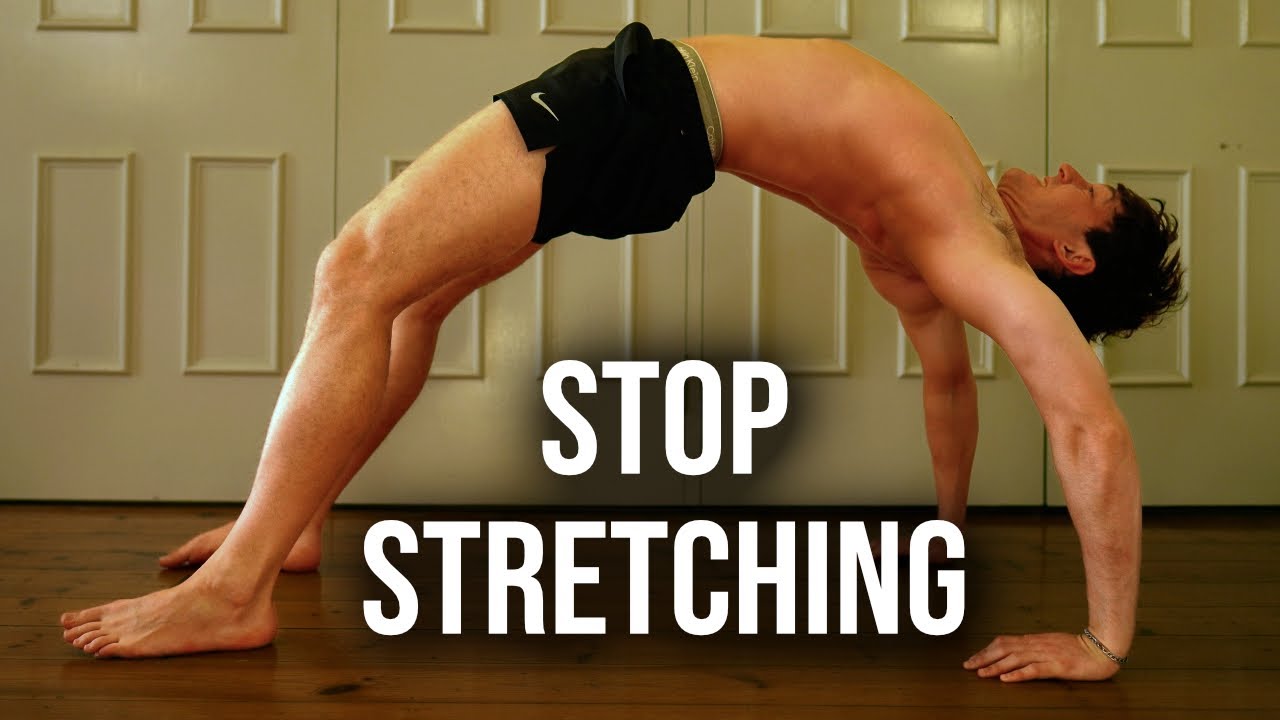
Yet most people struggle to flex their shoulders overhead comfortably, assuming they simply need to stretch more or that they’re naturally inflexible.
The truth is far more interesting—and the solution takes less than five minutes a week to achieve permanent results.
Jump to:
Why Your Shoulders Won’t Move (And Why Stretching Won’t Fix It)
The common assumption about limited shoulder mobility is dead wrong. Most people believe tight muscles or a stiff joint capsule holds them back, leading to endless stretching routines that produce minimal lasting results.
The real culprit? Your nervous system is deliberately limiting your range of motion as a protective mechanism.
Think about catching a basketball hurled from across the court. You jump up, reaching overhead with your shoulder fully flexed. If your strength in that overhead position is weak and the ball hits your hand hard, what happens?
Without adequate strength to resist the force, something has to give—muscle damage, tendon injury, or worse, damage to the shoulder joint itself. These injuries require extended recovery and often result in irreversible joint damage.
Your body desperately wants to avoid this scenario.
So it implements a simple safety protocol: your nervous system regulates how deeply you can move into shoulder flexion by creating muscle tension before you venture too far. It’s not that your muscles are inherently short or your joints inferior—your body is simply keeping you safe from positions where you lack the strength to protect yourself.
The Strength-Flexibility Connection
This protective mechanism reveals the solution. To unlock more range of motion, build strength specifically adjacent to the range you want to improve.
As strength increases through consistent practice, you prove to your body through repetition that moving through that range is safe. You demonstrate the ability to pull back out of deep positions even under load.
Over time, new range becomes accessible naturally—no warm-ups required, no 30-minute relaxation routines. Just functional range available immediately, whenever needed.
If your shoulders aren’t flexing, we’re not dealing with a loosen up the muscles and prey problem here. We need to actually build an upper body that can move through that range of motion uninhibited.
Understanding Shoulder Flexion Anatomy
Overhead shoulder mobility—technically called shoulder flexion—comes from a combination of three areas:
- Shoulder joint mobility
- Scapula movement
- Thoracic spine mobility
The muscles that elongate during shoulder flexion and therefore need strengthening are those responsible for shoulder extension—bringing your arm down from overhead. This primarily involves lats, pecs, and supporting muscles.
But here’s what matters most: the specific muscles don’t actually matter.
Whatever limiting factor exists for your body will get targeted first automatically. As you progress, the adaptation process continues naturally. Focus on building the movement and improving strength near end range, and the muscles will adapt accordingly.
The Five-Minute Protocol That Changes Everything
The method is remarkably simple and requires only a wall, your bodyweight, and intentional effort.
Setup and Positioning
Find a sturdy wall where you can place both hands. Gymnastics rings or a hip-height bar work equally well.
Place hands on the wall roughly level with your hips, arms completely straight. From this position, you’ll move toward end range by thinking about bringing your chest down toward the ground.
The key angle to focus on: the angle between your torso and upper arm (humerus). Don’t get distracted by hip position, foot placement, or shoulder height—just concentrate on increasing this single angle.
Finding Your Working Range
Gradually increase the angle until tension appears. This signals proximity to your current limit—exactly where you want to work.
You don’t need to reach absolute end range. Just get near enough to feel involuntary tension in the stretched muscles.
The Contraction That Unlocks Range
Once positioned with mild tension, perform shoulder extension against the stretch. Your cue: try bringing your hands down to the ground with straight arms, like closing a car trunk or pulling down a garage door.
Flex those muscles with every ounce of strength you have in them. And then after a few seconds of doing that, relax. Move out of the movement. That’s your first rep.
The sequence for each repetition:
- Lower chest down until you feel tension
- Push as hard as possible trying to bring hands toward the ground
- Tense stretched muscles with maximum strength for several seconds
- Relax and come back out
- Repeat
Most people notice slightly more range unlock with every single rep as the nervous system gains comfort and confidence in that position. This immediate feedback is normal and encouraging.
Programming for Permanent Results
Simplicity wins with programming. Perform as many reps as feel productive—continuing until diminishing returns appear or motivation wanes.
The critical factor isn’t volume but intensity. Focus on the actual effort and the strength of muscle contraction in the stretched position. Building strength unlocks range, not simply attempting to force yourself deeper into positions you can’t yet control.
Weekly Structure
One set accomplishes the work needed to stimulate progress. Add a second set if enjoyment and productivity continue, but don’t overthink it.
Recommended frequency: twice weekly until reaching your goal.
Ideal timing includes after upper body training sessions or on off days. The easiest implementation adds this as a five-minute addition following upper body workouts.
As long as it’s fun and you’re making progress, shouldn’t have a problem being consistent with this. Time certainly won’t be the issue.
Setting Realistic Goals
Hypermobility isn’t the goal—functional range of motion is. Remember, the protective mechanism limiting current range exists for good reasons. Building end-range strength creates stability and genuine safety when extending into challenging positions.
For most people, working toward a solid back bridge provides an excellent benchmark. Test progress by attempting bridges periodically: start on your back, press up with hands and feet, chest toward the sky, then extend arms and legs as straight as possible.
Once achieving a satisfactory bridge, mobility work can be shelved. Shoulder mobility won’t disappear with continued strength training, and beyond a certain point, additional mobility provides diminishing returns while strength gains remain valuable indefinitely.
The Complete Shoulder Mobility System
For comprehensive upper body mobility, pair this shoulder flexion work with German hangs, which build the opposite range—shoulder extension.
Achieving both a full German hang and back bridge sets shoulders for life. Once built, these qualities maintain themselves through regular strength training without dedicated mobility work.
I did this about 10 years ago and it served me brilliantly today. It won’t come from doing some halfass light stretching routines. It takes intent and it takes effort, but it doesn’t need to take long.
The approach requires intensity and intentionality but delivers permanent results achievable in just minutes weekly. Unlike passive stretching that produces temporary gains requiring constant maintenance, building strength in stretched positions creates lasting change that frees time and energy for other training priorities.