Chasing that coveted biceps peak? Adam Grosi from Gymnastics Method just revealed two unconventional exercises that target biceps growth in ways traditional curls can’t match.
These aren’t your typical gym movements.

In a recent video, Grosi emphasized these exercises work as supplementary moves—not replacements for fundamental pulling movements that build functional strength naturally.
Before diving into isolation work, compound movements come first.
Jump to:
Master Compounds Before Isolations
Grosi makes one thing crystal clear: compound pulling exercises build biceps most effectively for natural athletes.
Every exercise you do with an arm curl, which includes inverted rows or pull-up variations, those will help building your biceps the most.
He recommends achieving specific benchmarks before adding isolation exercises to training routines. Athletes should complete at least three sets of 15 inverted rows with elevated legs, plus clean, full range-of-motion pull-ups and chin-ups.
Only after mastering these fundamentals should lifters incorporate specialized biceps work.
Exercise #1: The Pelican Curl for Biceps Peak
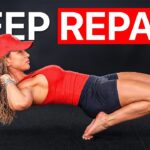
The pelican curl transforms standard biceps training by placing arms behind the body during the curling motion.
This unusual positioning specifically targets the long head of the biceps—the muscle responsible for peak height and overall arm appearance.
Why Stretch Position Matters
If you work on your biceps in a stretch position, it’s going to target the longer head. So basically, it can make your biceps look bigger and the peak is going to be higher.
Grosi acknowledges genetics play a significant role in muscle appearance. Shorter limbs and naturally fuller muscle bellies create more dramatic peaks than longer limbs with stretched muscle insertions.
However, training the long head in a stretched position can enhance whatever genetic potential exists.
Proper Pelican Curl Technique
Starting at a higher angle makes this movement beginner-friendly while teaching proper form:
- Body position: Maintain rigid plank alignment with engaged core and glutes—hips shouldn’t sag
- Shoulder positioning: Keep scapulas neutral throughout movement; avoid retracting shoulders or rounding forward
- Movement pattern: Pull bar underneath shoulders, striving to touch it against back for full range
- Progressive overload: Lower body angle gradually increases difficulty and extends range of motion
Beginners should aim for 15-30 repetitions at higher angles. As body position lowers toward parallel with the ground, intensity skyrockets and repetitions naturally decrease.
Advanced athletes performing nearly horizontal pelican curls on short bars experience extreme biceps activation—but must maintain strict core stability and scapular control to prevent form breakdown.
Programming Pelican Curls
Grosi recommends incorporating pelican curls as a finisher after completing primary pulling work like inverted rows and pull-ups.
Perform 10-15 repetitions based on individual capacity, completing up to three rounds for maximum pump and muscle stimulation.
Exercise #2: Behind-the-Neck Chin-Ups
This advanced variation takes standard chin-ups—already excellent for biceps development—and amplifies biceps isolation dramatically.
While regular chin-ups distribute effort between back muscles and arms, behind-the-neck execution shifts emphasis heavily toward biceps.
Execution Standards
Proper form requires specific positioning:
- Grip: Underhand (supinated) slightly wider than shoulder width
- Pull pattern: Draw bar behind neck rather than chin-to-bar
- Muscle activation: Biceps fire intensely with reduced lat involvement compared to standard chin-ups
- Mobility requirement: Adequate shoulder mobility prevents injury and enables proper execution
You will pull the bar behind your neck and you will feel your biceps really firing up. You won’t really feel your lats as in the regular chin-ups. Here you will feel the tension more in the biceps.
Beginner Progression Strategy
Athletes lacking strength or mobility for full bodyweight versions shouldn’t skip this exercise entirely.
Grosi demonstrates leg-assisted variations using lower bars that provide adjustable difficulty while teaching movement patterns safely. Specialized curved bars found in some parks allow gradual adaptation—practitioners can initially pull to shoulders before progressing behind the neck.
This approach eliminates risk of hitting one’s head while building necessary strength and coordination.
Volume Recommendations
Repetition ranges depend entirely on existing chin-up capacity. Athletes completing 15 standard chin-ups might achieve 10-12 behind-the-neck variations.
Leg-assisted versions allow higher volumes—up to 30 repetitions—making them ideal finishers when fatigue limits bodyweight performance.
Programming Both Exercises Effectively
Strategic implementation maximizes results without compromising recovery or primary training goals.
Workout structure: Complete fundamental compound pulling movements first—inverted rows, pull-ups, weighted variations. Only after finishing primary work should athletes add pelican curls or behind-the-neck chin-ups.
Frequency considerations: These specialized movements provide novel stimulus rather than replacing staple exercises. Rotate them periodically into training rather than performing every session.
Progression pathway: Pelican curls suit beginners better due to adjustable difficulty via body angle changes. Behind-the-neck chin-ups demand greater strength and mobility, making them appropriate for intermediate-to-advanced trainees.
Understanding Biceps Anatomy and Genetics
The biceps brachii contains two heads: short (inner) and long (outer). Peak height comes predominantly from long head development, though genetics ultimately determine maximum potential.
Muscle belly length, insertion points, and limb proportions create individual variation in arm appearance even with identical training stimulus.
Training biceps in stretched positions—like pelican curls provide—preferentially loads the long head due to biomechanical leverage changes. Research supports emphasizing exercises that stretch target muscles under load for hypertrophy optimization.
However, no exercise overcomes genetic limitations entirely. These movements optimize existing potential rather than creating fundamentally different muscle shapes.
Natural Athlete Considerations
Grosi specifically addresses natural lifters who build physiques without performance-enhancing substances.
For this population, compound movements deliver superior results compared to excessive isolation work. Multi-joint exercises recruit more total muscle mass, trigger greater hormonal responses, and develop functional strength alongside hypertrophy.
Isolation exercises like these biceps variations serve as supplements—they enhance results from solid foundational training but cannot replace it.
Natural athletes must prioritize recovery and training economy. Adding too many specialized movements creates fatigue that compromises compound lift performance, ultimately hindering rather than helping progress.
Safety and Mobility Requirements
Behind-the-neck movements carry inherent shoulder stress that demands adequate mobility screening before implementation.
Athletes with shoulder impingement, limited external rotation, or previous injuries should approach cautiously—potentially avoiding behind-the-neck variations entirely.
Pelican curls require less extreme positioning but still demand shoulder stability and core control. Starting at higher angles allows assessment of individual limitations before progressing to more demanding positions.
Both exercises emphasize controlled movement quality over maximum load or repetitions. Maintaining proper form protects joints while ensuring target muscles receive appropriate stimulus.