A recent video collaboration between fitness YouTuber Will Tennyson and former Victoria’s Secret model Vita Sidorkina has reignited conversation about extreme dieting practices in both the modeling and bodybuilding industries.
The pair swapped diets for a day, with shocking results that revealed just how similar—and equally problematic—both worlds can be.
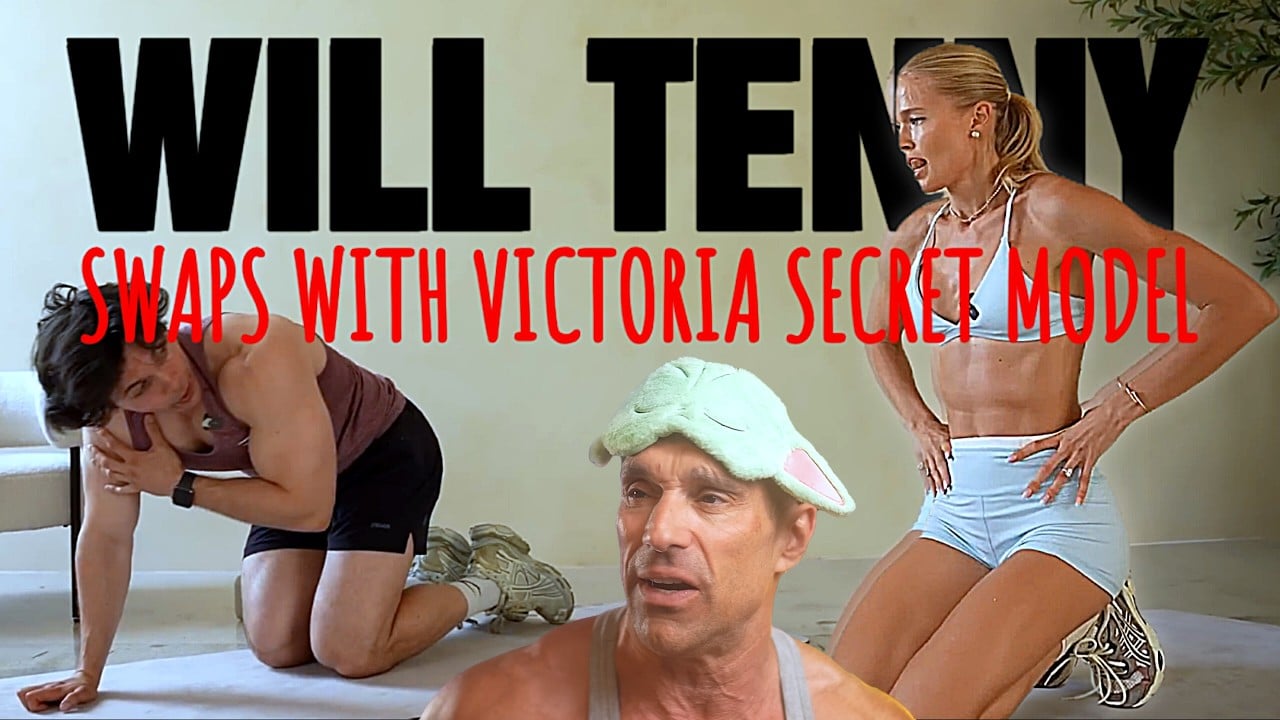
What emerged wasn’t just a tale of two industries, but a mirror reflecting decades of disordered eating normalized under the guise of “professional requirements.”
And the comparison raises uncomfortable questions about what we celebrate versus what we condemn.
Jump to:
The Victoria’s Secret Standard: Beauty Through Deprivation
Sidorkina didn’t mince words about her modeling days. The expectations were brutal and the measurements “virtually impossible for any normal woman to achieve without starving herself.”
Her daily intake during peak runway season? A staggering 611 calories—less than a quarter of what most adults need to function.
If the food would taste good, I’ll be like, there must be something in it that I shouldn’t be eating. The concept of wellness for me for the longest time was pain.
Breakfast, her largest meal, clocked in at just 267 calories: three egg whites and half an avocado. No salt. No carbs. No flavor.
The reasoning was simple but devastating—carbohydrates retain water, and water weight made models look “fluffy” in those impossibly tight garments.
The Industry’s Control Tactics
Sidorkina revealed that agencies monitored models with weekly weigh-ins and measurements. Gain even slight weight? Financial penalties followed.
Let’s say you would go on a trip somewhere, they would give you $150 per week. They would call you weekly into a modeling agency for measurements. And if you gain a little bit of weight, they wouldn’t give you the pocket money.
She recalled being sent home from Paris Fashion Week fittings because a dress wouldn’t close. The message was clear: smaller always meant better.
Desperate measures became commonplace. Models reportedly consumed cotton balls to feel full, abused laxatives, and survived on chewing gum between minuscule meals.
Bodybuilding: The Same Suffering, Different Stage
When Tennyson tried Sidorkina’s old diet, he was shocked by the deprivation. But fitness coach Greg Doucette, commenting on the video, pointed out an uncomfortable truth: bodybuilders do the exact same thing.
Competitive physique athletes routinely drop to dangerously low body fat percentages, eliminate entire food groups, and perform hours of cardio daily.
The only real difference? Anabolic steroids.
If I closed my eyes and you said, “Who’s talking?” I would say, I don’t know, anyone in the Miss Olympia bikini category. This is what they all say.
Doucette argues that steroid use actually allows bodybuilders to maintain muscle while eating slightly more than models, thanks to enhanced nutrient partitioning and elevated metabolism.
Without performance-enhancing drugs, the Victoria’s Secret physique and the competition bikini physique would require nearly identical nutritional deprivation.
The Consequences Nobody Talks About
Both industries leave lasting damage. Sidorkina experienced amenorrhea—loss of menstrual periods—a common consequence of extreme caloric restriction and low body fat.
This condition doesn’t just affect fertility. It increases risk for osteoporosis, hormonal dysfunction, and cardiovascular problems later in life.
I wanted to have kids really badly. And I will tell you like with that kind of unhealthy past dieting, I had loss of periods.
Bodybuilders face similar health risks, compounded by steroid abuse: liver damage, heart disease, psychological dependence, and permanent hormonal disruption.
Yet one group gets magazine covers while the other gets trophy plaques—and both are celebrated for “discipline.”
The Modern Twist: GLP-1 Medications Change Everything
Today’s models and competitors have access to something previous generations didn’t: GLP-1 receptor agonists like semaglutide.
These appetite-suppressing medications can reduce hunger by approximately 28%, making extreme restriction far more tolerable.
Doucette suggests that if these drugs had existed during Sidorkina’s career, the cotton balls and laxative abuse might never have happened. The same physiques would’ve been achievable with less suffering.
But here’s the problem: easier doesn’t mean healthier. GLP-1s can facilitate the same dangerous caloric deficits, just with fewer cravings screaming in protest.
What Changed for Sidorkina—And What It Reveals
After leaving the runway world, Sidorkina gained approximately 22 pounds. She now maintains visible abs and muscular definition while eating substantially more.
I weigh so much more now, but I look so much better because the quality of the body matters more than the weight on the scale.
Her transformation highlights a critical point: muscle tissue requires fuel. Adequate protein, calories, and recovery allow for a healthy, functional physique that actually looks better than starvation-mode thinness.
When Tennyson tried to feed her his high-protein bodybuilder meals, she struggled with the volume and texture—years of restriction had rewired her relationship with food.
The Pendulum Problem
Society tends to swing between extremes. A decade ago, impossibly thin models dominated. Today, there’s pushback toward body positivity.
But as Doucette points out, we’ve sometimes swung too far—from celebrating unhealthy thinness to normalizing obesity, neither of which serves public health.
The middle ground—functional fitness with adequate nutrition—rarely gets the spotlight because it doesn’t generate shock value or clicks.
Breaking the Cycle: What Actually Works
Both Sidorkina and various fitness experts now advocate for sustainable approaches that previous generations never considered.
- Adequate protein intake: Supports muscle maintenance and satiety
- Resistance training: Builds metabolically active tissue
- Flexible dieting: Allows for enjoyment without deprivation
- Reasonable body fat levels: Healthy ranges for women (20-30%) and men (10-20%)
- Hormone health priority: Maintaining menstrual function and libido as non-negotiables
Doucette revolutionized bodybuilding nutrition by creating high-volume, protein-rich recipes that don’t taste like cardboard—proving restriction doesn’t require suffering.
His “anabolic” approach uses low-calorie substitutions and volume eating to create satisfying meals within caloric targets, a stark contrast to the bland chicken-and-broccoli stereotype.
The Mental Shift Required
Perhaps most importantly, both industries need to reframe success. Sidorkina’s healing began when she stopped equating pain with wellness.
Aspiring competitors and models need to hear this: your worth isn’t determined by fitting into a sample size or achieving single-digit body fat.
Comparison truly is the thief of joy. Building your personal best physique—naturally, sustainably, healthfully—matters infinitely more than matching someone else’s drug-enhanced or genetically gifted standard.
At their worst, both modeling and bodybuilding promote disordered eating under professional banners. Both industries have normalized practices that would be classified as eating disorders in any other context.
Both celebrate extreme physiques achieved through methods that damage long-term health. And both have historically dismissed concerns with “it’s just what the job requires.”
The difference in public perception reveals our biases: we criticize rail-thin models but applaud shredded competitors, often without acknowledging the identical suffering behind both.
Sidorkina’s journey from 611-calorie deprivation to healthy, muscular motherhood proves another way exists. Her visible strength and vitality now exceed anything she achieved through starvation.
The question isn’t whether extreme physiques are achievable—clearly they are, through various harmful means. The question is whether pursuing them is worth sacrificing fertility, bone density, mental health, and years of your life to food obsession.
For the vast majority, the answer should be a resounding no.