

A content creator discovered that staring at a wall transformed his productivity—but not for the reasons most would expect.
The practice isn’t about the wall itself.
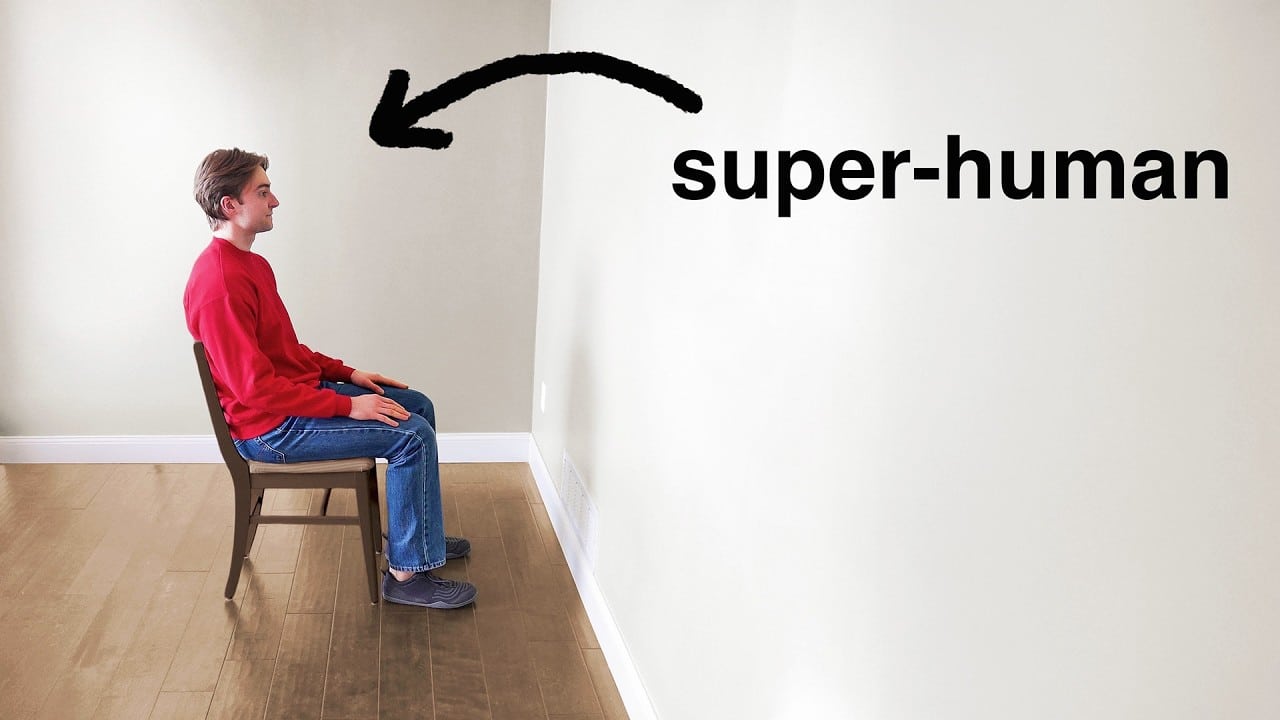
It’s about what he wasn’t doing: scrolling, checking emails, or consuming any digital content whatsoever.
Over five days of implementing a strict focus protocol inspired by neuroscience expert Andrew Huberman, he uncovered a completely new understanding of how attention actually works—and why modern life systematically destroys it.
Jump to:
- The Crisis That Demanded Total Focus
- Three Principles From Neuroscience
- Day One: The Struggle Begins
- Day Two: Breaking Through Resistance
- Day Three: Mental Clarity Emerges
- Day Four: The Critical Mistake
- Day Five: The Complete Picture
- Four Practical Recommendations
- Unexpected Benefits Beyond Work
- The Core Insight
The Crisis That Demanded Total Focus
Walking into work after holiday break, the creator faced mounting pressure. An extremely difficult project—one meant to solve his company’s biggest problem—had turned messy before year’s end.
Important stakeholders were nervous. The sentiment wasn’t good.
If I’m going to make this happen, I have to lock in right now.
He needed a solution, and he found it in neuroscientist Andrew Huberman’s approach to optimizing focus through dopamine regulation.
Three Principles From Neuroscience
Huberman’s protocol centers on harnessing the same dopaminergic system that creates phone addiction—but redirecting it toward productivity instead.
Rule One: Take Boring Breaks
Brains need genuine rest to maintain focus capacity. Consuming content during breaks—scrolling social media, watching videos, listening to podcasts—prevents actual recovery.
A favorite of mine is wall staring. Stare at a wall for 20 minutes and I’ll salivate.
Wall staring forces complete disengagement from stimulation, allowing neural reset.
Rule Two: Inhabit The In-Between
Don’t reflexively pull out a phone during every idle moment. Stand in line without distraction. Drive without music. Wait for someone to return from the bathroom without checking notifications.
Exist fully in these transition periods instead of filling them with input.
Rule Three: Single-Task Everything
Stop background videos while working. Don’t schedule appointments mid-project. When having conversations, just talk—don’t mentally drift to other concerns.
Complete focus on one thing at a time.
Day One: The Struggle Begins
Implementation proved immediately difficult. No non-essential screens during or outside work meant no video editing before his job, no Spotify, not even calculator apps.
This kind of sucks. I don’t know if my brain is broken or what, but I had gotten used to letting myself get distracted at work.
His first 10-minute wall-staring session felt awkward and uncertain.
But something shifted after work. Without digital distractions occupying mental space, he felt drawn to play drums—something he hadn’t touched in months. Walking with his wife later that evening, he experienced genuine presence.
It’s really nice to have a single work to do and then enjoy your life outside of that. Just have space. And I kind of missed it.
Day Two: Breaking Through Resistance
Morning arrived with nervousness. Day one hadn’t produced the work output he needed. Temptation for distraction remained intense.
This thing is calling my name right now. I’m so tempted to do anything but work.
Then breakthrough happened: trusting the process worked.
Sitting down felt uncomfortable initially, like focus would never arrive. But after pushing through initial resistance, hours passed in complete absorption. Work became the most interesting thing available.
His second wall-staring session intensified dramatically. Head throbbing, difficult to keep upright, he eventually relaxed completely. Light on the wall seemed to breathe and flex, warping perception until the wall felt like it was pulling him in.
I don’t know what you’re supposed to be thinking about when you do that, but I’m not sure if I’m doing it right.
Regardless, deep focus followed for hours. He created a baseline solution for one of the project’s biggest issues—real, significant progress.
Day Three: Mental Clarity Emerges
Wednesday brought excitement to start working. Ideas arrived naturally, setting up perfectly for an important leadership meeting about the exact problem he’d been solving.
Everyone loved his work.
But another effect emerged: conversational sharpness. Talking with his wife that evening, he noticed immediately stronger, more opinionated responses. Mental clarity allowed real-time processing at higher levels.
I feel like I have more just mental bandwidth from not plugging up my brain maximum capacity with all this stuff all the time.
His third wall-staring session—extended to 20 minutes—produced even faster neural reset. Consciousness fused with the wall in a half-awake, half-dreaming state where thoughts dulled almost to dreams.
Afterward: hours of absolute flow state. Solutions to remaining project problems arrived rapidly. What normally constituted accomplishments for entire weeks happened by Wednesday.
Day Four: The Critical Mistake
Growing confident in the routine, he made his first major error. While ordering thumbnail materials online, he checked email and YouTube analytics—just for a moment.
Twenty minutes vanished responding to a brand partnership inquiry.
I’ve just introduced so many more thoughts. So, probably a mistake.
This slip-up revealed the experiment’s most important insight.
Mental bandwidth functions like limited space. Focusing on something claims territory—and that territory remains occupied even after shifting attention elsewhere. Business emails, analytics, and partnership considerations didn’t disappear from consciousness. They lingered, competing with primary work for mental resources all day.
Once you open a door, it’s open. You can’t close it again. So be careful what you focus on because you welcome whatever you focus on.
His 25-minute wall session that afternoon proved too aggressive. Head throbbing intensely, he began looking through the wall rather than at it, exiting the practice nine minutes early in a dazed state.
Still, flow state returned for hours afterward. He completed a full mockup that earned enthusiastic approval.
Day Five: The Complete Picture
Friday morning arrived with clarity about how everything connected. Before this protocol, he believed his mental bandwidth looked fairly balanced—YouTube work, day job, life responsibilities all getting adequate attention.
Reality looked completely different.
What he called “YouTube work” actually fragmented across checking email, analytics, editing software, research, Photoshop, and more. Then switching to his day job introduced additional fragmentation—videos, podcasts, various tools and platforms.
His bandwidth was shattered into dozens of pieces before meaningful work even began.
No wonder deep focus felt impossible. No wonder presence with his wife suffered. Default behavior loaded his mind with competing concerns, leaving almost no capacity for what actually mattered.
Friday’s work focused on communication—sharing completed work with teams. The CPO responded enthusiastically, positive feedback flowing from multiple sources.
At the beginning of this week, people were nervous, uncertainty, people didn’t know what was going to happen. And after all the work I did this week, everyone is excited. The sentiment has totally changed.
Four Practical Recommendations
After five days of intensive focus protocol, four key strategies emerged as universally applicable.
Start With Your Most Important Work
Whatever receives initial focus gets prime mental real estate with zero competition. Give that advantage to top priorities.
Choose one single focus for morning sessions. If editing video, stay exclusively in editing software. Nothing else.
Wall Stare For 10-15 Minutes When Focus Fails
This practice genuinely resets mental bandwidth—the closest thing to restarting your day. Cap sessions at 15 minutes maximum; diminishing returns arrive quickly beyond that point.
Power naps provide similar reset benefits.
Use Pen And Paper Whenever Possible
Screens function as input hubs: notifications, appealing colors, icons, email, video, podcasts, social media, news. All these elements leach mental bandwidth constantly.
Pen and paper offer zero inputs. For tasks that work either way, analog tools preserve mental clarity dramatically better.
Delay Non-Essential Inputs As Long As Possible
Every additional hour without letting peripheral concerns claim bandwidth means greater presence for everything before that threshold.
Practical concessions remain reasonable—watching content during lunch breaks, for instance. Complete digital monasticism isn’t necessary for significant benefits.
Unexpected Benefits Beyond Work
Professional productivity improvements were expected and achieved. Project sentiment transformed from nervous uncertainty to genuine excitement within one week.
Personal life improvements proved equally significant.
I feel like I’ve been enjoying my time with Kate more this week. I’m more centered and it feels like we just have a little bit more fun together.
His wife noticed changes too: household vibe feeling more relaxed, inspiring her own reduced phone usage, creating mutual quietness even within individual consciousness.
Presence and productivity aren’t separate goals. They emerge from the same source: preserved mental bandwidth allowing fuller engagement with whatever moment arrives.
The Core Insight
Mental bandwidth represents total capacity for focus on anything. Every object of attention claims some portion. What remains determines both focus quality and presence depth.
More preserved bandwidth means:
- Better focus — fewer competing concerns
- Greater presence — availability for life’s smaller moments
- Richer experience — noticing details that otherwise disappear
Modern digital life systematically fragments this bandwidth before meaningful work begins. Email, analytics, social media, news, entertainment—each claims territory and refuses to relinquish it.
Preserving bandwidth requires ruthless gatekeeping about what receives attention and when.
Wall staring might seem absurd initially. But the underlying principle—complete disengagement allowing neural reset—produces measurable results in both professional output and life quality.
The wall itself doesn’t matter. What matters is finally not doing everything else.










