

Most people chase fitness transformations through endless reps, heavy weights, and exhausting cardio sessions.
But what if the real secret to reshaping your body was learning to stay completely still?
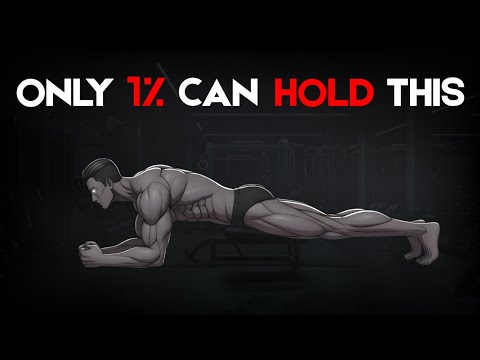
Isometric training—holding static positions under tension—has been used by ancient Chinese martial artists, Greek warriors, and modern Olympic athletes for thousands of years, yet it remains one of the most overlooked methods in mainstream fitness.
These seven powerful isometric holds can deliver a full-body transformation in just 21 days, no jumping or sprinting required.
Jump to:
- The Plank Hold: Your Foundation for Total-Body Stability
- Wall Sit: The Leg Sculptor
- Single-Leg Glute Bridge Hold: Fixing Modern Weakness
- Hollow Body Hold: The Gymnast’s Secret Weapon
- L-Sit Hold: Maximum Integration Challenge
- Pike Push-Up Hold: Shoulder Strength Redefined
- Dead Hang: Primal Decompression
- Your 21-Day Isometric Transformation Protocol
The Plank Hold: Your Foundation for Total-Body Stability
The plank might seem basic, but it’s one of the most transformative exercises available. Rooted in ancient strength-building traditions and military conditioning, this static position activates more than 20 muscle groups simultaneously.
Unlike crunches that isolate small areas, planks create what scientists call global stabilization—your entire body working as one unified system. Research shows isometric core work increases deep muscle fiber activation by up to 30% more than dynamic exercises.
Proper Plank Technique
Start in a push-up position with forearms on the floor and elbows directly under shoulders. Your body should form a straight line from head to heels.
- Contract everything: tighten glutes, brace core
- Push forearms into the ground
- Breathe steadily throughout
- Avoid sagging hips or raising them too high
Beginners: Three 30-second holds with 60-second rest between sets.
Advanced: Three rounds of 90 seconds.
Wall Sit: The Leg Sculptor
Deceptively simple yet brutally effective, wall sits have been a staple in military training and basketball conditioning for decades. This hold develops muscular endurance that directly translates to real-world performance.
Holding static positions forces muscles to rely heavily on slow-twitch fibers responsible for endurance and definition. Studies demonstrate that isometric training at specific joint angles can increase strength by 15% at that exact position.
How to Execute a Perfect Wall Sit
Place your back against a wall with feet shoulder-width apart, about two feet out. Slide down until thighs are parallel to the ground, forming a 90-degree bend at your knees.
Keep your back flat and core engaged. Avoid letting knees collapse inward or failing to reach parallel—if you’re not at 90 degrees, you’re missing the full effect.
Start with: 30 to 45-second holds for three rounds.
Advanced: 90 seconds up to 2 minutes.
Single-Leg Glute Bridge Hold: Fixing Modern Weakness
Modern living has created an epidemic of glute inactivity. The single-leg version of this hold forces each side to work independently, exposing and correcting strength imbalances that traditional exercises miss.
Your glute max is your body’s largest muscle. When engaged properly through isometric holds, it becomes a metabolic powerhouse that improves performance across all activities while reducing everyday pain.
Perfecting the Single-Leg Glute Bridge
Lie on your back with knees bent. Lift one foot and bring that knee toward your chest. Drive through your opposite heel to lift hips as high as possible, forming a straight line from shoulder to knee.
- Maintain intense glute squeeze throughout
- Brace core to avoid hyperextending lower back
- Keep hips level—no rotation
Beginners: 30-second holds per side for three sets.
Advanced: 60 to 90 seconds per side.
Hollow Body Hold: The Gymnast’s Secret Weapon
Many people can perform endless crunches but can’t sustain a hollow hold for even 30 seconds. That’s because this position teaches true stability, not just strength.
The hollow position deeply trains the transverse abdominis—the muscle that functions like a natural weight belt around your spine. Strengthening it through isometric work can reduce back pain and enhance performance in nearly every movement.
Mastering the Hollow Hold
Lie on your back with arms extended overhead. Press your lower back firmly into the floor with a slight pelvic tilt. Lift shoulders and legs off the ground, creating a smooth banana-shaped curve.
Only your lower back and glutes should remain on the floor. Your abs should work intensely to prevent arching. Keep arms and legs straight and breathe evenly.
Start with: 20 to 30-second holds for three sets.
Build up to: 45 to 60 seconds.
L-Sit Hold: Maximum Integration Challenge
The L-sit is the most difficult movement on this list, but it delivers massive rewards. Originating from gymnastics, it requires full-body integration—pushing through arms, pulling with core, and maintaining rigid leg positioning simultaneously.
This hold heavily targets hip flexors, an often-ignored muscle group essential for posture and athletic performance. From a core development standpoint, the L-sit is superior to most ab exercises because it demands simultaneous isometric contraction of multiple muscle groups.
L-Sit Progression Strategy
Sit with legs extended in front of you. Place hands beside hips, fingers pointing forward. Press into the floor to lift your body, keeping legs straight and parallel to the ground.
Beginners should start with bent-knee holds and gradually straighten legs over time. Holding even 10 to 15 seconds initially is a major win.
Advanced: 30 to 60-second holds.
Pike Push-Up Hold: Shoulder Strength Redefined
The pike push-up hold combines the benefits of inversion with serious shoulder and core strengthening. This position works shoulders from a completely different angle while developing stability needed for advanced movements.
The inverted position offers unique benefits: improved blood flow to the brain and potential reductions in blood pressure. From a strength standpoint, this hold targets anterior deltoids, serratus anterior, and deep core muscles.
Pike Push-Up Hold Execution
Begin in a downward dog position. Walk feet in until your body forms a tight V-shape. Lower your head toward the ground by bending elbows, stopping 2 to 3 inches before contact.
- Distribute weight evenly between both hands
- Keep core tight throughout
- Elbows should angle backward, not flare outward
Beginners: 15 to 20 seconds.
Advanced: 45 to 60 seconds.
Dead Hang: Primal Decompression
The dead hang is perhaps the most primal exercise here—it’s literally how our ancestors navigated trees. This simple hold corrects forward head posture and rounded shoulders caused by excessive screen usage while offering powerful spinal decompression.
The gentle stretch created by hanging reduces pressure on discs and can ease compression-related back pain. It’s also unmatched for developing grip strength.
Dead Hang Technique
Grab a pull-up bar with an overhand grip, hands shoulder-width apart. Allow your body to hang with arms straight. Slightly engage lats to protect shoulders without actually pulling up.
Maintain a neutral spine while gravity decompresses your vertebrae. Keep shoulders lightly activated and breathe normally.
Start with: 20 to 30-second holds for three sets.
Advanced: 60 to 90 seconds.
Your 21-Day Isometric Transformation Protocol
To maximize results from these seven holds, perform them in order three times weekly for 21 days. This frequency gives your nervous system enough repetition to adapt while allowing proper recovery.
Rest 60 to 90 seconds between each exercise. Give yourself at least one full day between sessions.
Weekly Progression Framework
Week One: Master technique and hit minimum hold times.
Week Two: Increase each hold by 25 to 50% while keeping form perfect.
Week Three: Push toward maximum hold times and start adding harder variations.
The beauty of isometrics lies in their measurability. Every additional second you hold represents guaranteed progress. Track your numbers and watch your body change simply through the power of holding still.










