Forget everything traditional gym wisdom taught about building muscle.
Recent evidence has completely rewritten the rulebook on hypertrophy training.
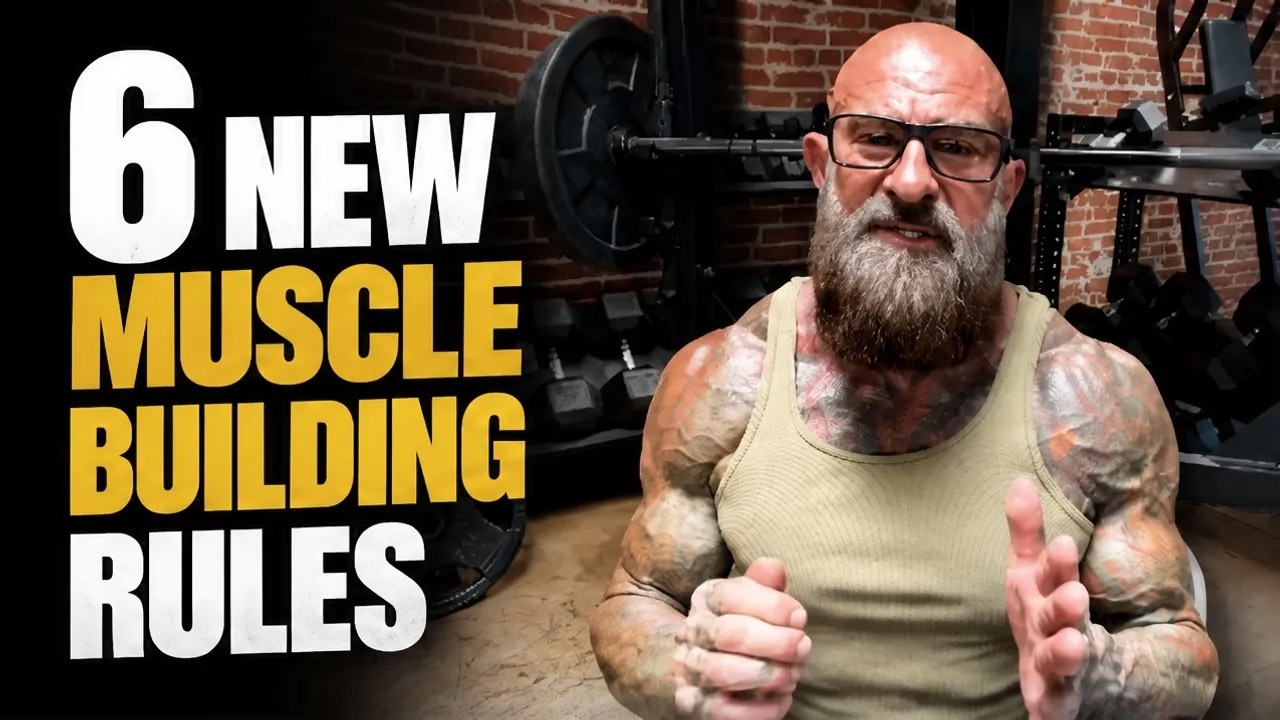
In a recent analysis, fitness expert Jim Stoppani broke down six research-backed principles that challenge decades of conventional bodybuilding advice—from rep ranges to rest periods to training frequency.
These aren’t minor tweaks—they’re fundamental shifts that could transform how lifters approach muscle growth.
Jump to:
All Rep Ranges Build Muscle Equally
The sacred “8-12 reps for hypertrophy” guideline? Outdated.
Both acute studies and long-term research measuring actual muscle growth reveal something surprising: heavy weight (4-6 reps) and light weight (20-30 reps) both trigger comparable muscle growth.

If you want something simple that actually works, this is one of the most effective tools I’ve used to build strength, conditioning, and endurance without needing a full gym setup.
- Full-body training with one weight using swings, squats, and presses
- Solid cast iron build that feels stable and lasts for years
- Comfortable grip that makes high-rep workouts easier to handle
Research hasn’t identified a definitively optimal rep range because bodybuilders and scientific studies alike demonstrate that a wide spectrum produces results.
Stoppani advocates for rep range periodization—cycling between heavy, moderate, and light weights throughout training blocks. While all rep ranges build muscle, they deliver distinct additional benefits:
- Heavy weight: Maximizes strength but stresses joints
- Light weight: Builds endurance and promotes joint recovery
- Moderate weight: Provides balanced stimulus for both adaptations
The strategy combines muscle building with performance diversity and joint health preservation.
Training to Failure Actually Matters
Despite debates around training intensity, evidence increasingly supports one critical factor: at least one set per exercise should reach genuine muscle failure.
But what constitutes true failure?
In my opinion, muscle failure is not when you can no longer do the full range of motion of an exercise, but when you can no longer budge the weight an inch from the start position.
This definition connects directly to emerging research on partial rep training and range of motion—which leads to the third principle.
If you want something simple that actually works, this is one of the most effective tools I’ve used to build strength, conditioning, and endurance without needing a full gym setup.
- Full-body training with one weight using swings, squats, and presses
- Solid cast iron build that feels stable and lasts for years
- Comfortable grip that makes high-rep workouts easier to handle
The First Half of Range of Motion Drives Growth
Here’s where training science gets counterintuitive.
Studies comparing muscle growth between subjects performing only the first half versus only the last half of an exercise’s range of motion show something remarkable: those doing just the first half experienced significantly more hypertrophy.
These “long length partials”—performing reps in the stretched position—appear to trigger superior muscle building signals.
Importantly, first-half partials don’t outperform full range of motion reps. Both produce comparable growth.
The practical application? Redefine failure.
Instead of reaching muscle failure when you can no longer do full range of motion of an exercise, keep going doing those long length partials until you can barely budge the weight.
This technique extends sets beyond traditional failure points, potentially maximizing hypertrophic stimulus.
If you want something simple that actually works, this is one of the most effective tools I’ve used to build strength, conditioning, and endurance without needing a full gym setup.
- Full-body training with one weight using swings, squats, and presses
- Solid cast iron build that feels stable and lasts for years
- Comfortable grip that makes high-rep workouts easier to handle
Longer Rest Periods Optimize Muscle Growth
Short rest periods for metabolic stress? Not necessary for maximum growth.
Research indicates that rest periods of 90 seconds to 2 minutes between sets outperform shorter 60-second rest intervals for muscle hypertrophy. Resting beyond 2 minutes provides no additional benefit.
However, Stoppani emphasizes the difference remains relatively small. If extended rest periods make workouts impractically long, shorter intervals still deliver similar results while dramatically reducing training time.
Recovery adequacy matters more than chasing marginal optimization.
Training Volume Shows Dose-Response Relationship
How many sets per muscle group per week builds optimal muscle?
Current research on trained individuals reveals muscle growth increases with volume up to approximately 40 sets per muscle group weekly. That said, gains demonstrate diminishing returns after 12-16 sets.
If you want something simple that actually works, this is one of the most effective tools I’ve used to build strength, conditioning, and endurance without needing a full gym setup.
- Full-body training with one weight using swings, squats, and presses
- Solid cast iron build that feels stable and lasts for years
- Comfortable grip that makes high-rep workouts easier to handle
Increasing from 8 to 12 weekly sets produces significant growth jumps. Bumping from 16 to 20 sets still adds muscle, but substantially less than earlier volume increases.
Stoppani’s recommendation: start with minimal effective volume.
- Beginners should start with just 3 sets per muscle group weekly
- Increase to 6 sets when progress stalls
- Gradually add volume over time as adaptation requires it
- Experienced lifters already performing high volumes can use frequency (rule six) to distribute sets
Rather than cramming 20 sets into one workout, split them across two sessions of 10 sets each.
Training Frequency Matters Less Than Expected
The “hit each muscle twice weekly” dogma? Not backed by research.
Studies show training a muscle group twice per week doesn’t produce more growth than once weekly—when total weekly sets remain equal.
Old-school bodybuilders often trained each muscle once weekly with 16-30 sets in a single session, then allowed full week recovery. Modern approaches favor higher frequency—training each muscle 2-3 times weekly.
If you want something simple that actually works, this is one of the most effective tools I’ve used to build strength, conditioning, and endurance without needing a full gym setup.
- Full-body training with one weight using swings, squats, and presses
- Solid cast iron build that feels stable and lasts for years
- Comfortable grip that makes high-rep workouts easier to handle
Arguments for higher frequency include:
- Ability to complete more total weekly sets
- Maintaining higher intensity across distributed workloads
- Sustaining post-workout muscle swelling and fullness
After intense training, muscles gain fluid and swell for 1-2 days or longer. Training every 2-3 days maintains this effect, keeping muscles visibly larger.
Both approaches work. Frequency becomes a tool for managing volume and intensity rather than a hypertrophy requirement itself.
Putting The New Rules Into Practice
These six evidence-based principles fundamentally challenge traditional muscle building wisdom.
The flexibility they provide—in rep ranges, training splits, and volume distribution—means lifters can customize approaches based on individual preferences, recovery capacity, and schedule constraints.
Rather than rigid prescriptions, modern hypertrophy science offers frameworks. Train with various rep ranges. Push at least one set to true failure. Extend sets with long-length partials. Rest adequately between sets. Progressively increase volume. Distribute frequency based on lifestyle.
If you want something simple that actually works, this is one of the most effective tools I’ve used to build strength, conditioning, and endurance without needing a full gym setup.
- Full-body training with one weight using swings, squats, and presses
- Solid cast iron build that feels stable and lasts for years
- Comfortable grip that makes high-rep workouts easier to handle
The evidence has rewritten muscle building rules—but implementation remains highly individual.