A physician conducted an extraordinary seven-year personal experiment, living with cholesterol levels that would alarm most cardiologists.
Yet advanced heart imaging revealed something remarkable: zero plaque buildup in his arteries.
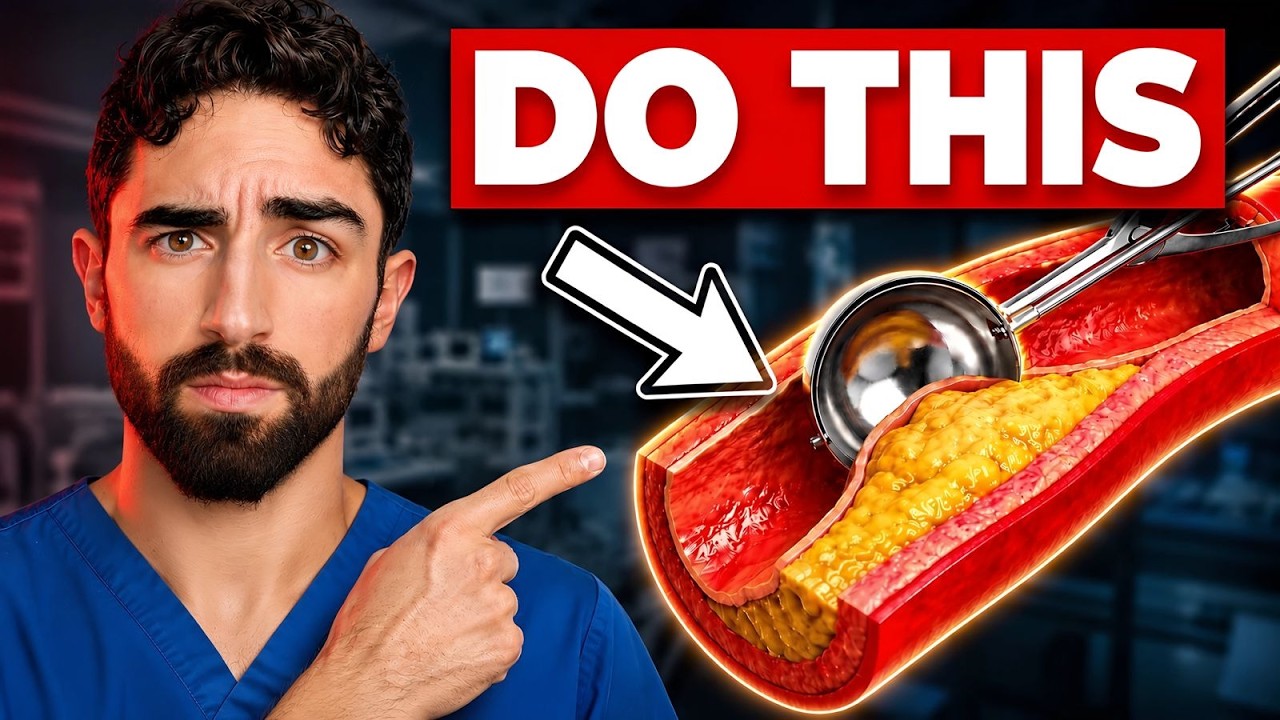
His heart was, as he describes it, “astonishingly pristine.”
What followed were countless questions about his approach to cardiovascular health—and now he’s revealing five science-backed tools that may help protect against heart disease and even reverse arterial plaque.
Jump to:
The Plaque-Reversing Enzyme From Japanese Fermented Soybeans
Nattokinase stands out as one of few compounds suggested to actually reverse plaque progression in arteries. This enzyme comes from natto, a traditional Japanese fermented soybean dish consumed for over a thousand years.
The clinical evidence is striking. In one large human study involving over a thousand participants, individuals taking high-dose nattokinase for one year showed regression of atherosclerotic heart disease.

If you want something simple that actually works, this is one of the most effective tools I’ve used to build strength, conditioning, and endurance without needing a full gym setup.
- Full-body training with one weight using swings, squats, and presses
- Solid cast iron build that feels stable and lasts for years
- Comfortable grip that makes high-rep workouts easier to handle
Using ultrasound imaging of carotid arteries, researchers observed a 22% reduction in carotid intima-media thickness and a 36% reduction in coronary plaque surface area.
Consuming natto itself is linked to approximately 25% lower rates of cardiovascular mortality compared to those who consume essentially none.
Three Ways Nattokinase Protects Your Heart
Nattokinase works through multiple cardiovascular pathways simultaneously:
- Anti-clotting activity: Makes blood less sticky and prone to clot formation in arteries
- Blood pressure reduction: Inhibits angiotensin-converting enzyme (ACE), similar to prescription blood pressure medications like lisinopril
- Oxidative stress reduction: Increases antioxidant defenses, protecting blood vessels from free radical damage
To achieve optimal effects, doses of 10,000 fibrinolytic units or more appear necessary. This convergence of benefits explains nattokinase’s ability to potentially reduce arterial plaque.
The Gut Hormone That Calms Arterial Inflammation
TUDCA represents a fascinating tool in cardiovascular protection. This gut hormone, which can be produced by your microbiome and taken as a supplement, primarily works by calming inflammation within artery walls.
In animal models with heart disease, TUDCA administration leads to dramatic reductions in arterial plaque. Importantly, this isn’t achieved by lowering cholesterol but by changing conditions inside artery walls themselves.
If you want something simple that actually works, this is one of the most effective tools I’ve used to build strength, conditioning, and endurance without needing a full gym setup.
- Full-body training with one weight using swings, squats, and presses
- Solid cast iron build that feels stable and lasts for years
- Comfortable grip that makes high-rep workouts easier to handle
When particles containing cholesterol enter artery walls, immune cells can become inflamed—like tiny Hulks causing microscopic damage. TUDCA functions as a biological ice pack, calming this inflammation and preventing formation of dangerous foam cells that burst and drive plaque progression.
The Statin Connection Nobody Talks About
TUDCA’s story takes an unexpected turn when considering statin medications. Statins have been shown to reduce levels of UDCA, a cousin compound to TUDCA.
Why does this matter? Because reducing UDCA levels is one mechanism by which statins cause insulin resistance, increase blood sugar, and reduce levels of GLP-1—the hormone associated with popular weight loss drugs like Ozempic and Wegovy.
Reducing UDCA levels is one way statins cause insulin resistance, increase blood sugar, and reduce levels of the key metabolism regulating hormone GLP-1.
Research published in Cell Metabolism demonstrated this effect in humans. TUDCA/UDCA supplementation may actually reverse many harmful metabolic effects of statins—available right now without prescription.
For dosing, starting at 250 mg once daily with food is prudent. Increase by 250 mg weekly as tolerated, up to a maximum of 1,750 mg split into two or three doses.
Heart Rate Variability: The Death Predictor You Can Change
Heart rate variability (HRV) refers to tiny moment-to-moment fluctuations in timing between heartbeats. Remarkably, HRV serves as a predictor of death and cardiovascular risk.
If you want something simple that actually works, this is one of the most effective tools I’ve used to build strength, conditioning, and endurance without needing a full gym setup.
- Full-body training with one weight using swings, squats, and presses
- Solid cast iron build that feels stable and lasts for years
- Comfortable grip that makes high-rep workouts easier to handle
Your heart isn’t an isolated pump—it’s deeply connected to your nervous system, which constantly influences how your heart functions, adapts, and ultimately thrives or fails.
Generally speaking, low HRV predicts increased risk of heart attack and death, while high HRV reflects better cardiovascular resilience.
The good news? HRV is modifiable.
Two High-Yield Ways to Boost HRV
Zone Two Cardio: Exercise performed at approximately 60-70% of maximum heart rate—where you can hold a conversation. Think moderate cycling, light jogging, or walking with a weighted vest. This training consistently increases heart rate variability.
Omega-3 Fatty Acids: Whether supplemented or consumed through fatty fish like sardines, omega-3s literally change how cells behave by integrating into cell membranes and improving flexibility.
Omega-3s reduce inflammation (which otherwise suppresses HRV) and accumulate in the brainstem, improving vagus nerve function—the literal cord connecting brain to heart.
If you want something simple that actually works, this is one of the most effective tools I’ve used to build strength, conditioning, and endurance without needing a full gym setup.
- Full-body training with one weight using swings, squats, and presses
- Solid cast iron build that feels stable and lasts for years
- Comfortable grip that makes high-rep workouts easier to handle
The Critical Omega-3 and Statin Connection for Women
Here’s something most doctors don’t know: statins have higher probability of causing problems in women than men, including muscle issues and increased blood sugar.
Women have two X chromosomes versus men’s one X and one Y. This difference means women have higher doses of certain genes, including one involved in omega-3 synthesis, particularly DHA.
Research shows women experiencing increased blood sugar on statins also tend to have more suppressed omega-3 and DHA levels because of this sex chromosome-statin interaction.
Women who have increased blood sugar on statins also tend to have more suppressed omega-3, more suppressed DHA because of this sex chromosome-statin interaction.
For women taking statins, fish oil or boosting omega-3 intake appears incredibly wise both for heart rate variability and offsetting negative statin effects on blood sugar.
Berberine: The Natural Compound That Works Unlike Any Drug
Berberine improves blood sugar control—critical for cardiovascular health—but also lowers LDL cholesterol and apoB in a fascinating way.
LDL particles circulate carrying cholesterol. Your body clears them through LDL receptors on liver cells that grab particles and remove them from circulation.
If you want something simple that actually works, this is one of the most effective tools I’ve used to build strength, conditioning, and endurance without needing a full gym setup.
- Full-body training with one weight using swings, squats, and presses
- Solid cast iron build that feels stable and lasts for years
- Comfortable grip that makes high-rep workouts easier to handle
These receptors constantly build up and break down. To build more receptors, cells need an mRNA blueprint for cellular machinery to construct them.
Berberine protects that blueprint by stabilizing LDL receptor mRNA transcripts, dramatically extending lifespan roughly threefold. Liver cells can then produce more LDL receptors because “workers” have more time with blueprints.
This mechanism is elegant and very different from statins, which create cholesterol starvation inside liver cells. Unlike statins, berberine tends to improve metabolic markers like insulin sensitivity and blood sugar.
Controlled trials show berberine can lower LDL cholesterol by up to 25%, in some cases approaching or exceeding certain pharmaceutical therapies.
Vitamin C: The Misunderstood Tool Against Lp(a)
Lp(a) is essentially an LDL-like particle with an extra sticky tail called apolipoprotein (a). High Lp(a) levels are recognized as an independent genetic risk factor for cardiovascular disease.
Elevated Lp(a) can increase heart attack risk by as much as 230%.
If you want something simple that actually works, this is one of the most effective tools I’ve used to build strength, conditioning, and endurance without needing a full gym setup.
- Full-body training with one weight using swings, squats, and presses
- Solid cast iron build that feels stable and lasts for years
- Comfortable grip that makes high-rep workouts easier to handle
Two-time Nobel laureate Linus Pauling championed a fascinating hypothesis: vitamin C may help counteract damaging effects of Lp(a). In fact, Lp(a) might function as an evolutionary substitute for vitamin C.
Animals that make their own vitamin C don’t produce Lp(a) the same way. But animals that can’t make vitamin C—like humans and guinea pigs—do produce Lp(a).
When vitamin C is insufficient, Lp(a) might help stabilize damaged blood vessels as a temporary biological patch. It prevents immediate bleeding but may slowly contribute to plaque buildup from stickiness.
When guinea pigs are deprived of vitamin C, again, guinea pigs make Lp(a), they develop rapid atherosclerosis, heart disease, characterized by plaques that are filled with Lp(a). Conversely, when guinea pigs are given vitamin C, very little Lp(a) deposits in the arteries.
Vitamin C makes Lp(a) less sticky, reduces oxidative stress, and improves nitric oxide and blood flow—another pathway Lp(a) negatively impacts.
The Anti-Aging Discovery About Vitamin C
Recent research published this year suggests vitamin C may improve overall healthspan through a previously unknown mechanism.
As we age, cells begin hoarding iron, activating a pathway called “ferro aging.” This iron build-up flips an aging catalyst switch in cells, accelerating biological aging.
If you want something simple that actually works, this is one of the most effective tools I’ve used to build strength, conditioning, and endurance without needing a full gym setup.
- Full-body training with one weight using swings, squats, and presses
- Solid cast iron build that feels stable and lasts for years
- Comfortable grip that makes high-rep workouts easier to handle
Researchers discovered vitamin C can bind to this switch and turn it off. Long-term experiments in monkeys found high-dose vitamin C—equivalent to 2 grams daily in humans—could slow brain shrinkage.
Vitamin C might support not just heart health, but potentially brain health, aging, and overall longevity as well.
For dosing, 500 mg twice daily is a good starting point, increasing to 1,000 mg twice daily if desired. Splitting doses improves gastrointestinal tolerance and absorption. That 2-gram daily dose costs approximately 6 cents per day—remarkable value for potential cardiovascular and longevity benefits.