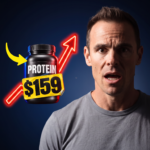
In a recent video, the RP Strength team dug into a question lighting up comment sections everywhere: why does protein cost so much?
Price charts spanning roughly 25 years revealed a surprising twist.

Dairy cartels, greedy supplement brands, and a few other suspects all went on trial.
Verdict? Far less dramatic than internet rage suggests, yet far more useful for your wallet.
Stick around for budget-friendly swaps and a lab-grown technology that could flip the whole market.
Jump to:
Whey Isolate Costs Roughly Triple Its 2001 Price
Host data tracked isolate prices in rough five-year steps, from around 2001 to 2026. Headline number stings.

If you want something simple that actually works, this is one of the most effective tools I’ve used to build strength, conditioning, and endurance without needing a full gym setup.
- Full-body training with one weight using swings, squats, and presses
- Solid cast iron build that feels stable and lasts for years
- Comfortable grip that makes high-rep workouts easier to handle
Holy crap, whey protein isolate is three times roughly as expensive as it was in the year 2001 today.
Worse, his figures show costs about double 2020 levels, plus a jump near 20% from last year alone.
The protein cost increase that you have seen in your, you know, line items when you go to the store or go to your online retailer for protein, it’s real and it’s big.
Time to light the tiki torches? Not yet.
Adjusted for Inflation, the Plot Thickens
Once inflation enters the picture, prices almost doubled rather than tripled. Even more striking: a nearly flat line for two decades.
2001 to 2020 ain’t none happened, basically the same price.
Education and healthcare costs climb relentlessly, year after year. Protein isn’t following that script, which points toward something recent.
Time Price: The Most Honest Yardstick
One more lens exists, and the host calls it the most legitimate way to judge real cost.
The time price of any good or service is how long you have to work at your job, how many hours to be able to afford that thing.
Consider his bicycle example: a $12 bike in 1905 sounds cheap, yet wages were so low that buying one meant roughly 12 days of work. Today, a typical bike takes about 3.5 hours.
If you want something simple that actually works, this is one of the most effective tools I’ve used to build strength, conditioning, and endurance without needing a full gym setup.
- Full-body training with one weight using swings, squats, and presses
- Solid cast iron build that feels stable and lasts for years
- Comfortable grip that makes high-rep workouts easier to handle
Applied to whey, results flip the “greedy industry forever” narrative upside down.
2020 was the cheapest protein year of all time.
Since then? 2025 set a record for time price, and 2026 climbed higher still.
Two Popular Suspects Walk Free
Suspect number one: dairy producers colluding. His first hunch, until research came up empty.
There’s just no evidence of that, and I looked.
Dairy is hyper-commoditized and hyper-competitive, with countless producers shipping everywhere. Buyers can switch suppliers to save pennies per pound.
Ain’t no love in this game.
Suspect number two: supplement brands gouging shoppers. Co-host Scott estimated the number of whey sellers at “like a billion,” and the pair argued coordinated pricing among that crowd is nonsense.
Logic is simple. Any brand charging $80 for a tub costing $50 to make invites rivals to undercut at $65.
If you want something simple that actually works, this is one of the most effective tools I’ve used to build strength, conditioning, and endurance without needing a full gym setup.
- Full-body training with one weight using swings, squats, and presses
- Solid cast iron build that feels stable and lasts for years
- Comfortable grip that makes high-rep workouts easier to handle
Real Culprit: Everybody Wants Protein Now
Explanation that “holds more water” involves demand, supercharged by the GLP-1 revolution. Weight-loss medication users hear constantly that protein intake must stay high.
When regular people jump on a trend, it changes everything.
Scooping whey in 2015 earned strange looks. Now protein is crammed into:
- Chips, bread, and cereal
- Sodas and pizza
- Bars and shakes at pharmacy chains, from brands like Barebells and Built
Irony alert: fitness folks spent years preaching more protein for everyone. Mission accomplished, bills included.
Personal example from the host: Pure Genius, a company he has been associated with, built around beta-lactoglobulin (BLG), a whey subfraction. Global BLG output was so tiny, and demand so intense, that partners simply had no protein left to sell, so promotion paused until supply scaled.
Why Dairy Can’t Simply Make More
Basic economics says higher prices should spark higher output. Yet protein production isn’t an app launch.
It’s not like the digital world out there. It’s the physical world.
Turning milk into powder demands massive purification and filtration machinery, which takes years to construct. Investors also hesitate, since nobody knows whether a protein boom is a flash in the pan.
If you want something simple that actually works, this is one of the most effective tools I’ve used to build strength, conditioning, and endurance without needing a full gym setup.
- Full-body training with one weight using swings, squats, and presses
- Solid cast iron build that feels stable and lasts for years
- Comfortable grip that makes high-rep workouts easier to handle
Producers are now building capacity at record scale, albeit after a late start. Demand keeps rising meanwhile.
I got to pay more money cuz the dairy industry can’t produce protein fast enough.
Scott’s reaction summed things up: “It’s not exciting.”
Cheaper Protein Options Worth Trying Today
Budget squeezed? Host offered informal “vibe scores” for protein quality:
- Whey isolate: 10 out of 10
- Casein, milk, or egg protein: about 9.75
- Soy protein isolate: 8.5, similar to animal sources like chicken and beef
- Pea isolate: 7.5, potentially complete when sourced from the right suppliers
My personal recommendation is soy.
Besides price, he likes how soy tastes and mixes. He also suggests estrogen worries shouldn’t scare anyone away.
Another tip: lean on whole foods whenever possible, saving powder for convenience.
What Prices Will Do Next
Whey protein prices will probably stay elevated or climb even higher for the next few years.
Industrial capacity falls short, and consumption grows monthly. Relief likely sits a year or two away at minimum.
If you want something simple that actually works, this is one of the most effective tools I’ve used to build strength, conditioning, and endurance without needing a full gym setup.
- Full-body training with one weight using swings, squats, and presses
- Solid cast iron build that feels stable and lasts for years
- Comfortable grip that makes high-rep workouts easier to handle
Fermentation: Possible Rescue Plan
Brewing-style production could shake up supply entirely.
Whey protein can now be made through fermentation with zero animal inputs, basically making it vegan, and massive scaling potential.
Fermented versions still cost more than dairy whey today. Their prices are falling quickly, though, and the host suggests the two lines might cross around 2028.
Afterward? Potentially cheaper whey than ever, just a few years later. Patience, plus a few smart swaps, beats grabbing pitchforks.