

Tony Cavalero was staring down a professional nightmare in 2024.
He had just two weeks to prepare for playing a boxer in Sydney Sweeney’s film Christy, and his shoulder felt completely wrecked.
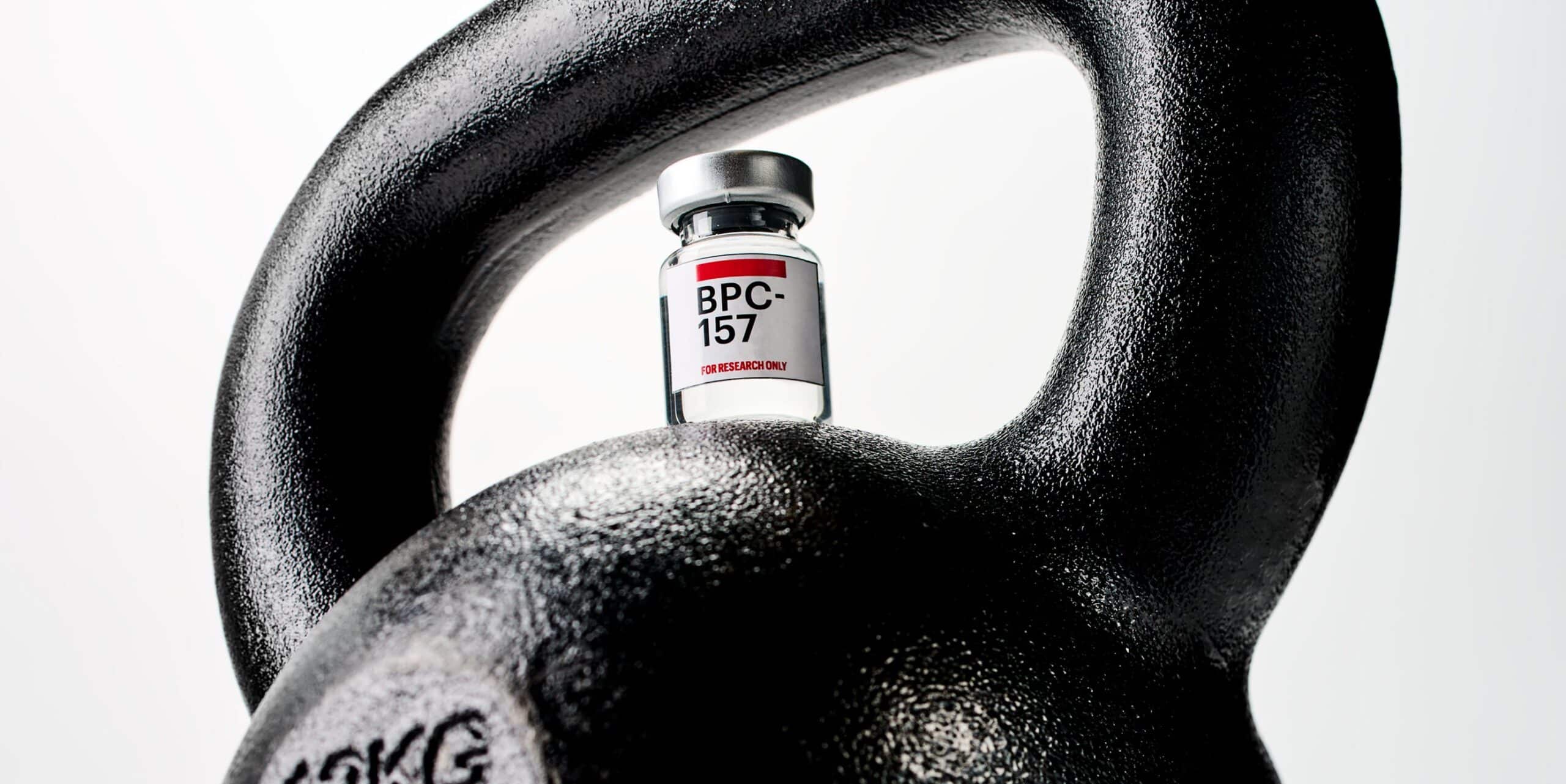
That’s when a bodybuilder friend mentioned something called BPC-157—a peptide nicknamed “Wolverine” for its supposedly superhuman healing powers.
What happened next reveals why everyone from gym bros to your dad’s running buddies can’t stop talking about this controversial substance.
Jump to:
- The Peptide Everyone’s Whispering About
- Why BPC-157 Feels Like a Loophole
- The Regulatory Crackdown That Changed Everything
- The Science Behind the Hype
- The Safety Question Nobody Can Answer
- How People Actually Get BPC-157
- The Purity Problem
- When BPC-157 Doesn’t Work
- The Dosing Debate
- Why This Matters Now
- The Commercial Reality
- A Real-World Success Story
- The Bottom Line
The Peptide Everyone’s Whispering About
BPC-157 has exploded into mainstream fitness culture with promises that sound almost too good to be true: accelerated healing for tendons and ligaments, faster post-surgical recovery, enhanced vitality.
Cavalero initially passed on trying it for that shoulder issue. But months later, when elbow pain became unbearable, he returned to that South Carolina physician and got an injection at the pain site.
I haven’t had a recurring elbow pain since then. I had no side effects other than being stronger and looking awesome.
His experience mirrors countless anecdotes flooding Reddit threads, gym conversations, and podcasts from Joe Rogan to Andrew Huberman.
Mathew Forzaglia, an ISSA-certified personal trainer in New York, tried a three-month stack of BPC-157 and another peptide called TB-500 after standard rehab couldn’t fix lingering pains from a torn pec.
My joints and tendons felt good. It was as if I suddenly was getting the right sleep, training, nutrition—like everything was perfect.
Why BPC-157 Feels Like a Loophole
Exercise physiologist Pat Davidson, PhD, who also competes in bodybuilding, explains the peculiar appeal.
Everyone is always looking for this free lunch—something that is morally okay. People don’t want to be labeled as a steroid user, and this is like skating close to the edge without crossing it.
That perception of being “cleaner” than steroids has fueled massive consumer interest, even as regulatory bodies crack down.
BPC-157 isn’t new—scientists first synthesized it in the early 1990s, and serious bodybuilders have used it for over a decade. But right now, with wellness influencers and RFK Jr. championing alternatives to traditional pharmaceuticals, the Wolverine peptide has reached cultural critical mass.
The Regulatory Crackdown That Changed Everything
The World Anti-Doping Agency banned BPC-157 in 2022, citing lack of approval from governmental regulatory health authorities for human therapeutic use.
Shortly after, FDA added BPC-157 to its Category 2 Bulk Substance List, designating it as ineligible for compounding for human use.
Their reasoning? No human studies and safety concerns, including theoretical worries that BPC-157 might promote tumor cell growth.
But here’s where things get interesting: The peptide has an extremely short half-life—as little as 30 minutes—making detection in drug testing nearly impossible.
Trainers quietly admit they still work with elite and professional athletes who take the peptide during downtime with relatively little fear of repercussions.
The Science Behind the Hype
BPC-157 stands for “body protection compound”—a synthetic chain of 15 amino acids first isolated from human gastric juice.
Over the past 20 years, dozens of preclinical studies (in animals and cells, not humans) have shown potentially promising data suggesting the peptide can fight inflammation and promote protein synthesis and angiogenesis—the fancy scientific term for new blood vessel production.
Drew Timmermans, ND, a naturopathic physician and cofounder of Regenerative Performance in Arizona, notes the limited but encouraging research.
The preclinical and animal studies indicate benefits for tendon and joint injuries.
But here’s the problem: Only three human studies have been conducted in more than 30 years.
One 2021 study tracked just 12 patients with chronic knee pain who received BPC-157 shots. Seven reported feeling relief for more than six months—moderately encouraging, but hardly the large-scale human trial typically required for drug approval.
The Safety Question Nobody Can Answer
Adam Meakins, a UK-based physiotherapist and strength coach who’s worked with clients using BPC-157, voices concerns shared by many medical professionals.
We don’t have confirmation that the peptide does what people promise it does. For that, we’d need double-blind, placebo-controlled human studies.
Katrin Svensson, PhD, an associate professor of pathology at Stanford University who directs a lab doing preclinical peptide research, goes further.
This peptide, I would never take this myself, even though I know a lot of people are taking it, and they report beneficial effects.
She notes that peptides synthesized for research purposes use a so-called TFA salt that’s different and arguably more toxic than FDA-approved peptides formulated for human use.
How People Actually Get BPC-157
Despite regulatory actions, finding injectable BPC-157 online remains shockingly easy.
It costs between $100 and $300 monthly, depending on source, dosage, and whether you’re stacking it with TB-500.
The process isn’t particularly simple:
- Peptides ship in powdered form requiring reconstitution with bacteriostatic water
- They must be kept sterile and refrigerated
- Injection requires 1-cc syringes with tiny needles (similar to insulin needles)
- Online shops typically label vials “for research use only”
Sports physiologist Michael Israetel, PhD, a competitive bodybuilder and former nutrition professor, says consumer attitudes have shifted dramatically.
Most people are unbothered by injectables. People already are comfortable taking stuff they buy at Whole Foods that isn’t approved—they just don’t care. They just want results.
The Purity Problem
Since most compounding pharmacies won’t prepare BPC-157 under current FDA guidelines, consumers sourcing from online outlets face questions about purity.
Some peptide shops display third-party certificates authenticating the purity of specific batches—not foolproof, but better than companies that don’t test at all.
Svensson warns that handling and storage present additional risks most consumers aren’t equipped to manage.
People need to be sure they can solubilize it properly, store it properly, handle it in a sterile way—and that’s on top of the questions about purity and contaminants that the average person doesn’t have the instruments to answer.
When BPC-157 Doesn’t Work
Not everyone experiences miraculous results.
Physician and obesity specialist Spencer Nadolsky, MD, tried sourcing BPC-157 from a compounding pharmacy for tennis elbow relief.
I didn’t get shit for results. I tried it a few times and it had zero effect on my tennis elbow. The only thing that helped was physical therapy, and that just took time.
Reddit threads contain plenty of posts from people reporting no benefits, unpleasant side effects, or struggles finding reputable sources.
Forzaglia admits he struggled initially with proper injection technique, experiencing disconcerting issues before getting the hang of it.
The Dosing Debate
Experienced trainers say timing and dose vary dramatically depending on what problem you’re addressing.
Israetel explains the spectrum.
I know people who’ve used it to deal with funky elbow discomfort. They will take a low dose and alter their lifting routine—and doing that, they can get complete recovery in four weeks.
Athletes healing torn pecs or reconstructed ACLs require longer regimens.
One point experts unanimously agree on: Nobody should take BPC-157 indefinitely.
Why This Matters Now
Sports performance coach Mircea Balaj, cofounder of training brand Project Mayhem, offers perspective on why BPC-157 has reached critical mass.
It’s buzzy because it works so well. It is a game changer.
The Ozempic revolution changed everything. That GLP-1 made regular people comfortable with routinely injecting drugs into their bodies, opening doors for peptides like BPC-157.
Israetel notes the institutional frustration driving consumer behavior.
The FDA is a comically outdated institution. They have no incentive to fast-track things that work.
The Commercial Reality
Timmermans points out why human studies remain elusive: The patent for BPC-157 expired long ago.
No company currently has clear profit motive to spend millions funding human trials.
Yet if the peptide actually works, commercial entities could feasibly patent novel compounds similar to BPC-157 and cash in.
Until then, online companies and independent practitioners make money while consumers do the heavy lifting—determining whether BPC-157 might work safely and figuring out sourcing on their own.
A Real-World Success Story
Matteo Daniele, owner of Personal Touch Training in New York’s Westchester County, made his informed decision a few years ago.
He had a meniscus tear in one knee that didn’t require surgery, then injured his other knee. Despite doing rehabilitation correctly—he used to work in a rehab clinic—pain curtailed his sporting life and made climbing stairs difficult.
After consulting a doctor, he tried BPC-157.
The inflammation immediately reduced, and I noticed that I was getting more blood circulation than normal.
Within months, he returned to playing competitive soccer with Division I athletes decades younger and training hard at the gym.
The peptide helped me notice progress was happening every day. I still had to do the work, but it helped my rehabilitation on the cellular level.
The Bottom Line
BPC-157 sits at a complicated intersection of science, personal experience, and public opinion.
In a perfect world, it would be vetted in well-designed human studies, widely prescribed by licensed professionals, and easily available at compounding pharmacies.
That’s not our world.
For people with nagging injuries, surgical recovery needs, or desires to train harder with less downtime, the only option may be doing thorough due diligence and making informed decisions.
Meakins, despite seeing many patients take BPC-157 with apparent benefits, remains cautious.
If people ask me, ‘Would you take it?’ I would say no. But I’ve had many patients take BPC-157 and TB-500, and it does seem to do something. That’s why I say it’s intriguing.
Wolverine is a fictional superhero created by Marvel in the 1970s, with powers beyond real-life humans and peptide manufacturers.
The final word on BPC-157 has yet to be written.










