In a comprehensive 100-day transformation experiment documented on YouTube, fitness educator Jeff Nippard and his brother Brad embarked on parallel fat loss journeys with dramatically different starting points.
The brothers tracked every metric imaginable—from DEXA scans to psychological evaluations—revealing insights that challenge conventional cutting wisdom.
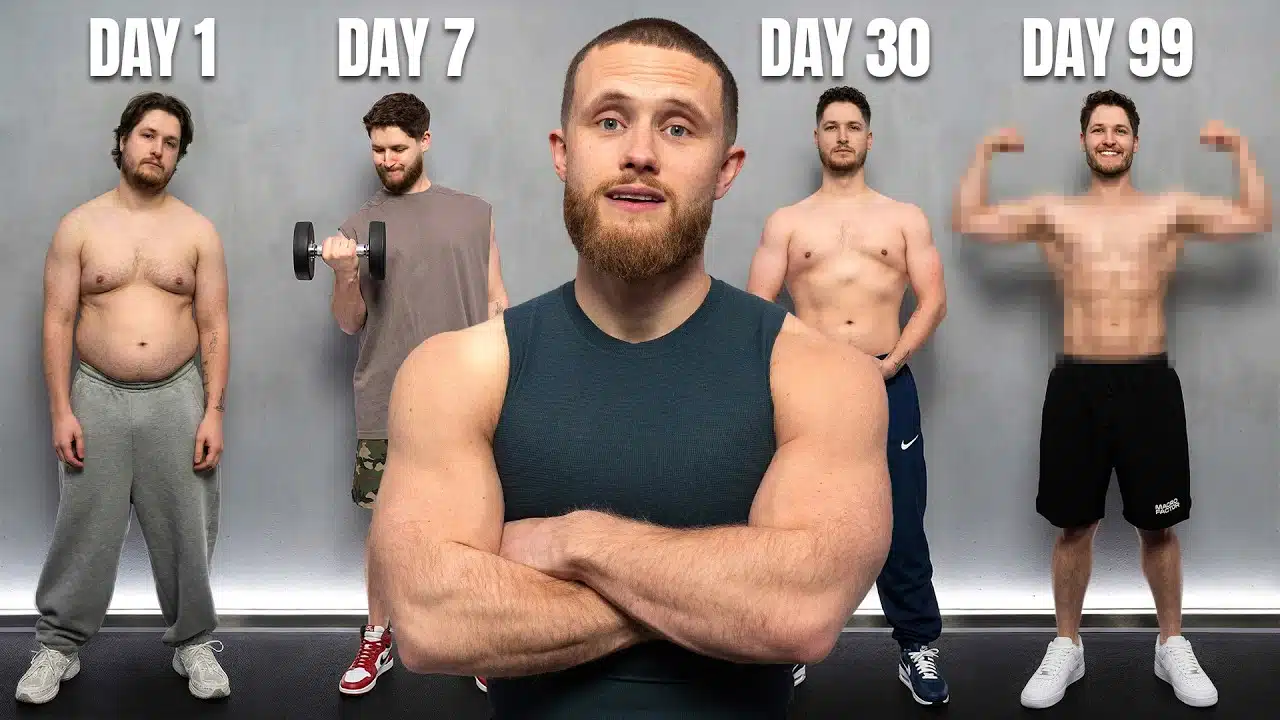
Brad started at 30.5% body fat with prediabetes, while Jeff began at a lean 12%, aiming for single digits.
What happened next demonstrates how vastly different bodies respond to identical protocols.
Jump to:
- The Identical Protocol With Opposite Results
- Low Volume, High Intensity Training
- The Surprising One-Month Check-In
- The Strategic Diet Break
- Mental Health and Behavioral Changes
- Hormone Changes and Health Markers
- Strength Maintenance During Extreme Leanness
- The Final Results and Extended Journey
- Key Takeaways for Sustainable Fat Loss
- The Lifestyle Transformation Beyond Numbers
The Identical Protocol With Opposite Results
Both brothers committed to 1,800 calories daily with 170 grams of protein, incorporating two weekly refeed days at 2,200 calories. Despite identical macros, their meal timing strategies differed dramatically based on personal hunger patterns.
Jeff switched from the traditional bodybuilding approach of four to five meals daily to just three larger meals. Research suggests that when calories run low, fewer but larger meals may prove more satiating—a theory Jeff wanted to test firsthand.
On previous cuts, I’d follow the classic bodybuilding approach of four to five meals a day, but some newer research shows that when calories are low, fewer larger meals may actually be more satiating.
Brad took an even more aggressive approach with intermittent fasting, restricting his eating window to just five hours—from 5:00 p.m. to 10:00 p.m. This wasn’t Jeff’s recommendation, but Brad found his hunger concentrated in evening hours.
Low Volume, High Intensity Training
The training philosophy represented a departure from typical high-volume cutting programs. They followed a four-day upper-lower split plus an arms and delts day, performing only one to two max-effort sets per exercise after warm-ups.
When you’re on a cut, I think a lower volume program with really high intensity is a smarter approach.
Cardio remained minimal initially—just two 30-minute low-intensity sessions weekly, plus 8,000 to 10,000 daily steps. This conservative approach prioritized recovery while maintaining a caloric deficit.
The Surprising One-Month Check-In
After 33 days, Jeff’s body fat dropped to 10.3%—frustratingly close to his 9% target. More concerning was the lean mass loss indicated by his DEXA scan, despite training intensity remaining high.
Brad’s results told a completely different story. His body fat plummeted from 30.5% to 27.3%—nearly 6 pounds of pure fat loss. Remarkably, he simultaneously gained 2.2 pounds of lean mass.
What I’m most happy with is the lean mass gain, because that tells me that you can still build lean muscle on a low volume training program, as long as you’re pushing it really, really hard, even in a caloric deficit.
This simultaneous fat loss and muscle gain—often considered impossible for trained individuals—highlighted Brad’s beginner advantage and the power of consistent effort.
The Strategic Diet Break
Concerned about potential muscle loss, Jeff implemented a two-week diet break at maintenance calories. Protein and fat remained constant while carbohydrates increased substantially.
The physiological benefits appeared quickly. Within days, Jeff noticed fuller muscle pumps and increased training energy, particularly during grinding final reps. His strength improvements during this period were notable.
However, the diet break extended to three weeks due to travel, and Jeff admitted his discipline wavered. Both brothers’ weights spiked a few pounds, but the strength and recovery benefits justified the temporary deviation.
Mental Health and Behavioral Changes
The psychological evaluations revealed fascinating insights about sustainable fat loss. Jeff’s comprehensive assessment showed no significant changes in appetite, depression, stress, or anxiety—remarkable considering he reached single-digit body fat.
Most importantly, his body image actually improved throughout the cut, and eating disorder indicators remained stable within normal ranges at both checkpoints.
Every time I’ve been this lean before, I felt worse. I’ll get home and I’m like, okay, I’m going to have this meal and then I don’t want to stop until I’m so bloated that it hurts.
Brad experienced the opposite eating pattern. His history of undereating in youth resurfaced during the cut—large meals made him feel uncomfortably full rather than satisfied.
For Brad, the transformation extended far beyond physical changes. His previously debilitating social anxiety improved dramatically as he became more active and confident.
Hormone Changes and Health Markers
The blood work results defied expectations. Jeff’s testosterone dropped 21% despite being simultaneously leaner and stronger—a counterintuitive but physiologically predictable response.
When body fat dips below comfortable ranges, testosterone production decreases to conserve energy. This explains why most men feel and perform best above 10% body fat.
Brad’s testosterone followed the opposite trajectory, increasing as his health improved. Most remarkably, his blood glucose markers—initially in the prediabetic range—dropped into normal healthy ranges by challenge end.
His lifestyle changes essentially reversed his prediabetes.
Cortisol, the so-called stress hormone, remained stable or slightly decreased for both brothers despite the caloric deficit. This stability likely reflected their flexible approach and continued enjoyment of life throughout the process.
Strength Maintenance During Extreme Leanness
Despite reaching 9% body fat, Jeff’s strength either maintained or improved across all tested lifts. His Smith machine bench press remained at 330 pounds, while single-leg extensions jumped from 145 to 160 pounds.
Brad’s strength showed positive trends overall, with dramatic improvements in quad strength and numerous personal records throughout his training log. His pull-up performance exemplified his transformation—from barely three reps initially to eight consecutive reps by challenge end.
Eight pull-ups body weight is nuts.
The ultrasound measurements from biceps and quadriceps strongly indicated muscle maintenance for Jeff, validating the low-volume, high-intensity training approach even during aggressive fat loss.
The Final Results and Extended Journey
Jeff hit his target precisely—9.0% body fat after approximately 122 days. The transformation from 12% to 9% appeared modest numerically but created dramatic visual changes, particularly in muscle definition and separation.
Brad’s journey proved more complex. At the planned endpoint, his body fat measured 26.6%—down from 30.5% but short of his 19% goal. Total weight loss reached 9 pounds for the challenge period.
Rather than accepting defeat, Brad continued solo for additional weeks while Jeff edited footage. This period tested his true commitment and revealed important lessons about sustainable progress.
The Motivation Struggle
As weeks extended beyond the original timeline, Brad’s weight loss stalled despite increased cardio and training intensity. A previously undiagnosed sleep disorder—limiting him to just 4-5 hours nightly—likely hampered progress significantly.
More cardio, working out harder, eating less calories, and my body’s like, eh, this is a good spot to just stay at.
After addressing his sleep issues medically, Brad’s energy improved, though his body fat percentage remained at 26% in subsequent scans. The number no longer mattered—his health markers, strength, mobility, and quality of life had transformed completely.
Key Takeaways for Sustainable Fat Loss
The experiment revealed several evidence-based insights for effective cutting:
- Meal timing flexibility matters: Three larger meals worked better than five smaller ones for satiety during Jeff’s cut
- Intermittent fasting isn’t universal: Brad thrived on a 5-hour eating window, but individual hunger patterns should guide timing decisions
- Low volume can preserve muscle: One to two high-intensity sets per exercise maintained and even built muscle when pushed to true failure
- Diet breaks preserve sanity: Strategic increases to maintenance calories restored training performance and mental clarity
- Beginners can recomp: Brad simultaneously lost fat and gained muscle—an advantage that diminishes with training experience
- Sleep is non-negotiable: Brad’s undiagnosed sleep disorder significantly impacted his progress and recovery capacity
- Mental health requires monitoring: The psychological evaluations provided crucial feedback about sustainability and warning signs
The Lifestyle Transformation Beyond Numbers
While Jeff achieved his numerical target and Brad fell short, both brothers demonstrated that meaningful transformation extends far beyond body fat percentages.
Brad’s reversal of prediabetes, dramatic improvement in social anxiety, newfound enjoyment of physical activity, and career shift to work with his brother represented life-altering changes that no DEXA scan could capture.
Jeff proved that reaching single-digit body fat doesn’t require sacrificing mental health or social life when approached with flexibility, patience, and evidence-based strategies.
The most important lesson? Sustainable habits matter infinitely more than hitting arbitrary numbers within arbitrary timeframes. Both brothers established practices they could maintain long-term—the true marker of successful body transformation.