If you had just 22 weeks to get down to 12% body fat, how would you do it?
That’s the exact question natural bodybuilding coach and nutritionist Adam tackled in a recent video outlining the precise approach he would follow if he suddenly woke up at 25% body fat.
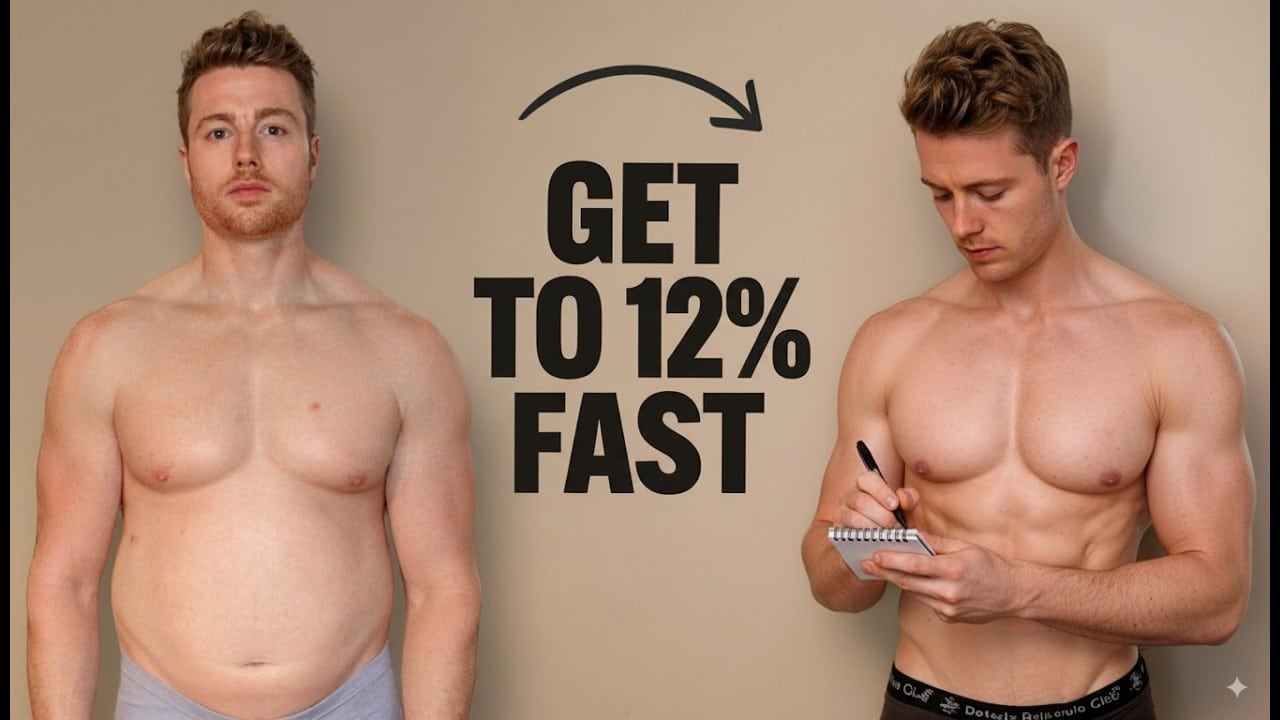
Having spent over two decades in the fitness industry, coaching hundreds of men and holding both a Master’s and a working PhD in nutrition, Adam didn’t hold back.
What follows is a crystal-clear breakdown of the step-by-step fat loss strategy he uses himself and with clients—backed by real-world application, nutritional science, and a healthy dose of realism.
Expect practical tips, brutal honesty, and a proven framework anyone can follow. Let’s get into it.
Jump to:
- Step One: Find Out Exactly Where You’re Starting
- Track Progress Using Body Weight, Not Body Fat Percentage
- Dialing in Nutrition: Calories First
- Pick Foods That Fight Hunger
- Example Daily Meal Template
- Lift to Keep Muscle While Leaning Out
- Use Steps to Burn Calories Without Burning Out
- Supplements: Keep It Minimal
- Adjust When Progress Slows, Not When Motivation Dips
- It Might Be Simple, But It’s Not Always Easy
Step One: Find Out Exactly Where You’re Starting
Before making a single dietary change, Adam emphasizes the importance of running the numbers: where are you now, where do you want to be, and how long will it realistically take?
In this hypothetical scenario, he starts at 220 pounds with 25% body fat and a goal of reaching 12%—considered a visibly lean yet sustainable level for most men.
Using a custom projection calculator (which he’s made publicly available), he estimates he needs to lose around 36 pounds to reach his target.
Rather than choosing a deadline based on guesswork, he factors in rate of fat loss, life events like travel and social outings, and ultimately lands on a 22-week timeline.
“Whatever body fat percentage you think you are—add 5%,” Adam says.
This level of honesty sets the stage for an effective plan. Most guys underestimate just how much fat they need to lose and how light they’re going to have to get.
Track Progress Using Body Weight, Not Body Fat Percentage
While the goal may be to reduce body fat, Adam uses daily body weight tracking as the main marker of progress. It’s more practical and sensitive to change week by week than trying to precisely measure body fat levels.
As long as the scale is trending downward at about 1% of total body weight per week and muscle mass is being preserved, you’re on the right track.
Dialing in Nutrition: Calories First
No amount of training will overcome poor nutrition habits—and nothing is more important than maintaining a calorie deficit.
Adam starts by multiplying total body weight by a range of 10–12 to estimate maintenance or slight deficit calories. In this example, that came out to roughly 2,200–2,640 per day, and he sets a starting target of 2,400 calories.
Calories are then broken down into macronutrients:
- **Protein:** 1 gram per pound of body weight
- **Fat:** Roughly 30% of total calories
- **Carbs:** Fill in the remainder
Adam uses apps like MacroFactor and MyFitnessPal for meal tracking, personally favoring MacroFactor for its handling of dynamic calorie adjustments. He even offers a free trial code.
The Default Diet: Always Know What You’re Eating
To avoid stress, decision fatigue, and inconsistency, Adam uses what he calls a “default diet.”
It’s not a rigid meal plan—but a repeatable structure made up of similar meals with small ingredient swaps when needed.
This strategy removes the friction of daily guesswork, makes grocery shopping easier, and significantly improves adherence.
Pick Foods That Fight Hunger
“Calories are the budget. Hunger is the tax.”
Managing hunger is critical for making a fat loss phase sustainable. Adam selects high-satiety foods rich in:
- **Protein:** whey, lean poultry, Greek yogurt, eggs
- **Fiber-rich carbs:** oats, fruits like kiwi and melon, vegetables
- **High-volume options:** steamed veggies, boiled potatoes
Contrary to popular belief, potatoes are one of the highest-ranking items on the satiety index—meaning they keep you fuller, longer, per calorie.
No Cheat Days, But Freedom When Needed
Adam doesn’t allow “cheat days.” He believes they create an unhealthy on/off mindset around food. That said, he does leave room for flexibility when planned ahead.
Having occasional meals out or events is fine—just track them, anticipate adjustments needed that week, and move on.
Bingeing because you “went over” is far more damaging than being slightly over your daily limit.
Example Daily Meal Template
Here’s an average day of eating when trying to hit calorie and macro targets:
- Meal 1 (10 a.m.): Oats with whey protein, blueberries, kiwi, melon
- Meal 2 (1-2 p.m.): Lean turkey burgers, steamed veggies, boiled potatoes
- Meal 3 (Evening): Meal prep dish with added eggs or side salad
- Snack (optional): Apple or high-fiber bar
- Last Meal: 0% Greek yogurt, berries, peanut butter or protein ice cream
The meals are simple, consistent, and focused on fullness and adherence. They’re not designed to entertain the palate every bite—but to deliver results.
Lift to Keep Muscle While Leaning Out
While cutting body fat, maintaining muscle becomes a top priority—and lifting is non-negotiable. Adam sticks to a basic, effective training split:
- Upper/Lower split, 3–4x per week
- Compound lifts: Squats, deadlifts, presses, rows, pulls
- Isolation work: Arms and abs
- Set/rep range: 2–3 sets per movement, aiming for failure in the 5–20 rep range
Progressing in reps or weight each week is still encouraged, even while in a deficit.
Use Steps to Burn Calories Without Burning Out
While many turn to cardio, Adam prefers increasing step count as a tool for boosting calorie burn in a sustainable way.
His goal? About 12,000 steps per day, broken up into blocks:
- Morning walk with coffee
- Lunchtime stroll
- Admin work on a walking pad
- Evening top-up if needed
Half his step goal is usually hit before 1–2 p.m. This prevents endless late-night walks and hunger-driven low-calorie days.
Supplements: Keep It Minimal
You don’t need a medicine cabinet full of pills to get lean. Adam’s essentials are:
- Creatine monohydrate
- Magnesium
- Multivitamin
- Fish oil or Vitamin D (if dietary intake is low)
No fat burners. No expensive stacks. Just fundamentals for health and muscle support.
Adjust When Progress Slows, Not When Motivation Dips
Fat loss is a game of delayed gratification—results don’t show up overnight. Adam sets expectations upfront: the first few weeks may not look like much is changing.
He uses weekly average weigh-ins to assess progress and only adjusts calories or activity when things stall—not when motivation fluctuates.
Throughout the 22-week cut, calories may drop below 10 per pound of body weight and steps may increase past 15,000 per day. It gets tough—but it’s expected.
It Might Be Simple, But It’s Not Always Easy
Fat loss at this level doesn’t happen by accident. It’s built on habits, structure, consistency, and mindset. According to Adam:
“Less than 1% of men in the Western world are under 15% body fat. If you want results that 99% of men don’t have, you have to do what 99% of men won’t.”
Success comes down to repeatable systems, emotional regulation, and decision-making even when motivation dips. These are learned skills—and they’re coachable.
Adam finishes by reminding viewers that if they want help building those skills or developing their own step-by-step roadmap, they can schedule a call to work with him directly.
For anyone feeling overwhelmed by the process, his advice is simple: trust the system, be honest, and block off time for what matters.
Fat loss might not be easy—but it is predictable if you follow the science and commit to the habits.