Powerlifting phenom Jesus Olivares is once again pushing the limits of what’s possible in raw strength.
On August 11, 2025, the five-time IPF world champion shared an Instagram reel that showcased a jaw-dropping 425-kilogram (937-pound) squat triple—his heaviest triple ever, and a statement that he’s only getting stronger.
Despite already holding the all-time IPF raw squat world record of 478 kilograms (1,053.8 pounds), Olivares is still raising the bar in training.
His latest performance isn’t just a PR—it’s a powerful signal that he’s refining every detail with surgical focus.
Jump to:
“Been a long time since I’ve hit an all-time squat PR”
In the caption of the post, Olivares reflected on what this lift meant to him:
“Been a long time since I’ve hit an all-time squat PR. Far too long.”
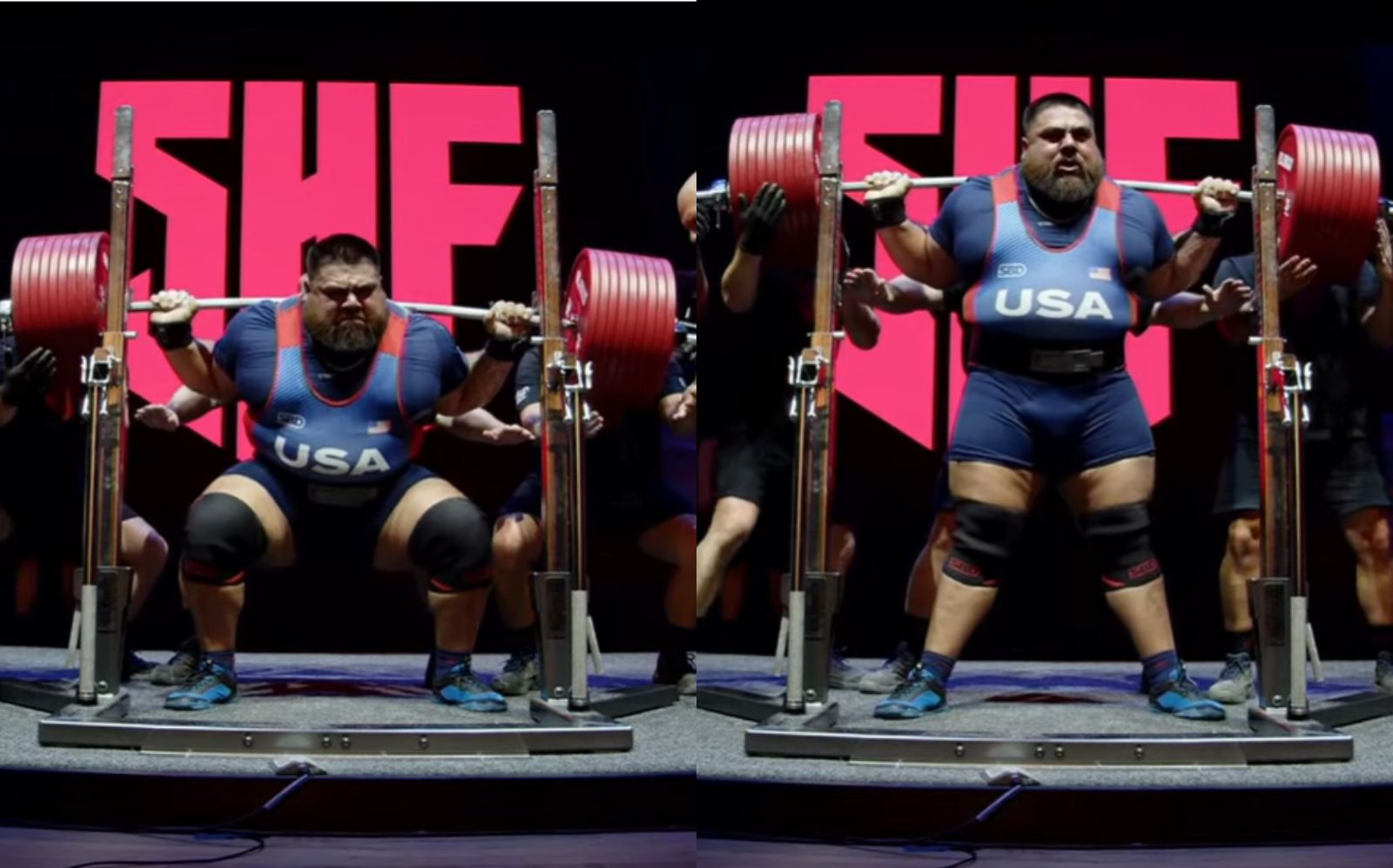
The video begins with Olivares stepping out of the rack, surrounded by five spotters. The massive 425-kilogram barbell rests in a low-bar position across his upper back—a technical setup that’s become a signature part of his evolving squat strategy.
With minimal hesitation, he locks in his stance and descends into the first rep. The bar moves smoothly through the full range of motion, and he explodes out of the hole with surprising speed. The second rep matches the first in pace and control. After a brief pause at the top, he sinks the third and final rep with equal authority, walking the bar back into the rack with ease.
Later, in his Instagram stories, Olivares admitted he regretted not attempting a fourth rep, saying he still had energy left in the tank.
Why This Lift Matters
While many fans are used to seeing Olivares dominate on the platform, what makes this lift so important is its context and consistency.
This 425-kilogram triple isn’t just heavy—it’s nearly 90% of his all-time best squat performed three times in a row, in training conditions. That kind of volume at such high intensity is extremely rare, even among elite lifters.
And it’s even more impressive when you consider he squatted 440 kilograms (970 pounds) in training just a few months ago. Now, hitting 425kg for reps suggests he’s built not just max strength, but also elite-level strength endurance.
Form, Focus, and Smart Programming
This wasn’t brute strength alone. Olivares continues to dial in the details—especially his technique.
In recent months, he’s made a clear shift to a lower bar position during his squats. By placing the bar slightly lower across the upper back, he shortens the range of motion and improves leverage. This approach maximizes hip drive and often leads to better bar control—especially for lifters with longer limbs or larger frames.
In the 425kg triple, that refinement is on full display.
Alongside his technical adjustments, he also continues to rely on essential supportive gear:
- Weightlifting belt for core bracing and lumbar protection
- Knee sleeves for compression, warmth, and slight rebound
- Wrist wraps to stabilize the joint under heavy axial load
These tools don’t replace skill—but they help Olivares train safely at world-class intensities.
A Glimpse of What’s Coming
Although Olivares qualified for the 2025 World Games in Chengdu, China, he confirmed he would not be competing. No official explanation has been offered, but the decision may reflect a deliberate focus on long-term development and peaking when it matters most.
His last meet was the 2025 IPF World Classic Championships, where he totaled 1,070 kilograms (2,358 pounds) across three lifts:
- 430kg (948lb) squat
- 270kg (595lb) bench press
- 370kg (815lb) deadlift
That meet reinforced his dominance. But this new training PR hints that he may be entering a new phase—one where 425kg triples become routine and a 480kg+ squat isn’t out of reach.
Strength, Maturity, and Momentum
In elite strength sports, hitting a triple with near-max weight speaks volumes. It reflects not just peak performance, but also durability, motor control, and the confidence to train close to the edge without tipping over.
Olivares didn’t need to chase this number. He earned it through years of disciplined training, smart recovery, and technical evolution. It’s also a reminder that progress in powerlifting isn’t just about competition day—it’s about showing up, day after day, and refining the process.
With the 425kg triple in the books, it’s clear: Olivares is not just maintaining his position at the top—he’s still climbing.
And if he’s squatting 937 pounds for three reps in training?
The next time he hits the platform, something historic may be on deck.