In the world of CrossFit, few physical benchmarks command the awe and respect of the 5-500 challenge — running a sub-5-minute mile and squatting 500 pounds on the same day.
Long considered nearly impossible, this test of peak strength and speed became legendary among elite athletes.
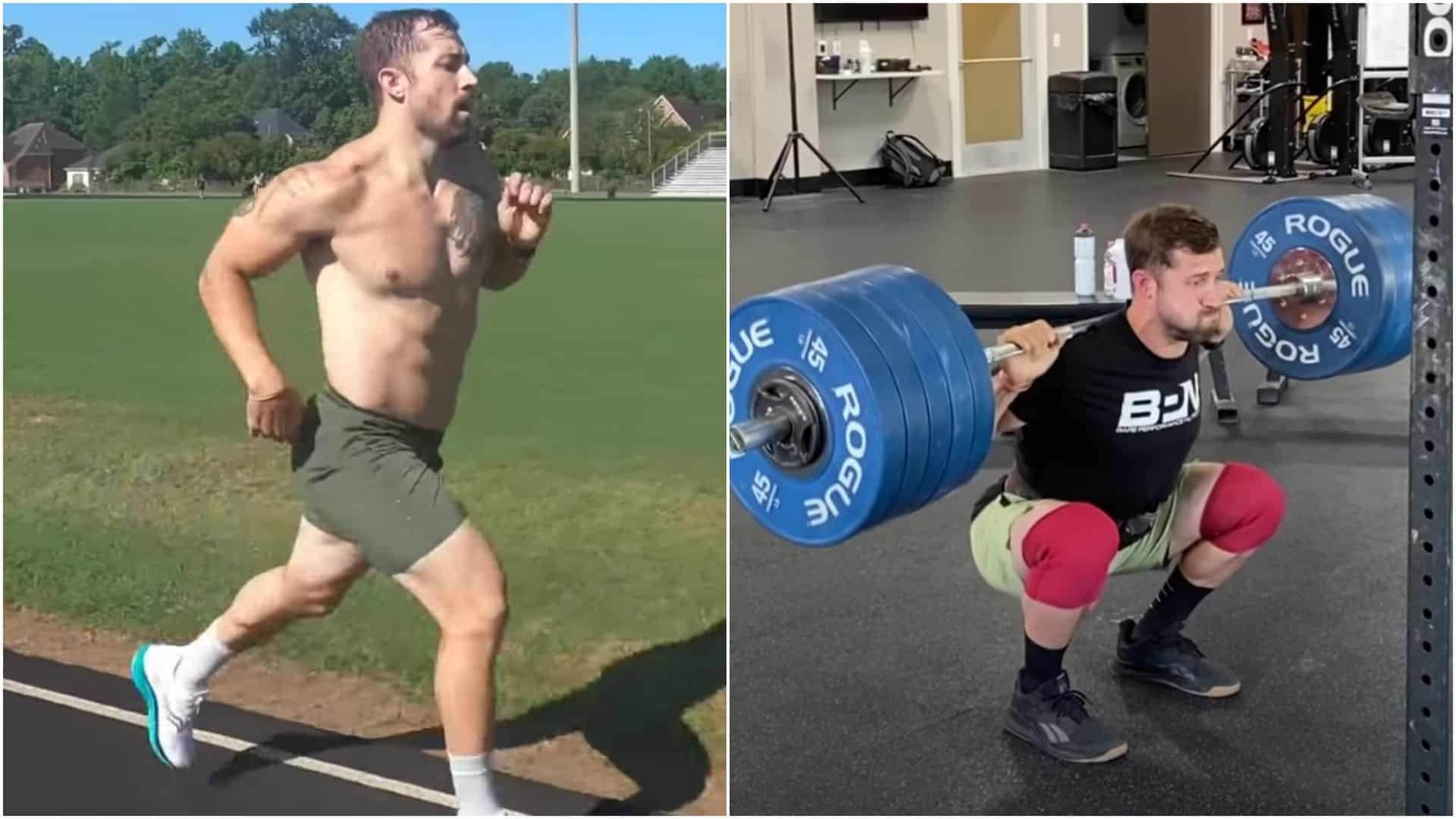
Adam Klink didn’t just chase this benchmark — he conquered it. And in doing so, he changed what many believed was humanly possible.
Jump to:
The Day Strength Met Speed
In a feat that stunned the CrossFit community, Klink ran a 4:56 mile and followed it with a 500-pound back squat, both within a short window.
And just for good measure?
He capped it off with 50 pull-ups, adding an optional element of gymnastic grit to the already brutal test.
But the core challenge — the one that’s been whispered about for years in boxes around the world — has always been twofold:
- Run one mile in under 5 minutes
- Squat 500 pounds
Doing one is impressive. Doing both is almost unheard of.
A Legendary Challenge with Deep Roots
The concept of 5-500 goes back to the early days of CrossFit Level 1 seminars. Coaches emphasized that the goal wasn’t to be a specialist — not a marathoner who can only run, or a powerlifter who can only lift.
Instead, CrossFit aims to build athletes who are exceptionally capable across all domains.
This philosophy was further reinforced by Dave Castro, former director of the CrossFit Games, who posed the question in his book Constructing the CrossFit Games: Could anyone run a sub-5-minute mile and squat 500 pounds in the same day?
Klink answered that question definitively.
Training for an Unlikely Combination
The biggest challenge? Balancing two qualities that seem to cancel each other out.
To squat 500 pounds, you typically need to be heavier and muscular. But to run a 4:56 mile, you must be light, efficient, and fast.
“It was probably the hardest thing I’ve ever done in my life,” Klink admitted. “The most intense running I’ve ever done — especially at that weight.”
His training included:
- Three runs per week: track intervals, road intervals, and longer tempo runs
- Heavy squat sessions: to maintain strength without sacrificing mobility
- Recovery protocols: mobility work and strategic rest to avoid burnout
“I Was Trying to Gain Every Advantage”
Klink wasn’t leaving anything to chance.
As he neared his final mile test, he began experimenting with track spikes — but for a 200+ pound athlete, they were a poor fit. “I couldn’t stay on the ball of my foot. My heel would start to hit the ground after 800 meters.”
Eventually, he switched to plated shoes, which provided enough bounce and support to power him through the run. “I felt like I had a superpower,” he said after testing them.
The margin for error was razor thin. Even one percent improvement in form or efficiency mattered.
Diet: The Unsung Struggle
Elite performance requires elite fueling. Klink was consuming around 500 grams of carbohydrates per day just to maintain strength while increasing his running volume.
“I had to eat two English muffins, a bagel, and a bowl of cereal before bed,” he shared. “Just to hit my carb goals.”
His wife teased him for complaining. “You’re whining about eating five bagels before bed?” she laughed.
But for Klink, the challenge wasn’t overeating — it was strategically fueling without compromising performance.
Not Just Physical, But Mental
One of Klink’s toughest moments came the week before his big attempt.
During a heavy single squat session, he failed 500 pounds — a weight he had hit multiple times before. “It was the first time in training I failed that lift,” he said. “It got in my head.”
Despite the self-doubt, he stayed focused. “It was never about going viral,” he said. “I just wanted to prove to myself that I could push the limits of my own potential.”
Why It Matters
The 5-500 challenge isn’t just a viral sensation. It’s a representation of the CrossFit ideal: broad, inclusive fitness.
For most athletes, running faster means losing mass. Gaining strength often slows you down. Klink’s success proved that, with intentional training, both can coexist — even thrive.
And he wasn’t an overnight success. When he started CrossFit in 2012, his back squat was already impressive at 425 pounds — but it took six more years to push that number to 500.
This feat takes patience, programming, and precision.
A New Question: What About Female Athletes?
Following the buzz around Klink’s performance, a new debate began: What would be the female equivalent of the 5-500?
After discussions among athletes and coaches — including Dave Castro — a consensus emerged:
- 5:30 mile
- 350-pound back squat
This version is now becoming the next frontier. Several elite women are already training for it, and the first successful attempt will undoubtedly be another milestone moment.
Final Takeaway: Redefining What’s Possible
Klink’s performance wasn’t just a physical victory. It was a mental, emotional, and strategic triumph. He balanced fatherhood, heat, injuries, and nutrition — all while training for a nearly impossible goal.
More importantly, he’s opened the door for others.
Since his performance, a handful of other athletes have hit the 5-500 benchmark — with some now adding 510-pound squats or faster mile times to compete for the unofficial title.
But for Klink, it was never about titles.
“It was about proving something to myself,” he said.
And in doing so, he reminded us all: Our limits are often self-imposed. With enough grit, preparation, and belief, they can be broken — one stride, one rep, one bagel at a time.