In a recent episode of the Boys Interrupted YouTube show, CrossFit Games mastermind Dave Castro sat down with top athletes Dallin Pepper and Jason Hopper for an unfiltered, hour-long conversation. What started off casual quickly turned into one of the most revealing interviews Castro has given in years.
Now in his 16th year programming the CrossFit Games (minus a brief hiatus), Castro shared his philosophy for 2025, his regrets, his predictions — and why he’s doubling down on the foundational elements of the sport.
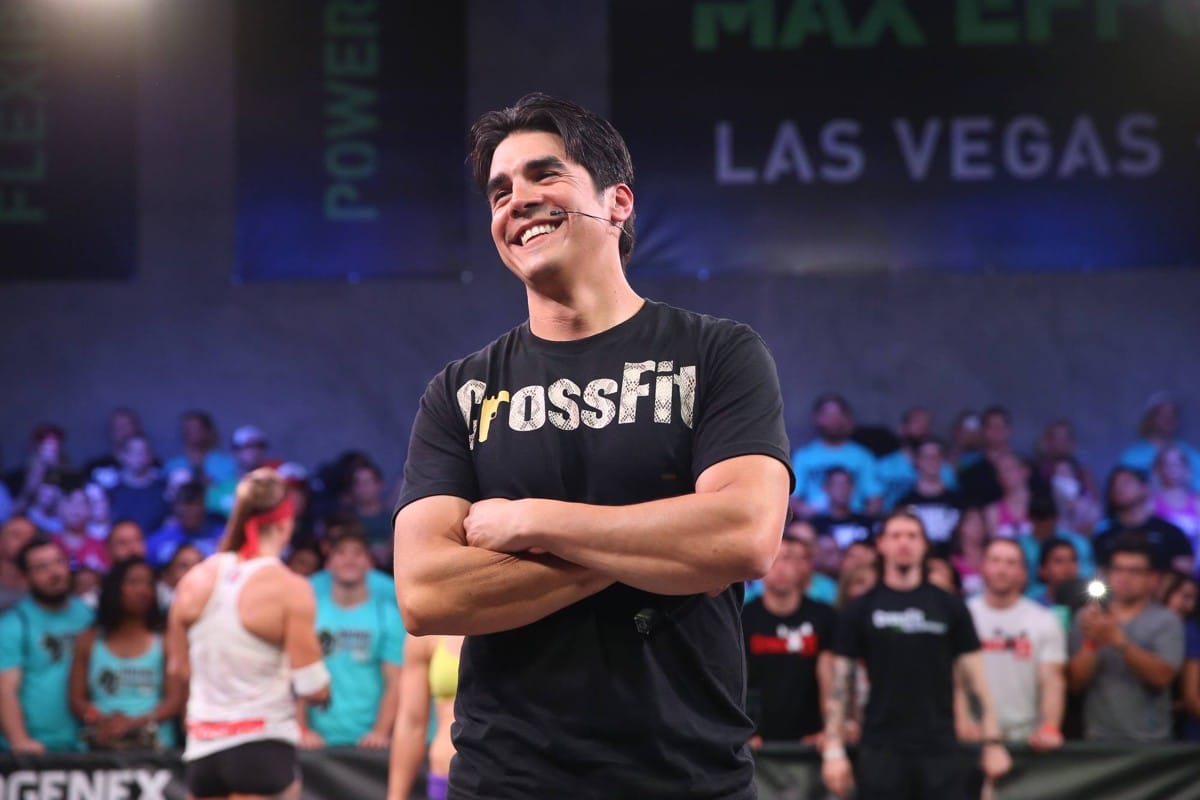
“This year, just think pure CrossFit. Don’t think anything wild,” Castro told the hosts. “It’s going to be just a hardcore test of fitness — bare bones basics.”
From workout volume to athlete traits and even podium predictions, here’s everything Dave Castro revealed about what’s coming at the 2025 CrossFit Games.
Jump to:
- Expect Classic, Gritty, No-Nonsense CrossFit
- Don’t Expect Repeat Movements — With One Exception
- Event Volume: Read the History
- Recovery Is Still King
- No Wild Implements, No Problem
- Don’t Hold Your Breath for Regionals (Yet)
- Will He Ever Step Away?
- The Bottom Line
- What Makes a Great CrossFit Athlete, According to Dave Castro
Expect Classic, Gritty, No-Nonsense CrossFit
When asked directly about what kind of workouts athletes should prepare for, Castro didn’t mince words.
“This year, just think pure CrossFit. Don’t think anything wild… just a hardcore test of fitness and CrossFit — bare bones basics,” he said.
Forget speculation around odd objects or surprise modalities. Castro emphasized that athletes should prepare for traditional programming: couplets, triplets, functional movement patterns, and time-tested modalities that reward the well-rounded.
He referenced the legendary 21-15-9 thrusters and pull-ups WOD as an example. On paper? Simple. In execution? Brutal.
“It’s not exciting at all… until you see everybody racing and people doing it in 1:45, just fighting to cross the finish line.”
This year’s programming will rely heavily on effort, pacing, and execution, not gimmicks.
Don’t Expect Repeat Movements — With One Exception
CrossFit Games fans know Castro well enough to read between the lines. When asked whether machines like the rower will show up again this year, his answer gave just enough to speculate.
“If something appears [at the Games], it usually doesn’t appear again,” he said — reaffirming his long-standing programming philosophy.
But running, he clarified, is an outlier. It shows up in many forms: long-distance, sprints, intervals, hill climbs. So athletes can likely expect to hit the pavement or trail in some capacity — but don’t count on the rower making a repeat.
That said, he teased the potential return of the marathon row, the notorious 2018 event that wrecked even the most elite athletes.
“I’m debating putting it back in just so you have to do it now… just to see your score,” he quipped.
Event Volume: Read the History
Athletes constantly seek clues about Games volume to guide their training, and Castro gave just enough historical context for competitors to start planning.
“Look at the history,” he said. “Typically, we do three events a day over three days. 2018 had four on the first day.”
He referenced the 2020 Games, which featured 12 events over three days — including a grueling five-event Friday.
But Castro noted that programming that level of density is only feasible when the athlete field is small, like the five-man/woman format of 2020. This year, the field is larger, which means more logistical constraints.
So what’s the likely scenario? Somewhere between 9 and 12 events — possibly with a four-event day to kick things off, if history repeats itself.
Recovery Is Still King
If there’s one non-negotiable in Castro’s Games design, it’s this: elite athletes need to be able to recover — and fast.
“The Games are a test of recovery,” Castro stated firmly.
He broke recovery into three layers:
- Across the weekend: The cumulative toll of three (or more) days.
- Within the day: Performing in back-to-back events spaced hours apart.
- Within the heat: Events programmed back-to-back with minimal rest.
Castro defended the controversial decision to score back-to-back events separately, even when they feature similar movements, noting that they test short-window recovery — a hallmark of CrossFit performance.
“That’s what separated Rich and Matt,” he said. “Their ability to recover quickly… and still dominate late in the weekend.”
No Wild Implements, No Problem
Despite fans’ obsession with novelty — pegboards, yokes, paddleboards, you name it — Castro emphasized that this year is about refining, not reinventing.
“Someone asked what new implements are going to be there. I said, ‘Don’t worry about anything new.’ Just focus on CrossFit.”
He made clear this isn’t about laziness or lack of creativity. It’s about creating a truly fair, data-backed test that doesn’t rely on shock value.
In fact, Castro wants to provide a level playing field — so that athletes can prepare for what matters most: movement proficiency, mental grit, and pure conditioning.
Don’t Hold Your Breath for Regionals (Yet)
Castro also opened up about broader structural changes to the CrossFit season, including the long-lamented retirement of Regionals. It’s a decision he says still impacts the sport.
“I wish we could’ve kept them. Regionals were great for affiliates and the community — maybe more than for the athletes.”
But while there’s some openness to revisiting that model, he was realistic about the chances:
“It might be too far gone… unless someone new buys CrossFit and decides to do it.”
He acknowledged that the old system drove excitement at the grassroots level — something the current format has arguably struggled to replicate.
Will He Ever Step Away?
After 16 seasons at the helm, it’s fair to wonder whether Castro ever gets tired of it all. But his enthusiasm was undeniable.
“I’m totally excited by it. I really enjoy it right now. I’m motivated by it.”
For this year, he’s doubling down on what made the sport special in the first place — and resisting the urge to overcomplicate.
“Clean programming. That’s what this year is about.”
The Bottom Line
The 2025 CrossFit Games won’t be about reinventing the wheel. It’ll be about pushing it up a hill — faster, smoother, and with better form than everyone else.
Athletes should expect:
- Traditional CrossFit movements
- Brutally simple couplets and triplets
- A pure test of recovery capacity
- Event volume in the 9–12 range
- Almost no surprise implements
And for fans? Expect a return to the roots — a Games that rewards those who’ve mastered the fundamentals and punishes anyone chasing novelty over fitness.
As Castro himself put it:
“It’s going to be just a hardcore test of fitness… the bare bones essence of CrossFit.”
Welcome to the grind.
You said:
great! Now creation another setion on his prediction, and the traits and features that makes a great crossfit atlhetes
ChatGPT said:
What Makes a Great CrossFit Athlete, According to Dave Castro
While Dave Castro is notoriously tight-lipped when it comes to event specifics, he had plenty to say about what separates a good CrossFit athlete from a great one — and who he sees as the most complete athletes heading into the 2025 season.
Castro’s Podium Predictions: Who Has What It Takes?
When asked about his personal picks for the podium at the 2025 CrossFit Games, Castro didn’t hesitate to throw out names — but he didn’t sugarcoat his reasoning either.
“I think the person that most fits that bill at this stage is Dallin [Pepper]. Jeff [Adler] is probably second… and James [Sprague] is close.”
He even added that if he had to place a bet on someone who might become the next dominant force — the new Froning, Fraser, or Toomey — Dallin was his pick.
“Dallin has the potential to be that guy.”
Jeff Adler, while clearly a top-tier athlete, hasn’t consistently podiumed in recent competitions, according to Castro. But he’s still on the shortlist because of his physical tools and mental edge.
And James Sprague?
“James has the same problem you do, Jason,” Castro told host Jason Hopper. “You’re just a little too big.”
The Perfect Build: Size Matters — But So Does Recovery
It’s not just about engine, skill, or strength — body type also plays a role. Castro noted that athletes who fall in the 5’10″ to 5’11″ range seem to have an ideal build for Games success. Not too short, not too tall. Mobile, powerful, and efficient.
“Some of these smaller guys… that 5’10” to 5’11” height seems to be really optimal.”
While size isn’t everything (Rich Froning and Mat Fraser were outliers), it does influence how athletes perform in endurance, gymnastics, and barbell cycling.
That said, physicality isn’t what defines a Games champion in Castro’s eyes.
The #1 Differentiator: Recovery
Over and over again, Castro came back to one thing: recovery.
“What really separated Rich and Matt was their ability to recover… quickly and repeatedly.”
In his view, the best athletes aren’t just good movers — they can show up at 100% again and again, through 10+ events across three or four days.
Recovery isn’t just physical either. It’s also psychological. Athletes who can shake off a bad event, rebound mentally, and refocus are the ones who rise to the top by Sunday.
Adaptability Over Specialization
Another key trait Castro emphasized: versatility. The best Games athletes don’t just have one gear — they have all of them. They can sprint, grind, lift, swim, strategize, and pace across a wildly varied test of fitness.
“Someone who is well-rounded and a really good CrossFitter should thrive at either version [of a workout],” Castro said during a debate about programming back-to-back similar events.
It’s not enough to be the strongest, fastest, or fittest in one domain. You need to be consistently excellent across all of them.
Mental Grit, Competitive Fire
What’s the intangible that no WOD leaderboard can measure? Mindset.
Castro didn’t explicitly say it, but through his commentary, one thing was clear: the elite CrossFit athlete isn’t just tough — they’re ruthless competitors. They don’t flinch at volume, embrace suffering, and show up sharper the deeper they get into a competition weekend.
And even when the leaderboard is stacked, they believe they belong.
“If everything goes right for me, I can see myself on top of the podium,” said Jason Hopper, prompting Castro to challenge him — and other hopefuls — to live up to that belief by embodying all the traits he values most.