Building muscle while losing fat isn’t just possible—it might be the smartest approach you’re not taking.
For years, conventional wisdom suggested tackling these goals separately: cut first, bulk later, or vice versa.
But recent coaching experience with hundreds of clients reveals a different story.
According to fitness coach and content creator who transformed his own physique using this exact approach, most people are wasting precious time following outdated advice that keeps them spinning their wheels.
Jump to:
- Why Sequential Dieting Wastes Your Time
- Who Can Actually Build Muscle While Losing Fat?
- The Calorie Deficit Reality Check
- Setting Your Calorie Targets
- Protein: The Muscle-Preserving Cornerstone
- Making Calorie Tracking Actually Work
- Forget Carb and Fat Ratios
- The Flexible Framework for Food Choices
- Meal Timing Doesn’t Matter (Much)
- Supplements Worth Considering
- Progress Tracking: Your Motivational Fuel
- When Weight Loss Stalls
- Training: The Muscle-Building Stimulus
- Training Intensity: The Critical Variable
- Rep Ranges and Loading
- Volume: Finding Your Sweet Spot
- Progressive Overload: Proof of Growth
- Technique Principles
- Recovery: The Foundation Everything Rests On
- Transitioning to Maintenance
Why Sequential Dieting Wastes Your Time
The traditional approach treats fat loss and muscle building like separate errands requiring two trips.
Building muscle and losing fat operate through different physiological systems that can work simultaneously. Focusing on both goals at once accelerates visible progress dramatically.

If you want something simple that actually works, this is one of the most effective tools I’ve used to build strength, conditioning, and endurance without needing a full gym setup.
- Full-body training with one weight using swings, squats, and presses
- Solid cast iron build that feels stable and lasts for years
- Comfortable grip that makes high-rep workouts easier to handle
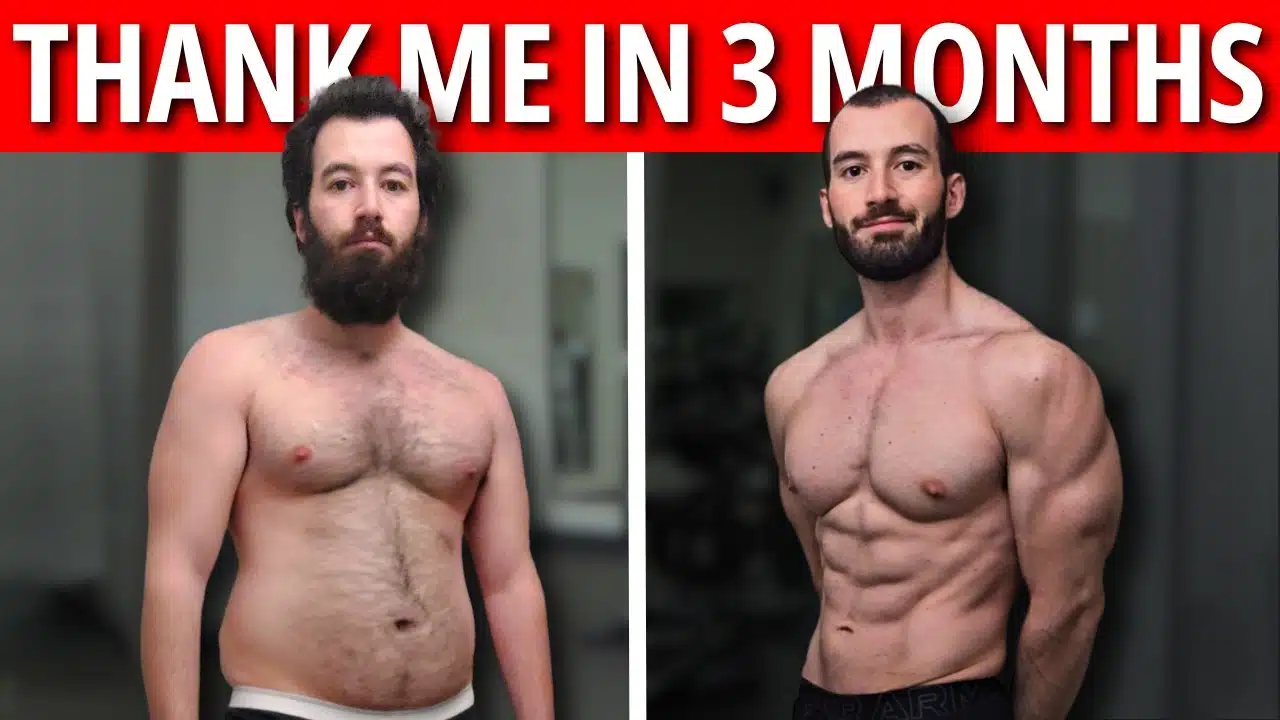
Look at my client Alex here. He’s 44 years old with a young family. He lost around 25 lbs total over the course of about 4 months while getting stronger and building more muscle along the way.
Who Can Actually Build Muscle While Losing Fat?
Three specific groups see the most dramatic results with simultaneous fat loss and muscle gain.
Men carrying more than 15% body fat have substantial energy reserves that support muscle protein synthesis even in a calorie deficit. Beginners who haven’t trained consistently for six months experience rapid “newbie gains” regardless of their nutritional state. Those who’ve trained inconsistently or without intelligent programming can quickly recapture lost adaptations.
Even advanced, lean trainees benefit from this approach. While they may not add significant mass, proper nutrition and training preserve existing muscle during cuts—preventing that dreaded “skinny fat” appearance.
The Calorie Deficit Reality Check
Most energy expenditure comes from functions you don’t control: heartbeat, brain activity, cellular repair, even hair growth.
Non-exercise activity thermogenesis (NEAT)—washing dishes, walking around, fidgeting—burns far more calories than formal workouts. Relying solely on exercise to create deficits is like repeatedly inflating a flat tire instead of replacing it.
Take a look at my client Bryson here, for example. He’s gone from 280 lbs to 215 in the last 8 months. He’s lost over 11 inches on his waistline, built muscle along the way, substantially improved his blood chemistry, and is feeling amazing about his progress.
Bryson didn’t hammer cardio sessions. He walked his dogs and tracked around 9,000 steps daily.
If you want something simple that actually works, this is one of the most effective tools I’ve used to build strength, conditioning, and endurance without needing a full gym setup.
- Full-body training with one weight using swings, squats, and presses
- Solid cast iron build that feels stable and lasts for years
- Comfortable grip that makes high-rep workouts easier to handle
Setting Your Calorie Targets
Sustainable fat loss occurs at 0.5% to 1% of total body weight per week—roughly one to two pounds weekly for a 200-pound person.
Start by calculating maintenance calories based on age, height, weight, and activity level. Apps like MacroFactor provide personalized recommendations and adjust targets based on actual results. Manual calculators work too, requiring a two-week testing period before fine-tuning.
The critical factor isn’t perfection—it’s consistency.
Protein: The Muscle-Preserving Cornerstone
Remember the Kansas State professor who lost weight eating only Twinkies? Weight loss follows calories in versus calories out.
But fat loss requires strategic macronutrient distribution. Dozens of studies confirm high protein intake protects against muscle catabolism during calorie restriction. Combined with resistance training, adequate protein becomes powerfully anabolic.
For larger individuals with significant weight to lose, the “one gram per pound” rule proves excessive. A better guideline: consume grams of protein equal to your height in centimeters.
If you want something simple that actually works, this is one of the most effective tools I’ve used to build strength, conditioning, and endurance without needing a full gym setup.
- Full-body training with one weight using swings, squats, and presses
- Solid cast iron build that feels stable and lasts for years
- Comfortable grip that makes high-rep workouts easier to handle
Leaner individuals should target 0.8 to 1 gram per pound of body weight. Going beyond 1.1 grams per pound offers minimal additional benefit while sacrificing dietary flexibility and enjoyment.
Making Calorie Tracking Actually Work
Calorie tracking fails for most people within days, not because the method doesn’t work, but because early mistakes never get corrected.
Complete transparency makes tracking an effective accountability tool. If you bite it, write it. Under-reporting creates frustrating scenarios where you’re “eating 1,200 calories” yet not losing weight.
- Log immediately after eating rather than reconstructing meals from memory
- Simplify and repeat meals to streamline shopping, prep, and tracking
- Use a food scale instead of eyeballing portions to prevent dramatic underestimation
- Apply the 250 Method for restaurant or family meals: estimate in 250-calorie increments, rounding up when uncertain
Imperfect consistency beats perfect inconsistency every time.
Forget Carb and Fat Ratios
Dr. Eric Helms’ nutrition priorities hierarchy places calorie balance at the foundation, with protein as the critical macronutrient.
Research consistently shows identical fat loss results between low-carb and low-fat diets when protein and calories match. Unless following extreme approaches, carbohydrate and fat ratios simply don’t matter for body composition.
If you want something simple that actually works, this is one of the most effective tools I’ve used to build strength, conditioning, and endurance without needing a full gym setup.
- Full-body training with one weight using swings, squats, and presses
- Solid cast iron build that feels stable and lasts for years
- Comfortable grip that makes high-rep workouts easier to handle
One exception: maintain at least 0.3 grams of fat per pound of body weight to support hormonal health. Beyond that threshold, personal preference should dictate your choices.
The Flexible Framework for Food Choices
Rigid “clean eating” creates misery. Pure flexible dieting—Pop-Tarts and chicken breast—causes bloating, energy crashes, and constant hunger.
The optimal approach combines both philosophies: a foundation of nutrient-dense whole foods with flexibility for treats and restaurant meals.
So, we set him up with our simple meal strategy that he could use to prepare all his weight loss meals in basically 10 minutes per day. And he lost 61 lbs this year.
Simple, repeatable high-protein meals—rotisserie chicken in tortillas, whey protein with yogurt and fruit—make execution effortless. Most meals take longer to eat than prepare.
Getting groceries delivered every two weeks makes healthy choices the default option, setting up automatic daily wins.
Meal Timing Doesn’t Matter (Much)
Your body processes energy on a rolling basis, not a meal-by-meal schedule.
If you want something simple that actually works, this is one of the most effective tools I’ve used to build strength, conditioning, and endurance without needing a full gym setup.
- Full-body training with one weight using swings, squats, and presses
- Solid cast iron build that feels stable and lasts for years
- Comfortable grip that makes high-rep workouts easier to handle
Whether you fast daily, eat six small meals, or consume everything before bed makes negligible difference. Weekly and monthly calorie totals drive results, not timing.
For muscle growth and satiety, two to four protein-dense meals daily works best for most people’s schedules and goals.
Supplements Worth Considering
Supplements represent a tiny fraction of results—so small they’d barely be visible on Helms’ nutrition pyramid if drawn to scale.
The unregulated supplement industry makes safety and efficacy concerns real. Focus on fundamentals before considering any supplementation.
Three evidence-based options deserve attention:
- Whey protein powder: A convenient food product for hitting protein targets without excess calories
- Creatine monohydrate: Modest strength and muscle-building benefits with extensive safety data
- Multivitamin: Inexpensive insurance against micronutrient deficiencies during calorie restriction
Progress Tracking: Your Motivational Fuel
Visible evidence of progress provides unmatched motivation for consistency.
If you want something simple that actually works, this is one of the most effective tools I’ve used to build strength, conditioning, and endurance without needing a full gym setup.
- Full-body training with one weight using swings, squats, and presses
- Solid cast iron build that feels stable and lasts for years
- Comfortable grip that makes high-rep workouts easier to handle
Without proof your plan works, sustaining effort for months or years becomes nearly impossible. Multiple data points create a complete picture, like evidence at a crime scene.
Track body weight daily or at minimum three times weekly—same time, same conditions (morning, unfed, unwatered). Daily fluctuations are normal; compare weekly averages to identify trends.
Monthly progress videos provide visual documentation. Record 10-second clips showing front, side, and back views. Screenshot key frames for comparison.
Body measurements—flexed biceps, waist at navel—add quantitative data. These take 10 minutes monthly but prove invaluable.
Non-scale victories matter too: belt notches moving, clothes fitting differently, unsolicited compliments from others.
When Weight Loss Stalls
Metabolic adaptation is real. As you lose weight, your body becomes more energy-efficient: lower body temperature, reduced fidgeting, better nutrient extraction.
If you want something simple that actually works, this is one of the most effective tools I’ve used to build strength, conditioning, and endurance without needing a full gym setup.
- Full-body training with one weight using swings, squats, and presses
- Solid cast iron build that feels stable and lasts for years
- Comfortable grip that makes high-rep workouts easier to handle
Calorie targets that initially produced weight loss eventually stop working. Individual variation means calculations provide estimates, not guarantees.
Never adjust your plan until you’ve been consistent with it first. Once you’ve accurately hit targets for two weeks without results, use this decision matrix:
- Low hunger, low activity: Reduce calories by 10%
- High hunger, low activity: Increase daily steps by 2,000
- High hunger, high activity: Consider a diet break
Wait two weeks after each adjustment before making further changes.
Training: The Muscle-Building Stimulus
Adequate protein is the seed. Training provides the sunlight that makes muscle growth happen.
Every rep, every set, every workout has one mission: build muscle. Calorie burning, fitness improvements, and strength gains arrive as bonuses.
Follow a structured training plan—the same basic resistance exercises for at least six months. This consistent stimulus sends a clear message: adapt by building muscle.
If you want something simple that actually works, this is one of the most effective tools I’ve used to build strength, conditioning, and endurance without needing a full gym setup.
- Full-body training with one weight using swings, squats, and presses
- Solid cast iron build that feels stable and lasts for years
- Comfortable grip that makes high-rep workouts easier to handle
Hit each target muscle group at least twice weekly. The specific program matters less than consistency.
Training Intensity: The Critical Variable
Effort separates those who build muscle from those who spin wheels.
In this first video, we see him doing his bicep curls. The technique looks solid. Nothing wrong with that, right? This is how I’d say probably 95% of the guys are training at the gym.
After coaching on effort and proximity to failure, results transformed dramatically.
Record training videos to assess honestly. Look for these signs of insufficient intensity:
- Reps never slow down as sets progress
- Technique breaks down when difficulty increases
- Stopping at arbitrary rep counts (8, 10, 12) regardless of remaining capacity
For compound movements (squats, deadlifts), leave 1-2 reps in reserve to maintain technique safety. For isolation exercises (curls, raises), train to complete failure or zero reps in reserve.
Rep Ranges and Loading
“Heavy” is relative. What matters isn’t absolute load but how many reps you can perform before failure.
If you want something simple that actually works, this is one of the most effective tools I’ve used to build strength, conditioning, and endurance without needing a full gym setup.
- Full-body training with one weight using swings, squats, and presses
- Solid cast iron build that feels stable and lasts for years
- Comfortable grip that makes high-rep workouts easier to handle
Research confirms muscle growth across wide rep ranges when training approaches failure. Extreme ends present logistical issues: sets of 2 require excessive rest and joint stress, while sets of 30 cause cardiovascular fatigue before muscular failure.
Most work should fall in the 8-12 rep range, with occasional sets from 5-7 or 15-20 reps for variety.
When a program prescribes “8-12 reps,” select weight that brings you near failure within that window.
Volume: Finding Your Sweet Spot
Training variables exist in tension. Maximizing one requires compromising others.
Most people do too many sets, diluting quality. Fewer high-quality sets produce superior results to numerous mediocre ones.
Start with 6-12 sets per body part weekly. Master training intensity first, then add volume if needed.
If you want something simple that actually works, this is one of the most effective tools I’ve used to build strength, conditioning, and endurance without needing a full gym setup.
- Full-body training with one weight using swings, squats, and presses
- Solid cast iron build that feels stable and lasts for years
- Comfortable grip that makes high-rep workouts easier to handle
Progressive Overload: Proof of Growth
After initial practice, strength gains on isolation exercises directly correlate with muscle growth.
Adding weight and reps over time both stimulates muscle building and proves your program works.
Use rep ranges to guide progression. Within a 6-10 rep target, add reps weekly with the same weight. Once you exceed the range (hitting 11 reps), add small weight increments and restart the cycle.
Don’t rush weight increases, but don’t stagnate either. Progress on smaller exercises may take months—that’s normal.
Technique Principles
Unlike competitive powerlifting, muscle building has no rigid technique standards. Wide variation works, guided by key principles:
- Avoid joint pain through adjusting positions, grip width, angles
- Use controlled tempo on lowering phases without excessively slow eccentrics
- Employ full range of motion within comfortable limits
- Minimize momentum and cheating that robs target muscles of tension
Maintain consistent technique. As long as movements feel comfortable, you’re getting stronger with controlled form through good depth, you’re succeeding.
If you want something simple that actually works, this is one of the most effective tools I’ve used to build strength, conditioning, and endurance without needing a full gym setup.
- Full-body training with one weight using swings, squats, and presses
- Solid cast iron build that feels stable and lasts for years
- Comfortable grip that makes high-rep workouts easier to handle
Recovery: The Foundation Everything Rests On
Recovery determines how much benefit you extract from nutrition and training efforts.
Sleep restriction sabotages everything: less muscle built, less fat lost, increased hunger, more cravings, elevated stress.
Target minimum six hours nightly. Optimize quality through:
- Avoiding screens before bed
- Keeping rooms dark and cool
- Implementing relaxation routines (breathing, meditation, journaling)
- Maintaining consistent sleep/wake schedules
Stress management—through boundary-setting, enjoyable activities, nature exposure, meditation—proves equally critical but requires ongoing commitment.
Transitioning to Maintenance
Eventually you’ll reach target leanness or hit a wall of diet fatigue.
Increase calories to maintenance levels, expecting a temporary 2-3% weight bump from glycogen, sodium, and water—not fat regain.
If you want something simple that actually works, this is one of the most effective tools I’ve used to build strength, conditioning, and endurance without needing a full gym setup.
- Full-body training with one weight using swings, squats, and presses
- Solid cast iron build that feels stable and lasts for years
- Comfortable grip that makes high-rep workouts easier to handle
Continue daily activity, training, healthy eating foundations, and progress tracking. Resist immediately reintroducing treats; slowly add them as hunger normalizes.
For maintenance, keep calories steady while training for muscle growth. For maximized muscle building, add 200 daily calories above maintenance, targeting 1% body weight gain monthly for 6-12 months, then cut briefly to remove excess fat.
This cycle of building and cutting produces progressively leaner, more muscular physiques over time.