Tendon injuries are quietly ending seasons, careers, and even weekend workouts before most people realize what’s happening.
New research suggests nutrition might be playing a larger role in tendon health than anyone previously understood.
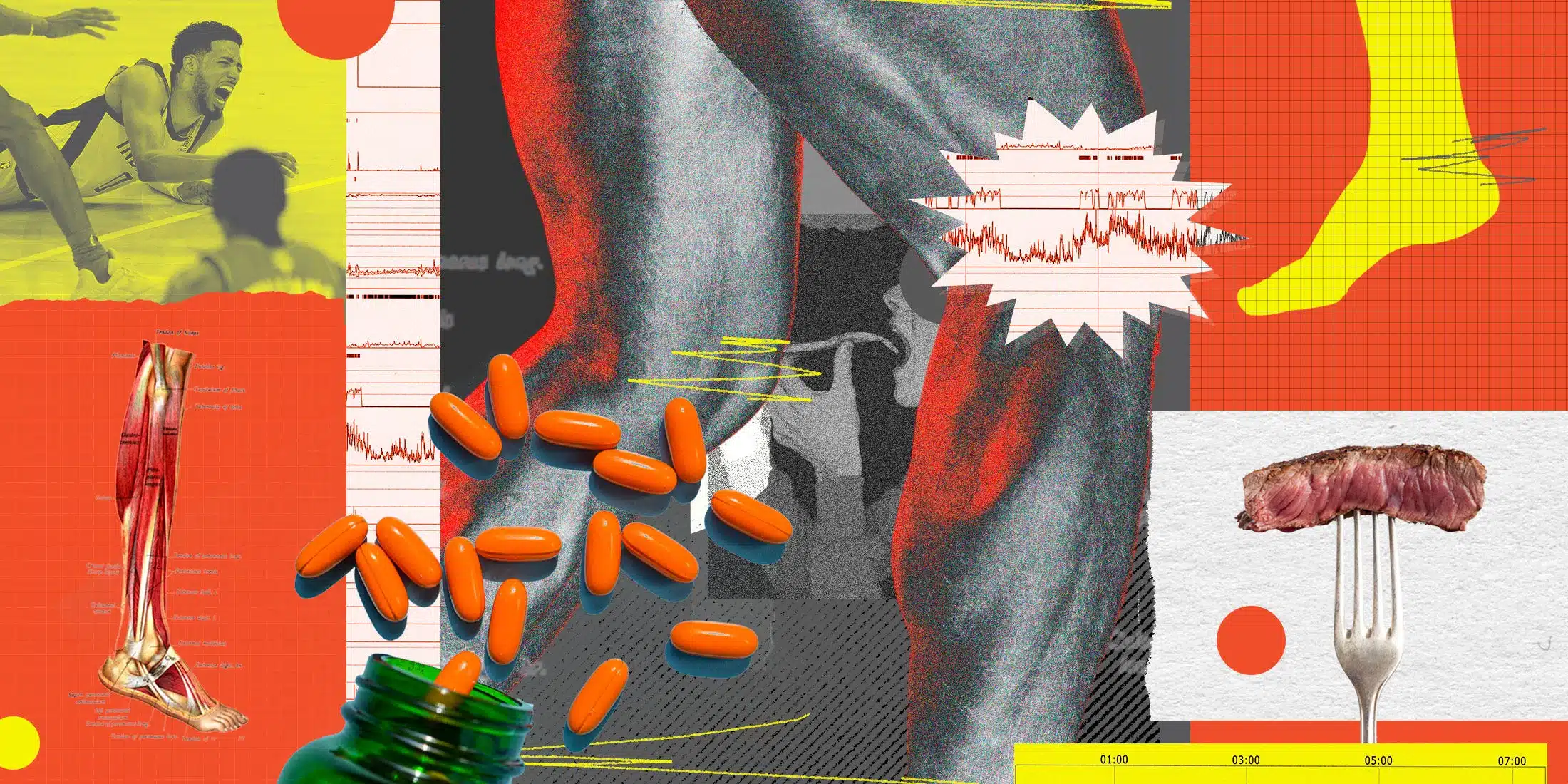
Registered dietitian Dezi Abeyta recently explored how blood sugar and saturated fat could be silently weakening connective tissue from within.
What she discovered might change how athletes and active individuals approach injury prevention entirely.
Jump to:
When Elite Athletes Go Down
Game 7 of the 2025 NBA finals between Indiana and Oklahoma City became a nightmare scenario for Pacers fans.
With less than five minutes gone in the opening quarter, two-time All-Star Tyrese Haliburton planted his foot outside the three-point line—and everything changed.

If you want something simple that actually works, this is one of the most effective tools I’ve used to build strength, conditioning, and endurance without needing a full gym setup.
- Full-body training with one weight using swings, squats, and presses
- Solid cast iron build that feels stable and lasts for years
- Comfortable grip that makes high-rep workouts easier to handle
Haliburton’s down! He looks hurt!
The MRI confirmed what everyone feared: torn right Achilles. Surgery followed, then eight to 10 months of rehab, effectively ending his 2026 season before it began.
Reports noted a calf strain had appeared days earlier. Warning signs the body sent that nobody caught in time.
Achilles ruptures strike men more than three times as often as women, with rates climbing steadily year over year according to a 2026 study. Peak injury window? Ages 30 to 49. But younger athletes aren’t safe either—about 60 percent of ruptures happen during sports.
And the typical victim isn’t a professional. He’s a recreational athlete, average age nearly 38, living his normal active life until his tendon snaps.
The Nutrition Connection Nobody’s Discussing
Following the media coverage around Haliburton’s injury, Abeyta started connecting dots between her work as a registered dietitian, emerging scientific research, and patterns she’d observed in clients with tendon injuries.
Maybe there’s a preventive factor hiding in plain sight that sports medicine hasn’t fully explored yet.
If you want something simple that actually works, this is one of the most effective tools I’ve used to build strength, conditioning, and endurance without needing a full gym setup.
- Full-body training with one weight using swings, squats, and presses
- Solid cast iron build that feels stable and lasts for years
- Comfortable grip that makes high-rep workouts easier to handle
Your Tendons Are More Alive Than You Think
Tendons connect muscles to bones throughout your body. Adults have roughly 400 tendons—nearly double the number of bones.
The Achilles links calf to heel, patellar tendon runs kneecap to shin, rotator cuff threads through shoulders, hamstring tendons anchor behind knees.
But tendons aren’t passive ropes. They’re living metabolic tissue that adapts slowly because it’s built slowly.
Tendons take longer to recover, longer to adapt; it could take weeks, whereas muscles recover and adapt within 48 hours.
That’s according to Theresa Lau, DPT, ATC, CSCS, of Evolve Performance and Physical Therapy, who has worked with Major League Baseball’s top athletes.
Tendon damage accumulates quietly over weeks and months, often before anyone notices changes in power, recovery, or speed.
Keith Baar, PhD, professor of molecular exercise physiology at UC Davis, puts the nutrition piece in perspective.
If you want something simple that actually works, this is one of the most effective tools I’ve used to build strength, conditioning, and endurance without needing a full gym setup.
- Full-body training with one weight using swings, squats, and presses
- Solid cast iron build that feels stable and lasts for years
- Comfortable grip that makes high-rep workouts easier to handle
Ninety-five percent of whether your muscle is big or small is down to the exercise. Same thing is true for your tendon. The five percent is what you’re doing with the nutritional components.
Small percentage, but potentially massive impact when that five percent goes wrong.
Training Your Tendons the Right Way
Most people assume tendon injuries happen during explosive movements—the jump, sprint, or lift.
Men’s Health Fitness Director Ebenezer Samuel, CSCS, says tendons actually break on the way down.
A lot of times the Achilles injury is going to happen when we’re in that moment of absorbing force.
Most training programs completely miss this absorption phase. What people don’t do is spend time repeatedly absorbing normal forces rather than maximal ones.
Samuel recommends three movement families every athlete should include weekly:
- Heavy eccentrics like slow single-leg calf lowers that train tendons under full stretch
- Low-level force absorption including jump roping, single-leg hops, bounding—repetitive rhythmic loading most programs ignore
- Explosive depth work such as depth jumps and drop-catch push-ups, trained for quality over volume at three sets of six maximum
Covering all three families throughout your training week is what most programs are missing entirely.
If you want something simple that actually works, this is one of the most effective tools I’ve used to build strength, conditioning, and endurance without needing a full gym setup.
- Full-body training with one weight using swings, squats, and presses
- Solid cast iron build that feels stable and lasts for years
- Comfortable grip that makes high-rep workouts easier to handle
The Saturated Fat Problem
The science connecting metabolic health to tendon injury has been building quietly in recent years.
When tendons are inflamed, repetitive exercise stress creates breaking points. And diet directly affects inflammation.
Craig Moore, RD, CSCS, sports dietitian at Red Bull’s Athlete Performance Center in Santa Monica, has been tracking this knowledge gap for years.
Yet I’ve very rarely seen dietitians actually talk about the role cholesterol and blood sugar play in soft tissue health.
Two key nutrients emerge as primary players: saturated fat and glucose.
Dietary saturated fat raises LDL cholesterol by suppressing the liver’s ability to clear it from bloodstream. That’s different from dietary cholesterol found in whole eggs, which barely moves blood LDL by comparison.
Moore says young, healthy athletes commonly eat large amounts of saturated fat because social media influencers and new dietary guidelines have convinced them it’s beneficial. The trend toward beef tallow as a seed oil alternative has fueled this misconception.
If you want something simple that actually works, this is one of the most effective tools I’ve used to build strength, conditioning, and endurance without needing a full gym setup.
- Full-body training with one weight using swings, squats, and presses
- Solid cast iron build that feels stable and lasts for years
- Comfortable grip that makes high-rep workouts easier to handle
Abeyta has worked with clients who believe diets high in saturated fat don’t contribute to cardiovascular disease, despite consistent evidence linking such dietary patterns to heart disease risk.
Baar points to lab data showing palmitate—the dominant fatty acid in saturated fat, abundant in beef and dairy—might be one mechanism.
We’ve done high-fat diet-fed animals and looked to see what happens in their tendons, and sure enough, their tendon function goes down a little bit, their tendon collagen goes down a little bit.
Post-injury nutrition matters too. Studies show elevated blood cholesterol impairs tendon healing after surgery.
So if you have an athlete who is at risk for an Achilles injury and they have elevated blood cholesterol, there’s something to be said for the fact that you’re actually not optimizing the internal environment for healing and recovery.
Elevated blood cholesterol isn’t only about diet—genetics, thyroid function, metabolic health, and medications all contribute. But for most active people without underlying conditions, diet remains the primary driver and the one variable you can actually change.
When Blood Sugar Becomes Your Enemy
Glucose powers everything from muscle contraction to brain function in the right amounts.
When blood glucose stays elevated—through poor diet, insulin resistance, or early pre-diabetes—excess glucose starts binding to proteins. Tendons become prime targets.
If you want something simple that actually works, this is one of the most effective tools I’ve used to build strength, conditioning, and endurance without needing a full gym setup.
- Full-body training with one weight using swings, squats, and presses
- Solid cast iron build that feels stable and lasts for years
- Comfortable grip that makes high-rep workouts easier to handle
This process creates advanced glycation end products (AGEs) that make collagen fibers in tendons stiffer, more brittle, and far more likely to snap under load.
A 2021 study found athletes with elevated blood sugar faced three times the risk of tendon injury compared to those with normal glucose levels.
Baar sees identical patterns in laboratory research.
We even do things with individuals with chronic kidney disease, or with diabetes, or with all of these different metabolic problems. Yes, their tendon function is lower.
The Numbers That Actually Matter
When sports dietitians assess soft tissue health clinically, they focus on specific biomarkers:
A1C Below 5.7 Percent
Once you cross into pre-diabetic territory, the AGE process accelerates with glucose binding to tendon collagen fibers, making them stiffer and more fragile.
Vitamin D Between 40 and 50 ng/mL
Vitamin D plays direct roles in collagen synthesis and soft tissue repair. Foods like fatty fish, egg yolks, and fortified dairy typically deliver 400 to 800 IU daily—well short of what moves the needle.
If you want something simple that actually works, this is one of the most effective tools I’ve used to build strength, conditioning, and endurance without needing a full gym setup.
- Full-body training with one weight using swings, squats, and presses
- Solid cast iron build that feels stable and lasts for years
- Comfortable grip that makes high-rep workouts easier to handle
A 1,000 to 2,000 IU D3 supplement daily is most reliable, especially fall through spring. Sunlight works too, but only with 15 to 20 minutes of direct skin exposure at midday, not through glass and not with SPF higher than 15.
Ferritin Between 40 and 90 ng/mL for Athletes
Iron is a required cofactor in collagen synthesis, working alongside vitamin C to give tendons structural integrity. Low ferritin slows the very process tendons depend on to rebuild.
Zinc, Manganese, Copper
This mineral trio found in pumpkin seeds, oysters, and whole grains all help collagen formation. Most athletes aren’t tracking or aware of any of the three.
While collagen powder is popular among athletes, taking it without addressing vitamin C, D, iron, and key minerals means raw material shows up with no way to be used. Your body cannot build what it cannot process.
The Warning Sign Everyone Misses
Lau, who works with Major League Baseball athletes, offers one final crucial insight: The biggest sign of overtraining appears in performance before it leads to injury.
An unexplained drop in output is often the first signal.
If you want something simple that actually works, this is one of the most effective tools I’ve used to build strength, conditioning, and endurance without needing a full gym setup.
- Full-body training with one weight using swings, squats, and presses
- Solid cast iron build that feels stable and lasts for years
- Comfortable grip that makes high-rep workouts easier to handle
Don’t wait for the snap.