A muscle sits hidden in your lower leg right now, and chances are, you’ve never heard its name.
It lives deep behind your shin bone, tucked under the larger calf muscle visible in the mirror.
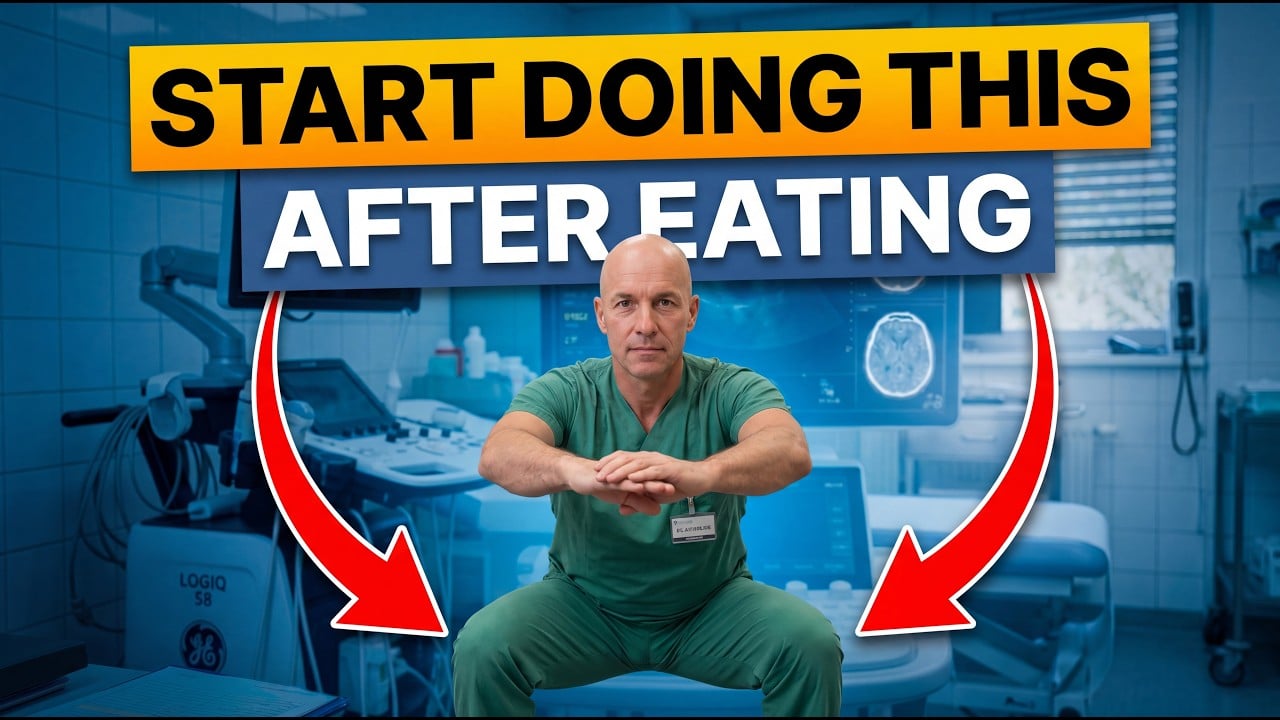
But this small, invisible muscle has an unusual ability: it can pull sugar straight from your bloodstream without your pancreas doing any work.
A peer-reviewed study from the University of Houston found that people who activate this muscle while sitting down—yes, sitting—cut their after-meal blood sugar spike by roughly half.
No gym, no diet changes, no medications required.
Jump to:
- Understanding Glucose: Fuel, Not Enemy
- The Insulin Response and Why It Backfires
- The Afternoon Wall Isn’t About Willpower
- The Long-Term Cost: When Your Pancreas Wears Out
- How Muscles Bypass Insulin Entirely
- The Hidden Muscle That Works Better Than Any Other
- Four Simple Tools That Work After Every Meal
- Why This Matters More After 40
- What Changes in the Short Term and Long Term
- What’s Worth Doing in Practice
Understanding Glucose: Fuel, Not Enemy
Glucose is sugar in its simplest form, and it’s fuel.

If you want something simple that actually works, this is one of the most effective tools I’ve used to build strength, conditioning, and endurance without needing a full gym setup.
- Full-body training with one weight using swings, squats, and presses
- Solid cast iron build that feels stable and lasts for years
- Comfortable grip that makes high-rep workouts easier to handle
Every cell runs on it. Muscles burn it, the liver stores it, and the brain depends on it almost completely.
Cut glucose off from your brain for more than a few minutes, and thinking becomes impossible. So glucose isn’t the problem—it’s what happens when too much arrives too fast and your body has nothing useful to do with it.
When you eat carbohydrates—bread, rice, pasta, potatoes, anything sweet—your digestive system breaks them down into glucose. That glucose enters your bloodstream. This is normal.
Trouble starts when large amounts arrive at once. Picture a garden hose with the tap turned gently—water flows smoothly. Now crank that tap wide open. The hose bulges and strains. That’s roughly what blood vessels experience during a sharp sugar spike.
The Insulin Response and Why It Backfires
Your body notices the surge immediately and sends an urgent message to your pancreas: release insulin, and release it fast.
Insulin acts as a delivery worker, grabbing glucose from blood and shuttling it into cells where it can be used or stored. Some goes to muscles, much goes to the liver where it’s packed away as glycogen—your body’s emergency fuel reserve.
If you want something simple that actually works, this is one of the most effective tools I’ve used to build strength, conditioning, and endurance without needing a full gym setup.
- Full-body training with one weight using swings, squats, and presses
- Solid cast iron build that feels stable and lasts for years
- Comfortable grip that makes high-rep workouts easier to handle
But here’s where things get messy. If your muscles are already full, your liver is already packed, and you’re sitting still after dinner, your body still must handle leftover glucose. It doesn’t discard it. It tucks it into fat cells, and once there, it’s incredibly difficult to retrieve.
Meanwhile, insulin has done its job almost too well. It’s shoved so much glucose out of your blood that sugar levels drop—sometimes lower than before eating.
This is the crash.
The Afternoon Wall Isn’t About Willpower
When blood sugar drops rapidly, your brain panics. It sends out an alarm: energy is running low, fix this immediately.
Tiredness washes over you. Your head feels foggy, thoughts turn slow and sticky, eyelids grow heavy. Then comes that desperate craving for something sweet—cookies, candy, chocolate from the office kitchen.
This isn’t weakness or lack of discipline. It’s pure chemistry. Your brain is protecting itself from running out of fuel by demanding more.
If you want something simple that actually works, this is one of the most effective tools I’ve used to build strength, conditioning, and endurance without needing a full gym setup.
- Full-body training with one weight using swings, squats, and presses
- Solid cast iron build that feels stable and lasts for years
- Comfortable grip that makes high-rep workouts easier to handle
Sugar went up fast, came down fast, and now your brain has entered energy conservation mode. It slows everything non-essential to keep critical functions running.
Consider Linda, a 44-year-old accountant. Sharp in the morning, she hit a wall every afternoon after lunch. Her head went foggy, concentration evaporated. Like clockwork around 3:00, she walked to the vending machine for chocolate.
For years, she blamed herself—told herself she had no discipline. But that was never true. Her brain was running the same biochemical cycle daily. Chocolate pushed glucose back up, then it crashed again. By 6:00 PM, she felt completely drained, even when her workload was light.
She wasn’t exhausted from work. She was exhausted from a blood sugar roller coaster nobody had explained to her.
The Long-Term Cost: When Your Pancreas Wears Out
Your pancreas isn’t infinite. Every excessive insulin release wears it down slightly.
At first, it keeps up easily. Then it slows down. Eventually, your cells start ignoring insulin signals—a condition called insulin resistance.
If you want something simple that actually works, this is one of the most effective tools I’ve used to build strength, conditioning, and endurance without needing a full gym setup.
- Full-body training with one weight using swings, squats, and presses
- Solid cast iron build that feels stable and lasts for years
- Comfortable grip that makes high-rep workouts easier to handle
In plain terms: there’s plenty of insulin in your blood, but cells have stopped listening. The key exists, the lock exists, but the lock is jammed.
To force glucose into cells anyway, your pancreas must release even more insulin. More and more, year after year, working harder for diminishing returns.
The tricky part? For years, routine blood work can look fine. There’s no diagnosis, no flashing red light. But the fatigue is real, belly fat creeps in, cravings won’t relent.
Ironically, this exact moment—when nothing is officially wrong yet—is the easiest time to reverse course.
Take Mike, 52, who visited his doctor for back pain. During conversation, he mentioned he’d been constantly hungry for three years, even right after full meals. An hour later, hunger returned.
Blood work showed his fasting glucose at the very top of normal range. Not diabetes, not even pre-diabetes officially. But to an experienced clinician, that number told a story: his pancreas was running near its limit.
If you want something simple that actually works, this is one of the most effective tools I’ve used to build strength, conditioning, and endurance without needing a full gym setup.
- Full-body training with one weight using swings, squats, and presses
- Solid cast iron build that feels stable and lasts for years
- Comfortable grip that makes high-rep workouts easier to handle
If this process continues uninterrupted, insulin resistance slides into pre-diabetes, then type 2 diabetes. Complications follow: blood vessel damage, vision problems, kidney trouble, slow-healing wounds.
But while numbers remain in range, all of this can be stopped, slowed, and often reversed.
How Muscles Bypass Insulin Entirely
Inside every muscle cell sit tiny structures called mitochondria. They work like furnaces, grabbing glucose from blood, burning it, and converting it to energy.
While you’re sitting still, those furnaces run on low pilot light, needing minimal fuel. But the moment a muscle contracts, furnaces flare up and burn glucose at a much higher rate.
Here’s what matters: normally, glucose needs insulin as a key to unlock cell doors. No insulin, no entry.
But working muscles have a back door. They open their own door without any key required. This completely separate biological mechanism kicks in the instant a muscle contracts.
If you want something simple that actually works, this is one of the most effective tools I’ve used to build strength, conditioning, and endurance without needing a full gym setup.
- Full-body training with one weight using swings, squats, and presses
- Solid cast iron build that feels stable and lasts for years
- Comfortable grip that makes high-rep workouts easier to handle
Glucose flows straight from bloodstream into muscle cells. Your pancreas doesn’t need to get involved. Blood sugar drops, insulin stays calm, the roller coaster never starts.
The 90 minutes after a meal represent the most valuable window for your metabolism. That’s when glucose is rising—the exact moment muscles can grab it directly before it gets stored as fat and before your pancreas fires up another big insulin release.
The Hidden Muscle That Works Better Than Any Other
On the back of your lower leg, just below the knee, two main muscles stack on top of each other.
The visible one—the bulge in your calf—is called the gastrocnemius. It flexes when you stand on your toes.
But underneath sits a second muscle: the soleus. Most people don’t know it exists. It doesn’t show in mirrors, you can’t really feel it independently.
Yet pound for pound, when it comes to pulling glucose from bloodstream, no other muscle matches it.
If you want something simple that actually works, this is one of the most effective tools I’ve used to build strength, conditioning, and endurance without needing a full gym setup.
- Full-body training with one weight using swings, squats, and presses
- Solid cast iron build that feels stable and lasts for years
- Comfortable grip that makes high-rep workouts easier to handle
Researchers at the University of Houston ran an experiment published in the peer-reviewed journal iScience in 2022. They had people sit in chairs and perform one simple movement after eating: lifting and lowering heels while keeping toes on the floor.
Participants could work at computers, watch television, talk on phones. Nothing about their day changed. Only the back of their foot moved.
Results stunned researchers. After-meal glucose spikes dropped by roughly 52%. Insulin release dropped by close to 60%.
That second number is huge. It means the pancreas barely engaged—the soleus pulled glucose from bloodstream so efficiently that a big insulin response simply wasn’t needed.
Four Simple Tools That Work After Every Meal
1. Seated Heel Raises (Soleus Activation)
Plant both feet flat on floor. Keep toes pressed down. Lift your heels slowly, then lower them back down.
Up, down, at your own pace. No rush, no force.
If you want something simple that actually works, this is one of the most effective tools I’ve used to build strength, conditioning, and endurance without needing a full gym setup.
- Full-body training with one weight using swings, squats, and presses
- Solid cast iron build that feels stable and lasts for years
- Comfortable grip that makes high-rep workouts easier to handle
You can do this at your desk, on the couch, in a coffee shop—nobody around you will notice. Ten to fifteen minutes after a meal makes a real, measurable difference.
2. A Walk After Eating
In one study, two groups ate identical meals. One sat quietly afterward, the other took a 10-minute walk at easy pace.
The walking group’s blood sugar peak was roughly half that of the sitting group.
Not an hour on the treadmill. Not interval training. Ten minutes, easy pace. Route doesn’t matter—step outside, walk laps around your living room, climb stairs in your building.
The only rule: move instead of sitting.
3. Squats
Squats work even faster because they fire up the biggest muscles in your body—thighs and glutes. Bigger muscle means more glucose pulled per minute.
If you want something simple that actually works, this is one of the most effective tools I’ve used to build strength, conditioning, and endurance without needing a full gym setup.
- Full-body training with one weight using swings, squats, and presses
- Solid cast iron build that feels stable and lasts for years
- Comfortable grip that makes high-rep workouts easier to handle
Stand tall, feet shoulder-width apart, toes slightly outward. Lower yourself as far as comfortable—you don’t need to hit parallel. Keep back straight, let knees track with toes.
Push back up. Do 10, slow and controlled.
A practical trick: turn on your kettle for after-dinner tea, and while it heats, do your set. That’s roughly the right timing to give glucose somewhere useful to go.
4. Housework Right After Eating
People already do housework—the problem is timing. They do it before eating or an hour later, once sugar has already gone where it wants to go.
The trick: do it right after eating.
Fifteen minutes of cleaning after dinner equals roughly a 10-minute walk in terms of glucose control. Wash dishes by hand, wipe counters, sweep the kitchen floor, put things away.
If you want something simple that actually works, this is one of the most effective tools I’ve used to build strength, conditioning, and endurance without needing a full gym setup.
- Full-body training with one weight using swings, squats, and presses
- Solid cast iron build that feels stable and lasts for years
- Comfortable grip that makes high-rep workouts easier to handle
Your body is moving, muscles are working, glucose is going somewhere useful. You don’t even need motivation because you were going to do it anyway.
Why This Matters More After 40
How quickly insulin resistance develops—and how fast you can rebuild insulin sensitivity—depends significantly on age.
After 40, muscle mass naturally declines unless actively maintained. Doctors call this sarcopenia.
Less muscle means a smaller glucose disposal system. Smaller disposal system means more pressure on the pancreas. More pressure means the roller coaster gets louder.
What Changes in the Short Term and Long Term
In the short term, if you start moving right after meals, you’ll feel differences within days:
- Post-lunch fog fades
- Head feels clearer in afternoons
- Energy stops falling off a cliff an hour after eating
- That urgent craving for something sweet quietly loses its grip
In the long term, you’re doing something more important: taking the load off your pancreas.
If you want something simple that actually works, this is one of the most effective tools I’ve used to build strength, conditioning, and endurance without needing a full gym setup.
- Full-body training with one weight using swings, squats, and presses
- Solid cast iron build that feels stable and lasts for years
- Comfortable grip that makes high-rep workouts easier to handle
Every time muscles handle glucose directly, your pancreas gets a break. Year after year, those breaks add up.
That’s the difference between staying metabolically healthy into your 60s and 70s versus slowly drifting toward insulin resistance, pre-diabetes, and type 2 diabetes.
What’s Worth Doing in Practice
Pay attention to what you actually do in the first 15 to 20 minutes after meals.
Try those seated heel raises at least once today and notice how you feel.
Bring up your fasting glucose number with your doctor at your next appointment. If they think it makes sense, ask about hemoglobin A1C as well—a blood test showing average blood sugar over the past three months.
If you’re already on medications like metformin or supplements like berberine or magnesium glycinate that some people take for blood sugar support, those are conversations to have with your provider, not with a video or article.
If you want something simple that actually works, this is one of the most effective tools I’ve used to build strength, conditioning, and endurance without needing a full gym setup.
- Full-body training with one weight using swings, squats, and presses
- Solid cast iron build that feels stable and lasts for years
- Comfortable grip that makes high-rep workouts easier to handle
Take what’s useful from this information, but run it past someone who knows your full health picture before changing anything.