Katherine Arnstead is entering her 70th year, and she’s never looked better.
The globally recognized biohacker and nutrition strategist takes zero medications, has no diagnosed illnesses, and credits her remarkable vitality to one primary intervention: algae.
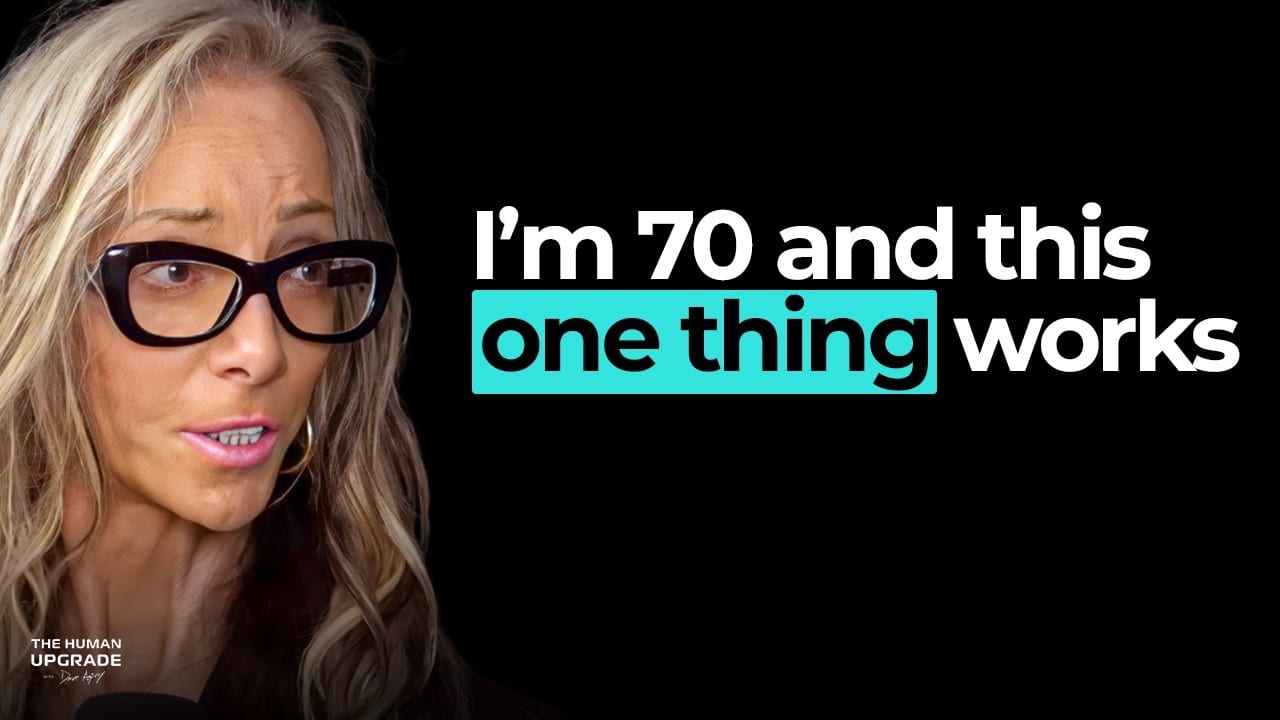
Recently appearing on Dave Asprey’s Human Upgrade podcast, Arnstead revealed the cellular mechanisms behind her anti-aging protocol—and why mitochondrial health is the master key to longevity that most people are ignoring.
“I taught myself most of what I know just by going deep into PubMed because I am determined to find out how we can make aging easier for people,” Arnstead explained.
Jump to:
The Mitochondrial Crisis After 30
Mitochondria generate cellular energy in the form of ATP, the molecular currency that powers everything from brain function to muscle contraction. Without ATP production, cells can’t perform basic functions—and the body has roughly six seconds of ATP storage at any given time.
The problem? ATP production creates a toxic byproduct called superoxide, a free radical that damages mitochondrial membranes if left unchecked.
Fortunately, the body produces an antioxidant called superoxide dismutase (SOD), which neutralizes superoxide by converting it into harmless oxygen and water. This protective mechanism works beautifully—until around age 30.
Our bodies are programmed to die at 30. Mother nature always looks for the best value. And why would it want our bodies to be making all this stuff? It doesn’t think we’re going to be alive.
After three decades, SOD production plummets. By age 40, levels are dramatically reduced. By 50, endogenous production has essentially stopped.
The result? Mitochondrial damage accelerates, cells swell, electron transport becomes inefficient, and ATP production crashes while free radical generation soars.
When Mitochondria Swell, Everything Slows Down
Arnstead introduced a concept rarely discussed in longevity circles: mitochondrial swelling and its impact on cellular energy production.
The electron transport chain functions like a relay race, with protein molecules passing electrons from one to another until reaching the finish line where ATP is produced. When mitochondria become damaged by free radicals, they expand—and those protein “runners” move farther apart.
“Just like in a relay race, if you can’t get up to the next runner, you can’t pass the baton,” Arnstead said. “In the electron transport chain, when the molecules are farther apart from one another, they can’t pass the electron. So they leak out.”
Even a 10% increase in mitochondrial size creates massive inefficiency. Electrons bounce back and forth millions of times per second—so that small expansion creates enormous latency in energy production while simultaneously generating more damaging free radicals.
Eventually, the mitochondria explode in a process called necrosis, spreading cellular debris and free radicals to neighboring mitochondria and triggering a cascade of inflammation and dysfunction.
The Three Types of SOD Your Body Needs
SOD exists in three locations within and around cells, each requiring different mineral cofactors to function:
- Extracellular SOD (outside cells): Requires copper and zinc
- Intracellular SOD (inside cells): Requires copper and zinc
- Mitochondrial SOD (inside mitochondria): Requires manganese
Research on mice demonstrated the critical importance of mitochondrial SOD. Animals survived when extracellular and intracellular SOD were depleted, but removing mitochondrial SOD resulted in death within hours.
The manganese cofactor is absolutely essential. Without adequate manganese, SOD will grab iron instead—and become pro-inflammatory rather than protective.
You need to have manganese with your SOD because if the manganese is not there to be the cofactor, the SOD goes, ‘Well, you don’t have any manganese. I’m going to grab something else. I’m going to grab iron.’ It grabs iron and then it becomes pro-inflammatory.
Algae contains the highest concentration of bioavailable manganese found in any food source—precisely the amount recommended for optimal SOD function.
Why Women Get Hit Harder After 40
While both sexes experience SOD depletion after age 30, women face an additional challenge: declining estrogen levels.
Estrogen functions as a mitochondrial antioxidant, providing extra protection against free radical damage. When estrogen drops during perimenopause and menopause, that protective layer vanishes.
The brain contains roughly 2 million mitochondria per cell—more than any other tissue. This concentration makes it particularly vulnerable to oxidative damage, which helps explain why depression, Alzheimer’s disease, and dementia occur at higher rates in women.
The Hydrogen Peroxide Problem
SOD neutralizes superoxide free radicals by converting them into hydrogen peroxide—which itself requires further processing to become harmless.
Most cells use an enzyme called catalase to break down hydrogen peroxide into water and oxygen. But most mitochondria don’t contain catalase—only those in the liver and heart do.
Instead, mitochondria rely entirely on glutathione, the body’s master antioxidant, to complete the neutralization process. Without adequate glutathione, hydrogen peroxide accumulates and causes cellular damage—including the graying of hair.
Glutathione is synthesized from three amino acids: glycine, cysteine, and glutamic acid. Spirulina and chlorella contain all three in optimal ratios, providing the raw materials cells need to produce this critical antioxidant.
Phycocyanin: The Intelligence Molecule
Spirulina contains a blue pigment called phycocyanin that doesn’t exist anywhere else in nature. This compound demonstrates what Arnstead calls “intelligent” behavior inside the body.
In healthy cells, phycocyanin accelerates electron movement through the transport chain, dramatically increasing ATP production and energy levels. It acts like rocket fuel for mitochondria.
But in senescent or cancerous cells, phycocyanin behaves completely differently.
In a senescent cell or a cancer cell, the phycocyanin can detect that and instead of speeding up the cytochrome C molecule, it ejects it which triggers something called caspases which triggers this thing called apoptosis which is cell death.
Cancer cells cannot undergo apoptosis—programmed cell death—which is why they proliferate uncontrollably. Phycocyanin forces the issue by ejecting cytochrome C, triggering caspase activation, and inducing apoptosis.
Chemotherapy companies now use phycocyanin in cancer treatments, measuring cytochrome C levels in blood serum to determine treatment effectiveness.
Interestingly, phycocyanin activates the same mitochondrial pathways as methylene blue—the cognitive enhancer popular in biohacking circles—but in a more biocompatible way that doesn’t carry the same risks of overuse.
Why Processing Matters More Than You Think
Not all algae supplements deliver the benefits Arnstead describes. The difference lies entirely in cultivation and processing methods.
High heat processing destroys delicate enzymes, pigments, and antioxidants—including SOD and phycocyanin. Many commercial algae products use heat drying because it’s faster and cheaper, but it renders the supplements largely ineffective.
Energy Bits uses low-temperature processing to preserve all bioactive compounds intact.
Water quality during cultivation is equally critical. Algae absorbs whatever’s in its growing medium, meaning contaminated water produces contaminated supplements.
Algae will absorb whatever’s in the water. So if your water is not clean, whatever’s there will get into the algae. Sort of like having a goldfish bowl. If you didn’t change your water, poor Goldie’s not doing well.
Energy Bits spirulina and chlorella are grown in triple-filtered spring mountain water, never ocean water, eliminating exposure to mercury and other environmental toxins.
Chlorella presents an additional challenge: its cellulose cell wall is the hardest in nature. If not properly cracked, the body cannot access the nutrients inside.
The FDA requires cracked cell wall chlorella in North America, but processing method matters. Energy Bits uses mechanical tumbling to crack the wall without heat damage. Some newer “fermented” chlorella grown in glass tubes under LED lights produces softer cell walls—but those walls don’t bind toxins as effectively during detoxification.
The Carnivore Conundrum
Carnivore dieters often assume they’re getting everything they need from animal products. While meat provides excellent protein and bioavailable nutrients, it’s missing key compounds for mitochondrial protection.
Chlorophyll—structurally almost identical to hemoglobin except with a magnesium atom instead of iron—supports blood health in ways meat cannot provide. SOD, manganese, and the glutathione precursors are either absent or present in suboptimal amounts in animal foods.
Importantly, spirulina and chlorella contain no lectins or oxalates—the plant defense compounds that cause problems for many people.
There are no lectins or oxalates in chlorella or spirulina. So you can get all the nutrients you’re missing and not move out of your carnivore lifestyle.
The Living Proof
Arnstead herself represents the most compelling evidence for her protocol.
At 70, she takes no medications, has no chronic illnesses, requires no other supplements, and recently earned a PhD while maintaining remarkable physical vitality and cognitive sharpness.
This is my own hair. There’s no extensions. This is my own teeth. I take nothing except algae. I think algae is the best hack period.
Her skin, she notes, is nourished from within—not through expensive topicals, but through cellular nutrition that supports blood health and mitochondrial function.
The protocol is simple: spirulina for energy and mitochondrial support, chlorella for detoxification and cellular repair. Ten to thirty tablets of chlorella at night. The precise amount of spirulina depends on individual energy needs.
It’s not complicated. It’s not expensive. And according to Arnstead, it addresses the root cause of virtually every age-related decline: mitochondrial dysfunction.
“We don’t want you to just live long. We want you to live well,” she emphasized. “Aging is natural. Declining is not.”