In a recent YouTube video, a former professional athlete turned movement coach revealed the only five movements he would keep if every other skill vanished tomorrow.
His background spans gymnastics, weightlifting, CrossFit, bodybuilding, and yoga.
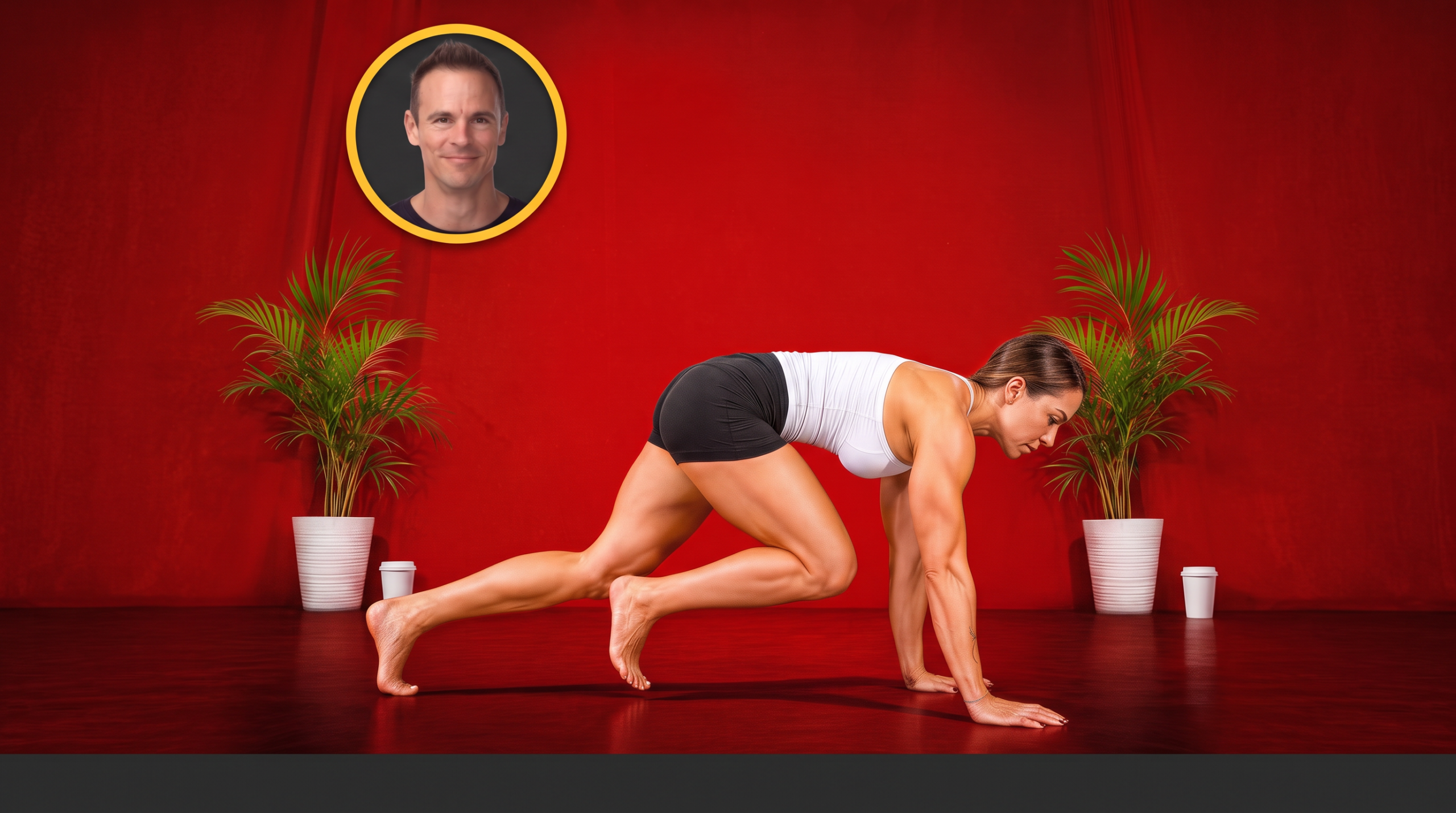
Five moves, he says, would hand back nearly everything: strength, mobility, range, control, and the ability to get down and up from the ground at any age.
One targets the ability your body is losing fastest right now.
Odds are, you have no idea which one.
Each comes with a quick test, so you can pinpoint your weakest link in minutes.

If you want something simple that actually works, this is one of the most effective tools I’ve used to build strength, conditioning, and endurance without needing a full gym setup.
- Full-body training with one weight using swings, squats, and presses
- Solid cast iron build that feels stable and lasts for years
- Comfortable grip that makes high-rep workouts easier to handle
Jump to:
Why Busy Workouts Can Leave You Fragile
Picture the classic routine: 45 minutes, ten machines, three sets of ten each, a little cardio, and a stretch if time allows.
Years later, that person may leg press double their bodyweight yet still fail to sit cross-legged for five minutes, touch their toes, or hang from a bar for 20 seconds.
I was strong on paper, I was fragile in real life.
He speaks from experience. His pro career ended with two frozen shoulders, tendonitis, slipped discs, and a body that felt decades older than its age.
These five movements, he says, rebuilt him.
Movement 1: The Deep Squat
The deep squat is your body’s natural resting position, and most adults have lost it completely, lost it to chairs.
Consequences, in his words: stiff ankles, closed hips, cranky knees on stairs, and eventually a day when standing up from the ground requires help.
Why it earns a spot? Hips, ankles, knees, and lower back all wake up together.
If you want something simple that actually works, this is one of the most effective tools I’ve used to build strength, conditioning, and endurance without needing a full gym setup.
- Full-body training with one weight using swings, squats, and presses
- Solid cast iron build that feels stable and lasts for years
- Comfortable grip that makes high-rep workouts easier to handle
The 60-Second Squat Test
Drop into your deepest squat with heels down. Can you stay for 60 seconds without grabbing anything?
- Setup: Feet roughly shoulder-width, toes turned out slightly.
- Position: Send hips back and down, let knees track over toes, press elbows against knees, keep chest tall.
- Too hard? Slide a rolled towel under your heels, or hold a door frame or rail and let your arms share the load.
- Dose: Accumulate 10 minutes daily, building toward 30.
Take calls down there. Read. Wait for the kettle. He says a 30-day daily squat habit changed far more than his hips.
Movement 2: The Hang
If the squat rules the lower body, the hang rules the upper body. If he could keep just one position forever, this would be it.
Modern arms live beside your hips or in front of a keyboard. Result: rounded shoulders, weak grip, and pinching when reaching for a high shelf.
Grip strength is one of the clearest markers of how well people age.
Hanging let gravity lengthen his upper body, open his shoulders, decompress his spine, and rebuild his grip simultaneously. When both shoulders froze, he credits hanging with giving them back.
The Hang Test
Hang from a bar, feet off the ground. Under 30 seconds? This is your priority.
If you want something simple that actually works, this is one of the most effective tools I’ve used to build strength, conditioning, and endurance without needing a full gym setup.
- Full-body training with one weight using swings, squats, and presses
- Solid cast iron build that feels stable and lasts for years
- Comfortable grip that makes high-rep workouts easier to handle
- Grip: Thumbs wrapped around the bar, arms long.
- Breathing: Slow, into your ribs, feeling length along your sides.
- Too hard? Keep toes planted and bend your knees, loading only what your hands can handle.
- Dose: 10 to 20 seconds per hang, one to two minutes daily, building toward five.
Progression ladder: foot-assisted hangs, full dead hangs, active hangs (shoulders pulled down), mixed grips, one-arm hangs, then dynamic and weighted variations.
Safety note: Doorway bars must be secured into the frame itself, never the trim. Test with your feet still grounded.
Movement 3: Balance
Hanging gives length. Balance gives control, and he calls it the most underrated skill here.
Skills fade without practice, and after your twenties almost nobody trains balance deliberately. You miss the fade until a misstep: an embarrassing stumble at 30, a broken hip at 70.
Tennis trained his balance constantly, without thinking. Retirement forced him to practice it on purpose.
The One-Leg Test
Stand on one leg, eyes forward, for 60 seconds. Then repeat with eyes closed. Stay near a wall or counter for safety.
If you want something simple that actually works, this is one of the most effective tools I’ve used to build strength, conditioning, and endurance without needing a full gym setup.
- Full-body training with one weight using swings, squats, and presses
- Solid cast iron build that feels stable and lasts for years
- Comfortable grip that makes high-rep workouts easier to handle
- Focus: Fix your gaze on a single spot ahead.
- Foot: Spread your toes so big toe, little toe, and heel share weight.
- Mindset: The wobbles are the practice.
- Dose: One minute each side daily, stacked onto toothbrushing or kettle-waiting.
- Progress: Eyes closed, slow hand reaches toward the ground, head turns, heel-to-toe walking along a line, then a rail or curb.
Balance extends to your hands too. Wall-assisted handstands, cartwheel drills, and crawling holds of 20 to 30 seconds build shoulders, wrists, and nerve. He now holds a freestanding handstand for minutes, a skill that began against a wall.
Movement 4: The Spine
Most people train a rigid spine: brace, stay neutral, never round. Your spine then moves as one stiff block.
Price tag: stiffness when rising from a chair, back pain that comes and goes, and a spine that panics when it must curve to lift something from the ground.
A spine that only knows neutral is a fragile spine everywhere else.
After his career, sciatica shot down his legs. Relearning to move his spine with strength was, he says, a huge part of getting rid of it.
The Spine Test
Roll down slowly toward your toes, one vertebra at a time. Then lie face down and lift your chest. Whichever direction feels locked is your weak side.
- Spinal waves: On hands and knees, round from tailbone upward, then arch from tailbone upward. Five to ten slow waves daily.
- Loaded rounding: Jefferson curls from a step, bodyweight first, two slow sets of five, adding light weight over months.
- Strong arching: Face-down chest and leg lifts, then bridges, eventually a full back bridge held 20 to 30 seconds.
- Breathing: Exhale rounding, inhale arching.
Begin in a comfortable range. A deep stretch or ache is fine, but back out of anything sharp or electric. With a history of back problems, check with a qualified professional before loading.
If you want something simple that actually works, this is one of the most effective tools I’ve used to build strength, conditioning, and endurance without needing a full gym setup.
- Full-body training with one weight using swings, squats, and presses
- Solid cast iron build that feels stable and lasts for years
- Comfortable grip that makes high-rep workouts easier to handle
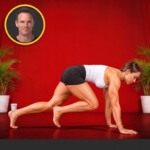
Movement 5: The Crawl
Crawling wired your coordination before you ever stood. Adults abandon it, so left-right connection weakens, body awareness dulls, and the ground starts feeling like kids’ territory.
Few exercises challenge strength, coordination, mobility, shoulders, hips, and core at once like this one.
The Crawl Test
Get on hands and feet, knees hovering an inch up. Crawl ten steps forward, ten backward, without stopping. Notice smooth or clumsy.
- Form: Hands under shoulders, knees under hips, back flat, head up.
- Pattern: Opposite hand and foot move together, in small steps.
- Dose: Three to five minutes daily; three one-minute rounds works as a start.
- Progress: Backward, sideways, turning, faster, then crab walks, jump crawls, and direction changes as if chasing or being chased.
A relaxed body moves better than a tense one.
What Got Cut From the List
- Carries: Excellent, but they demand equipment and load, while hanging builds grip and posture with just bodyweight.
- Hip rotation drills: Valuable, yet deep squatting, crawling, and balancing rotate your hips through range naturally.
- Machines and isolation work: They build muscle in narrow ranges rather than a body ready for real life.
- Passive stretching: Range lacking strength, he argues, fades within days.
Your Next Step
Look back at your five tests. One felt worse than the rest, maybe much worse. That’s your movement.
Practice only that one daily until it stops fighting back.
This was never about squats, hangs, or crawling. It’s about independence at 60, 70, 80, and beyond: reaching the carpet with grandkids, catching yourself mid-trip, carrying your own shopping.
If you want something simple that actually works, this is one of the most effective tools I’ve used to build strength, conditioning, and endurance without needing a full gym setup.
- Full-body training with one weight using swings, squats, and presses
- Solid cast iron build that feels stable and lasts for years
- Comfortable grip that makes high-rep workouts easier to handle