Rowing is a staple in CrossFit competitions, yet even the sport’s most elite athletes often struggle with proper technique.
Small inefficiencies in form can lead to lost power, reduced endurance, and slower times.
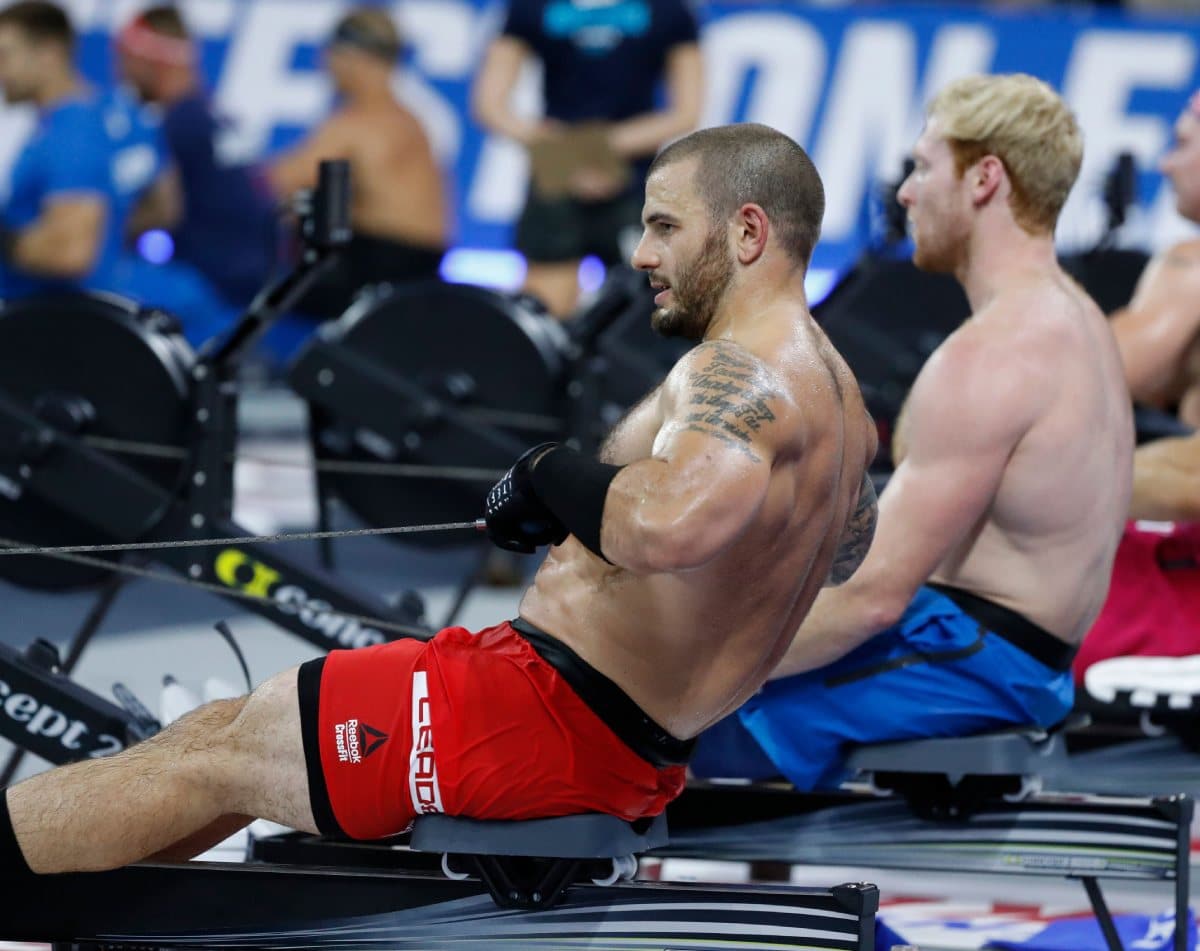
Analyzing the rowing strokes of top CrossFitters like Matt Fraser, Chandler Smith, and Jason Khalipa reveals common mistakes—and simple fixes that could drastically improve their performance.
Jump to:
- Matt Fraser’s Rowing Evolution: From 2018 to 2020
- Chandler Smith: Power Without Efficiency
- Noah Olsen: Slightly Better, But Still Missing Key Elements
- Jason Khalipa: A Stronger Rower With One Key Weakness
- The Biggest Mistakes CrossFitters Make on the Rower
- What Elite Rowers Do Differently
- How CrossFit Athletes Can Improve Their Rowing
- The Bottom Line
Matt Fraser’s Rowing Evolution: From 2018 to 2020
Matt Fraser, a five-time CrossFit Games champion, has long been known for his dominance in nearly every aspect of competition. But even he had technical flaws in his rowing mechanics.
2018: The 20K Row Mistakes
During the grueling 20,000-meter row in 2018, Fraser’s initial drive phase was inefficient. Instead of driving his hips back, he lifted his body straight up, failing to maintain a strong connection between his shoulders and hips. This limited his ability to engage his back effectively, forcing him to rely almost entirely on his legs.
“Rowing should mimic a deadlift,” says rowing coach and former Olympic rower Alex Dunne. “You wouldn’t lift the bar by pulling with your shoulders first. The same concept applies here—hips should lead, and the shoulders should follow.”
2020: Improvements, but Not Perfect
By the 2020 CrossFit Games, Fraser had made some adjustments. His hips were moving more at the start, and he maintained better suspension—a rowing term for staying engaged through the stroke. However, his body still opened too early, reducing the efficiency of his drive.
“If he got his shoulders over sooner and let his hips lead more, he’d generate more power per stroke,” Dunne explains. “That small change could shave seconds off his split times.”
Chandler Smith: Power Without Efficiency
Chandler Smith, another top-tier CrossFit athlete, showcased a rowing style in 2020 that exaggerated some of Fraser’s past mistakes.
His biggest flaw? A lack of forward body angle at the catch. Smith barely got his shoulders in front of his hips, limiting his ability to create a powerful drive. Instead, he leaned back significantly, which allowed his seat to move far up the slide but reduced the overall stroke efficiency.
“Rowing isn’t just about pulling hard—it’s about pulling smart,” says Dunne. “If an athlete doesn’t get their shoulders in front of their hips early, they lose a massive opportunity for a strong, connected stroke.”
Noah Olsen: Slightly Better, But Still Missing Key Elements
Noah Olsen displayed marginally better positioning than some of his peers, keeping his shoulders in front of his hips at the catch. However, he still opened up too soon, a habit that reduces efficiency and forces unnecessary upper-body engagement.
The ideal sequence for a rowing stroke is legs first, then hips, then arms—a pattern Olsen struggles to maintain. Without that controlled sequencing, power is lost, and stroke efficiency decreases.
Jason Khalipa: A Stronger Rower With One Key Weakness
Jason Khalipa, a former CrossFit Games champion, displayed one of the better rowing techniques among his peers. His drive phase was stronger, and he led with his hips more effectively than Fraser or Smith.
However, like many CrossFit athletes, Khalipa had an unnecessary pause at the knees during recovery.
“This pause kills momentum,” says Dunne. “Instead of smoothly transitioning into the next stroke, they waste time and energy resetting. Elite rowers avoid this completely.”
Despite these minor flaws, Khalipa still managed 1:52 splits for a half marathon row—a respectable time, but one that could be significantly improved with a more fluid recovery phase.
The Biggest Mistakes CrossFitters Make on the Rower
Across multiple competitions, a few key issues repeatedly appeared in CrossFit athletes’ rowing techniques:
✅ Pausing at the knees – Wastes time and disrupts stroke rhythm.
✅ Opening the shoulders too soon – Reduces power transfer and efficiency.
✅ Lack of hip-driven movement – Prevents optimal engagement of the posterior chain.
✅ Excessive backward lean – Leads to wasted energy and poor connection.
Fixing these issues could mean faster splits, less fatigue, and better overall rowing performance.
What Elite Rowers Do Differently
To see what truly efficient rowing looks like, one only needs to watch Hamish Bond, a two-time Olympic gold medalist and one of the most dominant rowers in history.
Bond’s stroke is a masterclass in efficiency:
- He leads with his hips, keeping his body angle constant as he drives through the legs.
- His shoulders remain in front of his hips until his legs are nearly fully extended.
- His recovery is smooth and uninterrupted, allowing for a seamless transition between strokes.
“You can see the difference in connection,” says Dunne. “Elite rowers don’t rely on their straps to stay in place—they push through their toes, maintaining full-body engagement.”
In contrast, many CrossFitters pull against their foot straps at the finish, signaling a lack of connection and inefficiency in their stroke.
How CrossFit Athletes Can Improve Their Rowing
The good news? Fixing rowing mechanics doesn’t require major overhauls—just a few focused adjustments.
Key Technique Fixes
✅ Get the shoulders in front of the hips early in recovery.
✅ Lead the drive with the hips, not the shoulders.
✅ Eliminate pauses at the knees.
✅ Practice “feet-out rowing” (rowing without straps) to improve connection and prevent excessive leaning back).
Training Recommendations
- Film technique sessions: Recording strokes can help athletes identify inefficiencies.
- Rowing-specific drills: Short, focused technique sessions can improve mechanics without adding excessive training volume.
- Structured rowing programs: Specific training blocks (such as 2K, 5K, and 30-minute efforts) can help athletes develop endurance and efficiency.
“CrossFitters are already great at breaking down weightlifting technique,” Dunne says. “If they applied the same attention to rowing, they’d see massive improvements in their scores and overall performance.”
The Bottom Line
CrossFit athletes dedicate countless hours to perfecting Olympic lifts and gymnastics skills, but rowing often remains an afterthought. However, small technical adjustments could yield huge payoffs—not just in rowing-specific events, but in overall endurance and efficiency across all workouts.
By focusing on proper hip engagement, eliminating wasted movements, and incorporating structured training, CrossFit athletes could unlock their full potential on the rower—and finally close the gap between their raw power and true rowing efficiency.