Former Army Ranger and college linebacker Judd Lienhard has spent over 15 years coaching athletes on speed and performance.
As founder of the MASS Method, he’s developed efficient training protocols that deliver results without requiring expensive equipment or gym memberships.
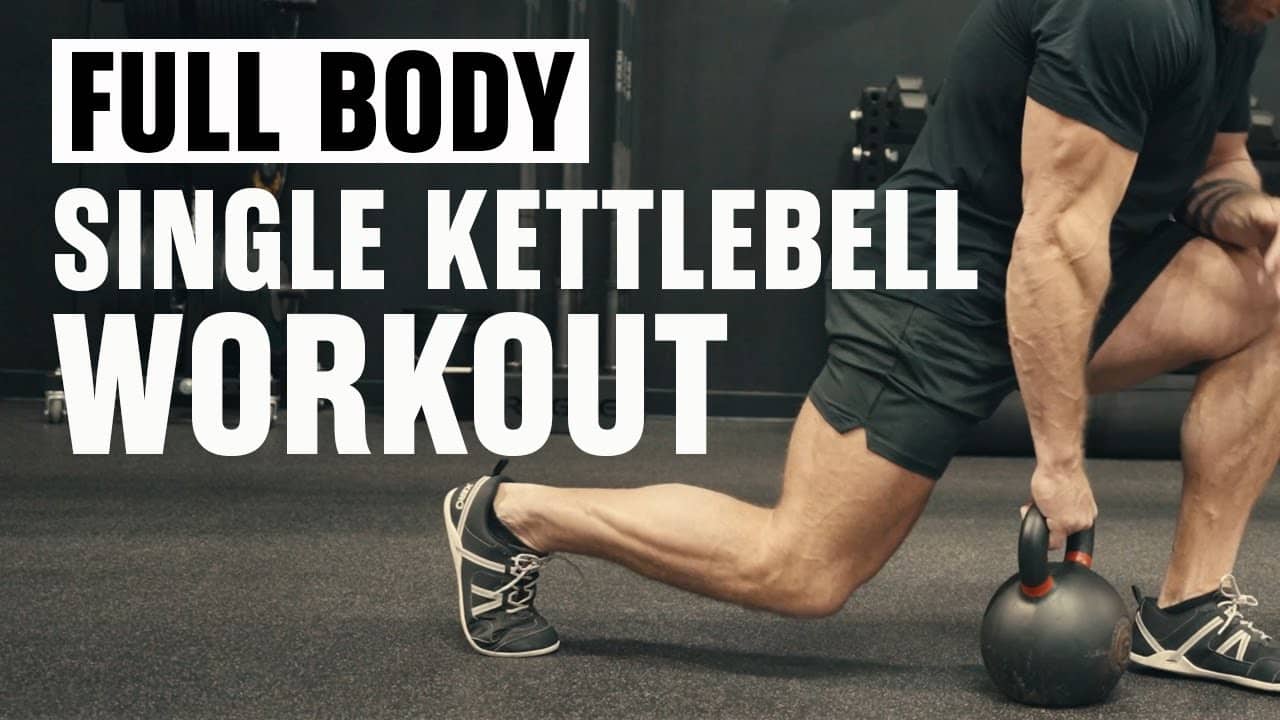
In a recent training demonstration at 1st Phorm headquarters in St. Louis, Missouri, Lienhard broke down his approach to total body conditioning using just a single kettlebell.
His method combines power movements, strength building, and metabolic conditioning into one streamlined workout that challenges beginners and advanced athletes alike.
Jump to:
Why Kettlebells Work So Well
Kettlebells offer unique advantages over traditional barbells and dumbbells. Their design enables smooth, curvilinear movements that align with natural human biomechanics.
“Kettlebells are great because the nature of the implement allows for a lot of smooth movements that are curvilinear in nature that really go with how we are made to move naturally,” Lienhard explains. “They’re very adaptable and fairly affordable for everything that you can do with them.”
Choosing Your Weight
Selecting proper kettlebell weight makes all the difference. Lienhard recommends choosing 20 to 30 percent of body weight for maximum versatility.
The reason I say that is because that’s the most versatile and adaptable weight that you can do the most things with but it’s still heavy enough where you get a good stimulus with most things.
At 250 pounds, Lienhard uses a 75-pound kettlebell. This weight allows single-arm variations, plyometric exercises, and sufficient mechanical tension for muscle growth.
Starting Strong: Power Prep Movements
Beginning with preparatory exercises serves dual purposes—warming up joints and muscles while delivering genuine training stimulus. These movements aren’t just filler.
Kettlebell Front Swing
Despite being commonly performed, most people execute front swings incorrectly. The movement isn’t about squatting or muscling weight upward with arms.
Start with the bell slightly ahead. Drag it toward you, loading hips naturally. Keep the bell at knee height, push it behind you, then extend hips explosively.
“You’re not going to try to throw it up in front of you with your arms, you’re just going to extend your hips and however high it goes is how high the bell goes,” Lienhard instructs.
Proper execution targets glutes and hamstrings, not lower back. If experiencing lower back fatigue, technique needs adjustment or weakness needs addressing.
- Lighter weights: 10-20 reps for power development
- Heavier weights: 6-8 reps for strength building
- Advanced option: Add resistance bands for increased difficulty
Single-Arm Front Swings
Progression continues with alternating single-arm swings. Rotate the bell backward at bottom position, thumb pointing behind you.
Open palm during swing, catch at highest point, switch hands, repeat. Lienhard shifts hips laterally—not required but helpful for comfort and range.
His wrist stacks under working-side hipbone as the bell passes behind legs. Target 8-10 reps per side for two sets.
Figure Eights
Moving into mobility and core activation, figure eights warm multiple joint systems simultaneously. Drop into half-squat position, weave bell between legs in continuous pattern.
Momentum behind legs carries bell through without excessive arm work. This primes hips, knees, ankles, shoulders, and back while elevating heart rate.
Eight repetitions each side across two sets provides sufficient preparation.
Building Strength: Upper Body Work
True isolation doesn’t exist with kettlebells. Even “upper body” movements engage legs, hips, and core substantially.
Overhead Press Technique
Pressing kettlebells differs fundamentally from barbells or dumbbells. Avoid pressing outward like traditional implements—it feels awkward and stresses joints unnecessarily.
Establish rack position: fist on sternum, forearm at 45-degree angle, elbow away from body. Bell nestles comfortably in forearm cradle.
When you press it you’re not going to press like that, you’re going to come around, press it up and then drop it right back down to that sternum.
Curvilinear motion emphasizes medial deltoids effectively. Maintain open hand, keeping wrist relatively straight throughout movement.
Heavier loads allow incorporating leg drive similar to push press, then catching bell back in rack position.
Adding Cleans
Increase complexity by preceding presses with kettlebell cleans. Unlike barbell cleans, don’t pull straight upward—bell flops painfully onto shoulder.
Begin with single-arm swing, then swoop arm underneath bell while pulling inward. Movement travels in front of body, engaging core throughout.
Opposite hand can provide support during rack position when fatigue sets in.
Cossack Squat to Row
Supersets maximize efficiency without compromising performance. Pairing presses with Cossack squat rows works complementary muscle groups.
Assume wide stance, descend into lateral squat, row bell to hip. Thumb starts rearward, full squat depth depends on individual mobility.
Lean on thigh as needed for core support—adjust pressure based on challenge desired. Rotate side to side deliberately for 6-8 reps per side.
Lower Body Power and Strength
Alternating between upper and lower body maintains workout intensity while managing fatigue intelligently.
Pass-Through Lunges
Lienhard calls these among his favorite movements. Hold bell in one hand, lunge with opposite leg. Descend fully without resting bell or knee on ground.
Pass bell through legs, smoothly transition into opposite-side lunge. Widen stance slightly, creating space for comfortable bell transfer.
Six to ten repetitions per set challenges conditioning and coordination simultaneously.
Weighted Split Jumps
Advanced athletes can substitute explosive split jumps. Grip bell by horns, shift torso over front leg each descent.
Front shoulder points forward, forearm and thigh form T or X shape. Jump explosively, switching legs mid-air.
Six to eight quality reps typically exhaust even well-conditioned athletes. Bonus bicep work from horn grip adds upper body stimulus.
Total Body Explosive Movements
Single-Arm Snatch
Commonly taught incorrectly, snatches earn unfair reputation for discomfort. Poor technique causes bell to slam painfully onto forearms.
Proper execution follows curvilinear path—bell travels outward first, then punch toward ceiling. Bell settles gently on forearm at top position.
Begin with front swing momentum, pull bell backward, drive upward while punching skyward. Target 6-8 reps when breathing permits.
High Pull Alternative
Those uncomfortable with snatches benefit from high pulls. Execute similar hip drive, pull bell backward while keeping elbow high.
Push bell forward at peak, maintaining elbow height matching hand position. Rear delts, medial delts, posterior chain all receive substantial stimulus.
Finishing Strong: Push Movements
Saving upper body pressing for workout’s end serves strategic purposes. Less risk of dropping weight overhead when fatigued, plus psychological reward after completing compound movements.
Over-and-Back Push-Ups
Place kettlebell on flat side—most have logo side rounded, opposite side flat for stability. Position handle facing away.
Plant one hand on bell, maintain weight over working hand. Explode laterally, switching hands smoothly mid-air.
These staple movements in MASS Method programming develop explosive pressing power and stability simultaneously.
Close-Grip Push-Ups
Targeting upper chest, triceps, and front delts, close-grip variations provide focused stimulus. Hands grip either side of bell, actively squeezing like crushing egg.
Descend forward and down, press back and up. Knees can bend slightly at top for full range.
Pike position—hips elevated above shoulders—shifts emphasis toward deltoids, creating incline press effect.
Programming Considerations
Lienhard emphasizes this workout represents starting framework, not comprehensive exercise encyclopedia. Individuals should incorporate movements matching their goals and abilities.
Supersets save time and boost metabolic demand. Pull-up bars, rowing machines, or assault bikes complement kettlebell work beautifully when available.
There’s no implement that’s better or worse, it’s just how you use that implement and what you use it for—is it optimal for what you’re trying to achieve?
Kettlebells offer legitimate advantages over other equipment for specific movement patterns. Their design naturally facilitates certain exercises impossible or awkward with barbells.
Workout Structure at a Glance
- Prep movements: Front swings, single-arm swings, figure eights
- Upper body strength: Overhead press, clean and press, Cossack squat rows
- Lower body power: Pass-through lunges, weighted split jumps
- Total body explosiveness: Snatches or high pulls
- Pressing finishers: Over-and-back push-ups, close-grip variations
Rep ranges vary based on movement complexity and load. Power movements typically use 6-10 reps, while lighter prep work extends to 10-20 repetitions.
Limiting sets per exercise—usually two—maintains workout flow while accumulating sufficient volume. Total session duration stays manageable without sacrificing intensity.
Making It Work for You
Simple doesn’t mean ineffective. Even advanced trainees benefit from fundamental movements executed with proper load and intent.
Progression comes through increased weight, additional reps, shorter rest periods, or movement complexity. Beginners start conservative, masters challenge themselves within proven frameworks.
Equipment minimalism removes excuses while developing comprehensive fitness. One kettlebell, properly programmed, builds strength, power, conditioning, and mobility.
Home gyms, hotel rooms, vacation rentals—wherever kettlebells travel, effective training follows. Lienhard’s approach proves sophisticated programming doesn’t require sophisticated equipment.
Just proper understanding of movement principles, intelligent exercise selection, and consistent execution over time.