Imagine an 80-year-old person. Most picture someone frail, slow, maybe using a cane.
But that stereotype doesn’t have to be anyone’s future.
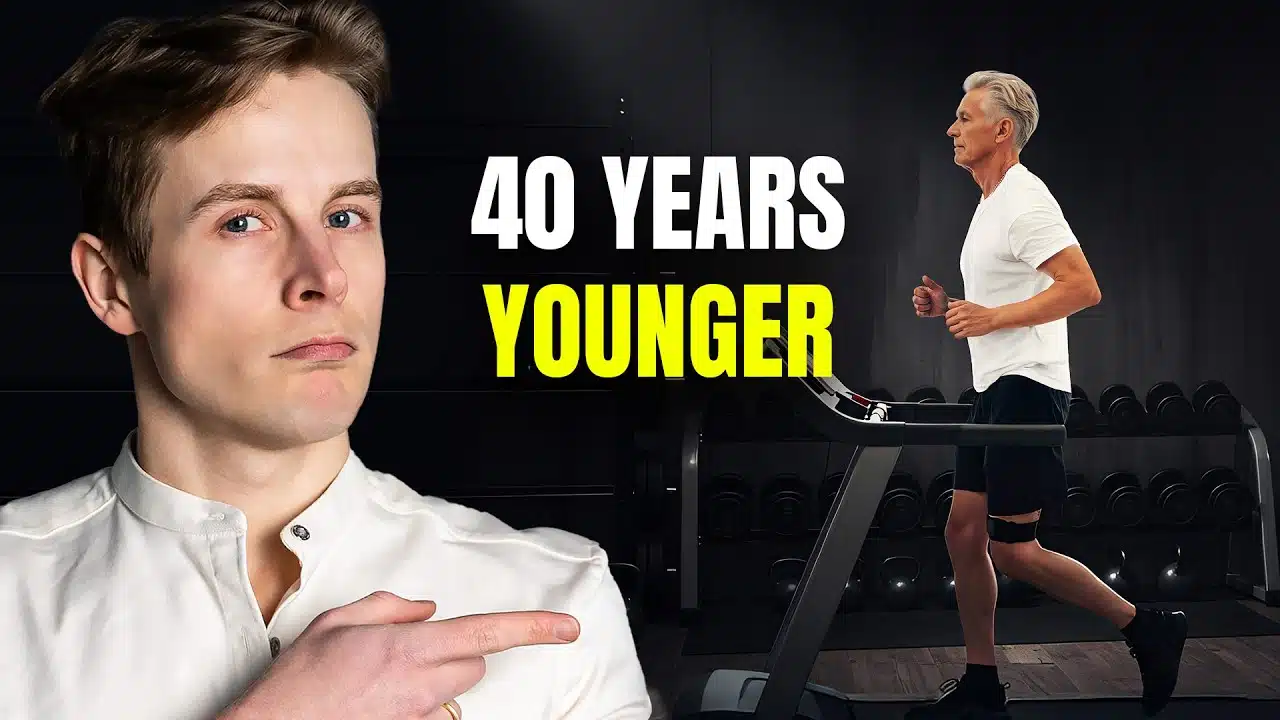
A study on an anonymous Norwegian 80-year-old man revealed he had the VO2 max and fitness level of someone aged 25 to 35—that’s 50 years younger than his chronological age.
This wasn’t just someone walking without assistance. He was sprinting and performing L-sit pull-ups, placing him in the top 0.001% of health for his age group.
Jump to:
The Fitness Markers That Defied Age
Published in 2015, this remarkable case study documented fitness markers that would make many middle-aged adults envious.
His VO2 max measured 50 ml per kilogram per minute—exceptionally high for his age. That’s top 0.1% among 80-year-olds and comparable to a sedentary 25-year-old or modestly fit 35-year-old.
Average 80-year-olds typically have a VO2 max around 17 to 20, hovering near the disability threshold. Below that line, daily activities require assistance.
This Norwegian gentleman had two to three times higher VO2 max than his peers. Research indicates that a VO2 max of 50 compared to 17 associates with a 300% lower mortality risk—meaning he had dramatically better odds of surviving another year compared to other octogenarians.
Even master athletes in their 80s average only 39 for VO2 max. This man was essentially the Michael Jordan or Tom Brady of his age bracket.
A Lifetime of Exceptional Fitness
Interestingly, he reported previous VO2 max tests earlier in life. At age 25, he scored 75—equivalent to Olympic athlete levels.
At 45, that number was 58. By 80, it settled at 50.
Scientists estimated about 7% reduction between ages 25 and 45, then gradual decline to 50 by age 80. That aligns with the 6 to 11% reduction per decade seen in research.
Here’s the critical point: He achieved a VO2 max of 50 at 80 because he started with 75 at 25.
Higher VO2 max in youth translates to higher levels in elderly years—as long as exercise continues. Someone with a VO2 max of 30 at age 30 will plunge into disability territory much sooner than someone who maintains higher levels throughout life.
Heart Health That Impressed Researchers
His resting heart rate sat at 60 beats per minute, typical for someone in their 40s.
Maximum heart rate during exercise reached 175 beats per minute—exceptional considering expected maximum at 80 would be 140. That 35-beat difference signals remarkable cardiovascular fitness.
Body Composition and Blood Markers
Scientists analyzed his biomarkers and discovered impressive numbers across the board.
Body fat percentage measured 12% with a BMI of 23. Muscle mass comprised 49% of total body weight—solid for any age.
His waist-to-hip ratio was excellent at 0.85, indicating narrow waist compared to hips. That’s a strong sign of low visceral fat, beneficial for heart health.
Blood Pressure and Cholesterol
Blood pressure came in slightly elevated at 136 over 78, though nervousness from study participation could explain that.
Cholesterol numbers impressed researchers:
- Total cholesterol: 4 mmol/L (154 mg/dL)
- LDL: 1.9 mmol/L (73 mg/dL)
- HDL: 1.76 mmol/L (68 mg/dL)
- Triglycerides: 0.55 mmol/L (48 mg/dL)
Blood Sugar: The One Weak Spot
Fasting glucose measured 5.2 mmol (93 mg/dL), potentially elevated from study-related stress.
However, his hemoglobin A1C—reflecting average blood sugar over recent months—registered 6.2%, placing him in pre-diabetes range. Blood sugar regulation naturally worsens with age, though this wasn’t optimal.
C-peptide came in at 0.3 nmol/L, on the lower end. This indicated his body wasn’t producing much insulin, explaining elevated blood sugar.
Early signs pointed toward declining beta cell function in the pancreas and poor insulin secretion.
Kidney function appeared normal with creatinine at 82 μmol/L (93 mg/dL) and eGFR at 78. Though creatinine isn’t the most reliable kidney health marker, results suggested adequate function.
How He Built Old Man Strength
Growing up on a farm, he worked fields starting at age 13. That grueling daily physical labor built an incredible baseline for fitness and muscle strength.
No records exist of formal competitive sports participation, though his evident love for exercise suggests recreational athletic pursuits.
Structured Training in His 70s
Between ages 70 and 80, he maintained a structured exercise program:
- Three sessions weekly
- 90 minutes total per week
- 20 minutes endurance training (moderate to threshold intensity)
- 10 minutes strength training (upper body and core focus, 10-12 reps per set)
He also competed in ultra-endurance ski and bike races, including Vasaloppet (90 km) and Birkebeinerrennet (54 km) ski races at ages 69, 71, and 74—remarkable achievements for septuagenarians.
At 74, he completed Birkebeiner mountain bike race (89 km) and a half marathon (21 km).
Daily Activity Levels
His daily step count averaged 10,800—above typical recommendations.
Total weekly activity included 2 hours 20 minutes of moderate activity and 12 minutes of vigorous activity that elevated heart rate.
That’s seven times more moderate physical activity and two times more vigorous activity than current guidelines recommend.
To be as fit as a 35-year-old at the age of 80, you need to be training a lot more than the bare minimum.
Old Man Strength in Action
This Norwegian exemplified true “old man strength”—not bulky or massive, but remarkably strong and exceptionally fit overall.
Years of farm work guaranteed an iron grip. But most importantly, he combined aerobic exercise with resistance training.
Many people neglect one or the other. A 2020 meta-analysis of 11 studies found resistance training alone associated with 21% lower mortality risk.
Combined with aerobic exercise? A 40% lower risk.
Where Is He Now?
Unfortunately, no follow-up information exists since the study was conducted 10 years ago. He’d be 90 now.
Given his top 0.1% health status at 80, survival wouldn’t be surprising. However, declining beta cell function and poor insulin secretion could have accelerated health decline over the past decade.
Start Building Your Future Today
Want to run, walk without assistance, and maintain independence at 80? Want to get off the toilet without help?
Physical health and fitness require attention much sooner than old age.
You choose which direction your health heads. That choice starts today, not tomorrow, not next year—today.
Build your baseline now. Combine strength training with cardiovascular exercise. Move consistently. Push beyond minimum guidelines.
Your 80-year-old self will thank you.