A shocking new investigation reveals that your daily protein shake might be doing more harm than good.
Consumer Reports recently tested 23 popular protein powders and ready-to-drink shakes, uncovering disturbing levels of heavy metals—particularly lead—in more than two-thirds of the products analyzed.
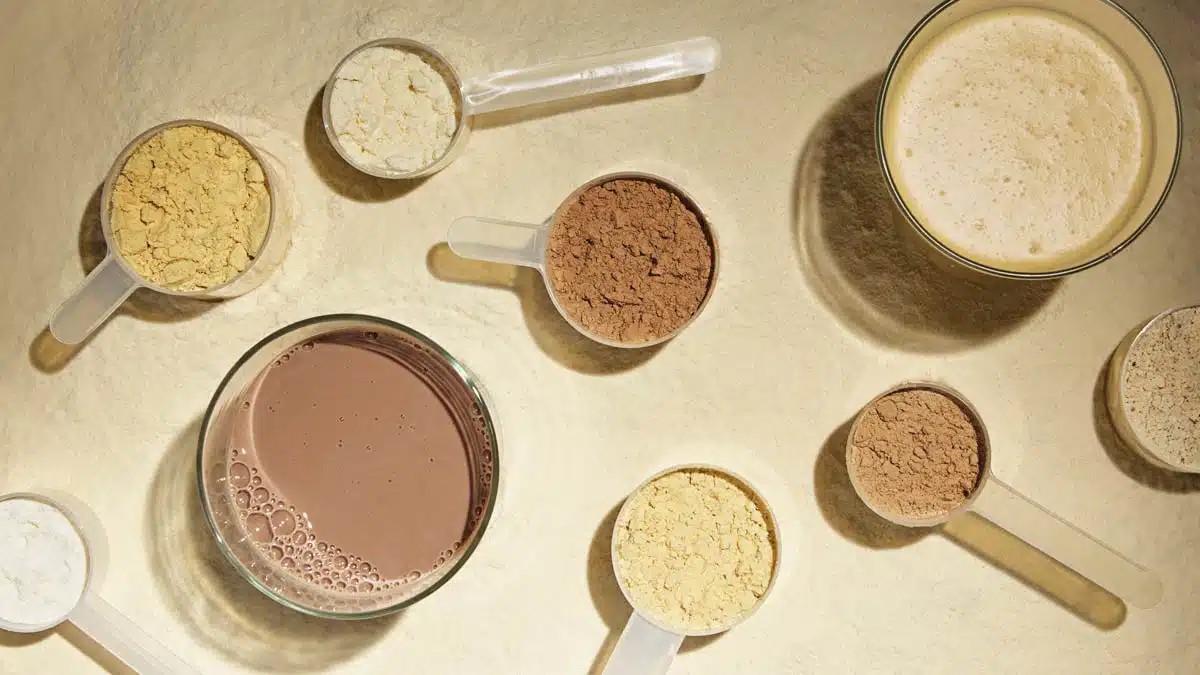
The findings paint a troubling picture: contamination has actually worsened since the organization last investigated protein supplements 15 years ago.
According to lead researcher Tunde Akinleye, a food safety chemist at Consumer Reports, average lead levels have climbed higher, fewer products came back clean, and the worst offenders contained nearly twice the lead found in previous tests.
See below for all brands to avoid, and the ones you can safely take.
Jump to:
Plant-Based Powders Pack the Biggest Punch
Nearly all plant-based protein products tested showed elevated lead levels, with some registering concentrations so high that experts recommend avoiding them entirely.
Two products stood out as particularly dangerous: Naked Nutrition’s Vegan Mass Gainer and Huel’s Black Edition.
A single serving of Naked Nutrition’s powder contained 7.7 micrograms of lead—roughly 1,570 percent of Consumer Reports’ daily safety threshold of 0.5 micrograms. Huel’s Black Edition wasn’t far behind at 6.3 micrograms per serving, or about 1,290 percent over the limit.
We advise against daily use for most protein powders, since many have high levels of heavy metals and none are necessary to hit your protein goals.
Two additional plant-based products—Garden of Life’s Sport Organic Plant-Based Protein and Momentous’ 100% Plant Protein—contained lead levels between 400 and 600 percent of the safety threshold. Consumer Reports recommends limiting these to just once weekly.
Plant-based products averaged nine times more lead than dairy-based options and twice as much as beef-based powders.
Why Dairy Isn’t Necessarily Safer
While dairy-based protein powders generally performed better, half still contained enough lead that experts caution against daily consumption.
The investigation also uncovered concerning levels of cadmium and inorganic arsenic in several products. Huel’s Black Edition contained more than double the safe daily limit for cadmium at 9.2 micrograms per serving.
Optimum Nutrition’s Serious Mass whey protein powder registered 8.5 micrograms of inorganic arsenic—twice what scientists consider safe for daily intake.
The Hidden Dangers of Lead Exposure
Lead is particularly insidious because it accumulates in the body over time, with no amount considered truly safe.
Dr. Rose Goldman, an associate professor of medicine at Cambridge Health Alliance, explains that while no single serving will cause immediate harm, repeated exposure creates serious health risks—especially for vulnerable populations.
- Children and pregnant people face the highest risks, as lead damages developing brains and nervous systems
- Adults may experience immune suppression, reproductive problems, kidney damage, and high blood pressure
- Chronic exposure allows even small amounts to compound into dangerous levels
The average American adult already consumes up to 5.3 micrograms of lead daily through food. Adding a serving of Naked Nutrition’s Mass Gainer (7.7 micrograms) pushes total exposure well beyond the FDA’s interim reference level of 8.8 micrograms per day.
It’s concerning that these results are even worse than the last time we tested.
How Companies Responded
Consumer Reports contacted all 23 manufacturers before publication. Seven companies—BSN, Dymatize, Jocko Fuel, Muscle Milk, Owyn, PlantFusion, and Transparent Labs—never responded.
Many companies that did reply defended their products by pointing out that lead occurs naturally in plant-based ingredients and is difficult to eliminate entirely.
James Clark, chief marketing officer of Naked Nutrition, stated the company sources ingredients from select suppliers who document heavy metal testing.
We take our customers’ health very seriously.
Clark added that Naked Nutrition requested third-party testing of its Mass Gainer powder following Consumer Reports’ findings.
Huel insisted its products undergo “rigorous testing” and remain “confident in the current formulation and safety” of their supplements, noting they fall within levels set by the National Sanitation Foundation.
The Protein Obsession Nobody Needs
Here’s the kicker: most people don’t actually need protein supplements.
Dr. Nicholas Burd, a professor of health and kinesiology at the University of Illinois Urbana-Champaign who has studied protein extensively, says Americans consume far more protein than necessary.
I’m constantly trying to pull protein out of people’s diets.
Federal nutrition guidelines recommend roughly 0.8 grams of protein per kilogram of body weight (0.36 grams per pound) for healthy adults. For a 170-pound person, that’s only 61 grams—easily achieved through a cup of Greek yogurt and 3.5 ounces of chicken breast.
Federal surveys confirm Americans of all age groups exceed recommended protein intake, with men consuming over 155 percent of recommendations and women over 135 percent.
Even vegans typically get sufficient protein through diet alone, according to multiple studies.
Why Contamination Is Worse in Plant Proteins
Plants naturally absorb whatever’s in their environment—including heavy metals from soil, water, and air.
All plant-based powders tested relied heavily on pea protein, which has exploded in popularity as an alternative to soy due to its flavor profile and low allergenicity.
But extracting concentrated protein from plants involves multiple mechanized steps, each presenting opportunities for contamination. Lead can enter during dehulling, grinding, mixing with water, or the final spray-drying process—depending on equipment materials and water quality.
Much of the pea protein used in U.S. supplements is imported from China, according to U.S. International Trade Commission data. That matters because while the FDA has authority to audit foreign supplement makers, it rarely exercises that power.
The Regulatory Black Hole
Protein powders exist in a regulatory gray area that leaves consumers dangerously exposed.
There are no federal limits for lead in protein powders. The FDA requires manufacturers keep products free of harmful contaminants but largely lets companies decide what counts as harmful and test their own products.
Before 1994, manufacturers had to prove herbal products were safe before selling them. The Dietary Supplement Health and Education Act changed everything, sharply limiting FDA authority and leaving supplements far less regulated than drugs.
When these products that should be straightforward contain more heavy metals than expected, that exposes the challenge for consumers these days.
Dr. Pieter Cohen, an associate professor at Harvard Medical School, notes that supplements are now “presumed safe unless found otherwise.”
Most products face scrutiny only after reaching the market—meaning unsafe or contaminated supplements can reach consumers before problems surface.
There are currently about 12,000 registered supplement manufacturers. Last year, the FDA inspected only 600: 510 domestic and 90 foreign operations.
What You Should Do Right Now
Limit your exposure. If you use protein supplements, reduce consumption frequency and avoid products with the highest lead levels identified in Consumer Reports’ testing.
Check for Prop 65 warnings. Avoid products carrying California Proposition 65 warning labels for lead or reproductive harm.
Demand transparency. Look for companies that publish heavy metal testing results online or provide them upon request. Very few currently do—only Momentous publishes results on its website, while KOS and Equip Foods say they’ll provide them if asked.
Choose dairy over plants. If you must use supplements, dairy-based options generally contain significantly less lead than plant-based alternatives.
Make your own shakes. Swap protein powders for whole foods high in protein: Greek yogurt, peanut butter, eggs, beans, lentils, tofu, fish, or lean meats.
Ignore the protein hype. Most people don’t need supplements or protein-fortified foods. You can calculate your individual needs using the USDA’s online calculator, but general guidelines suggest 0.36 grams per pound of body weight for most adults.
Dr. Burd’s advice is simple: stick with whole foods that naturally contain protein rather than isolated supplements or fortified processed products.
If you have a healthy eating pattern, there’s certainly no reason you need an isolated food protein.
The bottom line? That protein powder sitting in your pantry might be exposing you to heavy metals your body doesn’t need—to get protein your diet already provides.
❌ Brands with Concerning Heavy Metal Levels
(Exceeded Consumer Reports’ recommended limits for lead, cadmium, or arsenic)
- Naked Nutrition
– Highest lead content overall (7.7 micrograms per serving).
– Exceeded CR’s lead limit by 1,570%.
– Not yet NSF certified but claims third-party testing is underway. - Huel (Black Edition)
– High lead (1,290% over CR’s limit) and 9.2 micrograms of cadmium, more than double safe levels.
– Claimed their products are tested and “safe” under NSF limits. - Garden of Life (Sport Organic Plant-Based Protein)
– Lead levels between 400–600% of CR’s concern threshold.
– Claims safety based on guidance from FDA, EPA, WHO, but declined CR’s weekly usage restriction. - Momentous (100% Plant Protein)
– Also in the 400–600% lead range.
– Company says the tested version is discontinued after a “massive overhaul.”
– Now publishes test results on its website. - MuscleMeds (Carnivor Mass)
– Only beef-based product with over 200% of CR’s lead limit.
– Claims compliance with 10 microgram/serving limit. - Optimum Nutrition (Serious Mass)
– Detected inorganic arsenic at 8.5 micrograms, over twice the safe daily intake.
– Declined to comment on CR’s findings. - Vega (Premium Sport Protein Powder)
– Detected cadmium levels exceeding CR’s safety threshold.
– Company said CR’s results didn’t match their own regular testing.
– Has a history of Prop 65 settlement payments for heavy metals.
❓ Brands Tested but Didn’t Respond or Had Questionable Transparency
(Either didn’t reply to CR or didn’t address concerns directly)
- BSN
– No response to CR’s request for comment.
– Specific contamination levels not disclosed. - Dymatize
– Did not respond to CR inquiry.
– Details about contamination levels not provided. - Jocko Fuel
– No response.
– Included in CR’s testing. - Muscle Milk
– Did not provide comment.
– Tested by CR, but individual results not highlighted. - Owyn
– No comment given.
– Tested, though no standout data in report summary. - PlantFusion
– Did not reply.
– CR tested the brand, but detailed results were not published. - Transparent Labs
– No response to CR.
– Contamination level details were not highlighted in summary.
(Claimed to meet testing benchmarks or offer transparent data)
- Equip Foods
– States that it tests both ingredients and final products for heavy metals.
– Offers lab results to customers upon request. - KOS
– Claims regular heavy metal testing.
– Will provide results to customers upon request.
– Not identified as high risk in CR’s report. - Orgain
– Claimed compliance with food safety guidelines from global agencies.
– CR identified lead concerns but brand denied risks, citing international standards. - MuscleTech
– Says it tests its products for heavy metal safety.
– No high-risk contamination flagged in CR’s results.
⚠️ Other Brands or Products Mentioned in Context
(Referenced in testing or discussion but not central to the contamination findings)
- Ensure (by Abbott)
– CR detected low lead levels.
– Abbott noted it’s expected with plant-based ingredients and said the product is safe. - Quest
– Found to have lead, but within safety thresholds, according to the company.
– Brand claimed results reflect its effective safety programs. - Special K (Kellogg’s)
– Mentioned in a study about marketing perception, not tested for heavy metals.
– Example of how “high-protein” labeling influences consumer health perceptions.
Summary Table
| Category | Brands |
|---|---|
| ❌ High Concern | Naked Nutrition, Huel, Garden of Life, Momentous, MuscleMeds, Optimum Nutrition, Vega |
| ❓ No Response / Transparency Issues | BSN, Dymatize, Jocko Fuel, Muscle Milk, Owyn, PlantFusion, Transparent Labs |
| ✅ Shared Safety Practices | Equip Foods, KOS, Orgain, MuscleTech |
| ⚠️ Mentioned in Context | Ensure, Quest, Special K |