Struggling to stay consistent with workouts? The answer might not be what fitness culture has been selling.
Two experienced coaches recently dismantled the popular “discipline over everything” mentality that dominates gym culture.
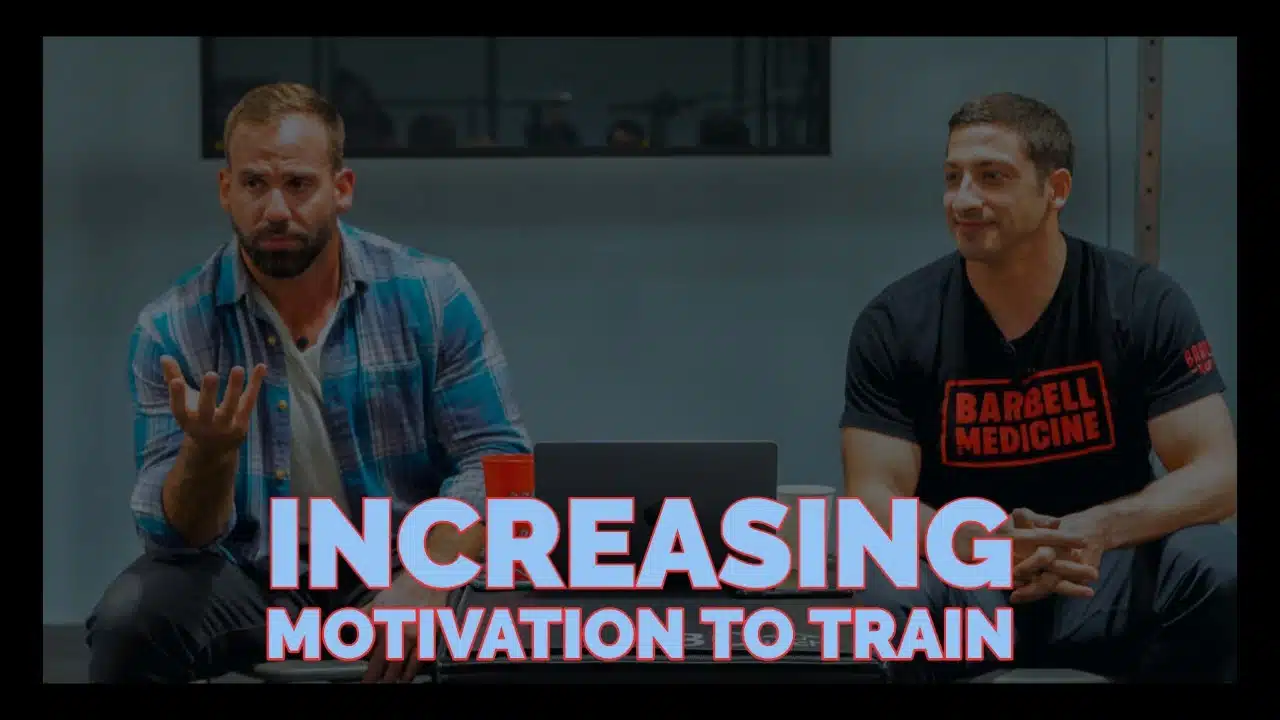
Their perspective challenges conventional wisdom and offers a more sustainable path forward.
What they revealed about training adherence could completely transform how people approach fitness.
Jump to:
- The Discipline Myth That’s Holding People Back
- Enjoyment Over Discipline: The Real Key to Consistency
- The All-or-Nothing Trap That Derails Progress
- Social Support: The Overlooked Training Variable
- When Deeper Issues Are at Play
- The Goal Clarity Question
- Reframing the Discipline Narrative
- Building Sustainable Training Habits
The Discipline Myth That’s Holding People Back
When asked about increasing motivation and discipline for training, one coach immediately pushed back against framing the conversation around discipline at all.
He explained that despite rarely missing workouts over the past decade, it wasn’t superhuman discipline driving that consistency.
In the past decade we can count how many workouts we’ve missed on one hand or less even last week when I was laid up with the flu I still went out and did my deadlift day on Tuesday.
The secret? He actually enjoys training.
Even when sick with the flu, experiencing coughing fits, chills, and sweats, he went to the gym not because of iron willpower, but because training genuinely makes him feel better.
Enjoyment Over Discipline: The Real Key to Consistency
Both coaches emphasized that enjoyment should be the foundation of any sustainable training program.
One coach explained his approach when clients struggle with adherence.
I think you should enjoy not only the training you’re doing but and the components of that but the actual process so like your goal oriented training so I think if somebody’s like really having a hard time like sticking to it I’d wonder like do you like what you’re doing is this enjoyable for you.
If someone loathes their training program, forcing themselves through it creates a double barrier—the inherent difficulty of exercise plus the psychological resistance to doing something unpleasant.
That’s unsustainable long-term.
The All-or-Nothing Trap That Derails Progress
One particularly common pattern destroys training consistency: the all-or-nothing mindset.
The coach described seeing this repeatedly with clients.
If somebody misses day one of the workout I’ve seen it a lot of times where people will just not work out the rest of the week that like I missed my first day this weeks off I’m just gonna repeat this week next week.
This perfectionist thinking sabotages progress more than missing a single workout ever could.
Another version of this problem: obsessing over optimal scheduling at the expense of actually training.
People worry that working out on consecutive days or disrupting their planned rest day will somehow ruin their progress.
The Simple Solution
The coaches receive countless questions about scheduling conflicts and optimal workout spacing.
Their answer is refreshingly straightforward: just complete the workouts.
Hey I’m leaving town for the week on Thursday on Friday and I have four workouts to do this week what new it’s like workout Monday Tuesday Wednesday Thursday go on your vacation.
Acute performance during individual sessions matters far less than accumulating total training volume over time.
Social Support: The Overlooked Training Variable
Beyond enjoyment, social connection plays a massive role in training adherence.
One coach identified isolation as a serious barrier to consistency.
If people are doing this by themselves so like they have a home gym and they’re the only one in the house that uses the home gym or if none of their family members workout even immediate or extended none of their friends work out there just effectively leaving their social circle.
Training becomes exponentially harder when it means abandoning family and friends to enter an environment where you know no one.
Leveraging social support makes training more time-efficient and enjoyable.
Practical Ways to Build Social Support
- Find a training partner with similar goals
- Join group fitness classes or communities
- Share training updates with supportive friends or family
- Connect with online fitness communities aligned with your approach
- Train at times when the gym has a welcoming atmosphere
When Deeper Issues Are at Play
Sometimes training struggles signal problems requiring more attention than simple programming adjustments.
The coaches noted that certain response patterns indicate someone might benefit from additional support or counseling.
If someone experiences fear around training or genuinely hates their workouts despite trying different approaches, addressing the underlying psychological barriers becomes essential.
These situations transcend typical motivation challenges.
The Goal Clarity Question
For those genuinely struggling with motivation, the coaches recommend returning to fundamental questions:
- Where do you want to be in three, six, or twelve months?
- What specific outcomes do you want from training?
- How do your daily actions move you closer to or further from those goals?
This isn’t about delivering motivational speeches or pumping people up temporarily.
It’s about creating genuine clarity around personal objectives and honestly assessing whether current behaviors align with desired outcomes.
Reframing the Discipline Narrative
The fitness industry often glorifies suffering and frames consistency as evidence of superior character.
One coach directly challenged this narrative.
I don’t think that that’s a good way to view human behavior really in general.
Rather than viewing missed workouts as moral failures requiring more discipline, he suggests examining whether the training itself creates genuine value and satisfaction.
People who consistently train for decades aren’t necessarily more disciplined—they’ve simply found approaches they genuinely enjoy.
This perspective shift removes the self-flagellation that often accompanies training struggles and replaces it with practical problem-solving.
Building Sustainable Training Habits
The coaches’ advice synthesizes into a practical framework for long-term training success:
First, find training modalities and programming you genuinely enjoy. Experiment until you discover what feels satisfying rather than torturous.
Second, abandon perfectionism around scheduling and performance. Completing workouts matters more than optimal spacing or peak performance in every session.
Third, deliberately build social support into your training environment. Connection transforms exercise from isolating obligation into shared experience.
Finally, maintain clarity about your goals and honestly assess whether your actions align with those objectives.
This approach replaces willpower with sustainable systems—the real foundation of lasting fitness results.