Baking soda might sound like an internet wellness fad, but the science behind sodium bicarbonate supplementation tells a completely different story.
The International Society of Sports Nutrition has published a formal position stand on this compound—something they don’t do lightly.
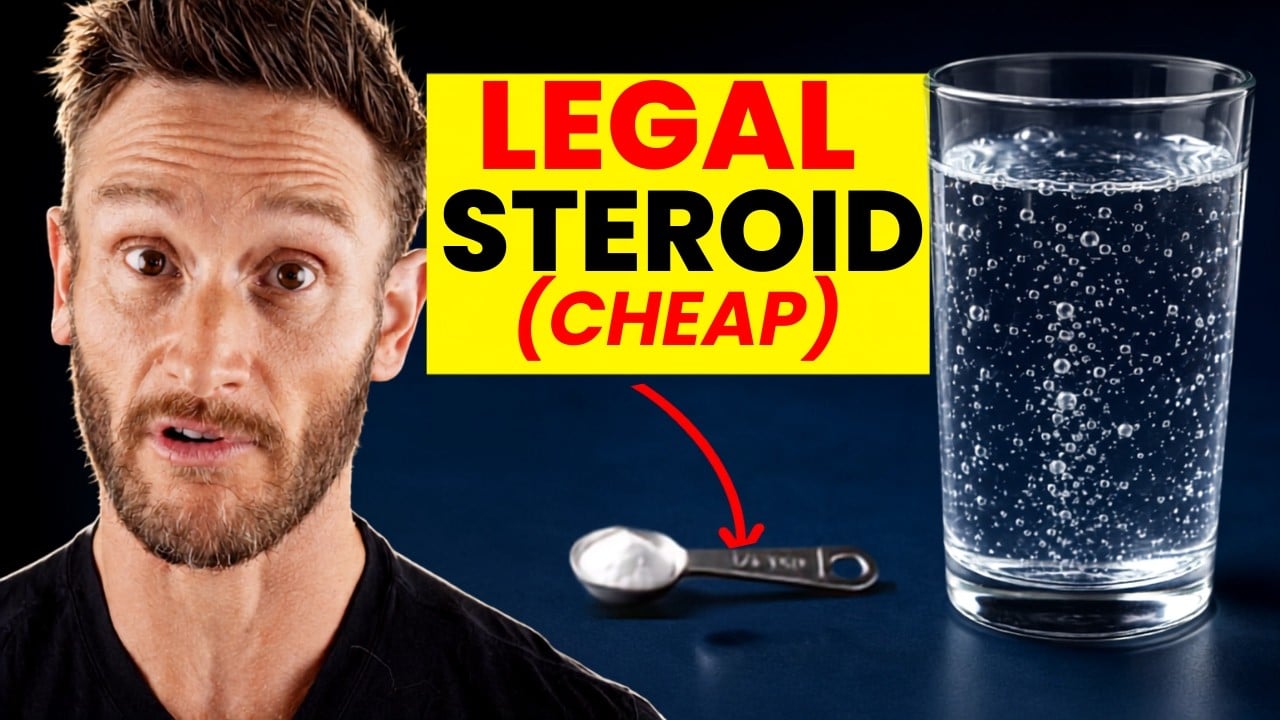
At roughly three cents per serving, this kitchen staple has generated staggering performance data that rivals far more expensive supplements.
And when combined with another dirt-cheap powder, research shows the performance benefits more than double.
Jump to:
Why Sodium Bicarbonate Works for Athletic Performance
During high-intensity exercise lasting anywhere from 30 seconds to 12 minutes, muscles produce large amounts of hydrogen ions.
These ions create that familiar burning sensation and lower pH inside muscle cells, interfering with both muscle contraction and enzyme activity.

If you want something simple that actually works, this is one of the most effective tools I’ve used to build strength, conditioning, and endurance without needing a full gym setup.
- Full-body training with one weight using swings, squats, and presses
- Solid cast iron build that feels stable and lasts for years
- Comfortable grip that makes high-rep workouts easier to handle
Health science educator Thomas DeLauer explains how sodium bicarbonate addresses this issue by raising bicarbonate concentration in blood and extracellular fluid surrounding muscles. This creates a steeper gradient for hydrogen ions to move out of muscle cells and into the bloodstream, where they’re buffered and cleared faster.
You’re not stopping acid production, but you’re giving your body a bigger sink to dump it into.
Evidence-Based Dosing Protocols
The ISSN reviewed evidence confirming performance improvements in activities relying on anaerobic metabolism—sprinting, combat sports, rowing, and swimming.
Effective dosing ranges from 0.2 to 0.5 grams per kilogram of body weight, taken 60 to 180 minutes before exercise.
A multi-day loading approach offers an alternative for those experiencing gastrointestinal discomfort. This protocol involves 0.4 to 0.6 grams per kilogram daily for three to seven days.
DeLauer notes that regular training with elevated buffering capacity doesn’t just improve immediate performance. It allows athletes to train harder even without supplementation, creating compounding benefits over time rather than temporary enhancements that disappear when supplementation stops.
The Intracellular Component: Beta-Alanine
While bicarbonate works exclusively in extracellular space outside muscle cells, beta-alanine addresses acid buffering from within.
If you want something simple that actually works, this is one of the most effective tools I’ve used to build strength, conditioning, and endurance without needing a full gym setup.
- Full-body training with one weight using swings, squats, and presses
- Solid cast iron build that feels stable and lasts for years
- Comfortable grip that makes high-rep workouts easier to handle
As the rate-limiting precursor to carnosine—a dipeptide stored directly in muscles—beta-alanine acts as an intracellular pH buffer. Its chemical structure allows it to buffer acid at pH levels closer to normal muscle resting state, making it the first line of defense against acid buildup right at the source.
Supplementing 4 to 6 grams of beta-alanine daily for four weeks can increase muscle carnosine concentrations by 40 to 60 percent. Carnosine concentrates more heavily in fast-twitch muscle fibers—the exact fibers doing most work during high-intensity efforts.
Performance Data That Matters
The International Society of Sports Nutrition formally reviewed beta-alanine and confirmed improvements in performance for efforts lasting one to four minutes, with pronounced effects on open-ended exhaustion tasks.
A meta-analysis published in Amino Acids found beta-alanine supplementation produced a median improvement of 2.85 percent compared to placebo.
If you apply that to a 4-minute event, like a 1,500-meter run, that’s 6 seconds. If you’re talking about like the Olympics, 6 seconds would have moved the last-place finalist to probably a bronze or silver medal, maybe even gold.
Beta-alanine does produce paresthesia—a tingling sensation—in many users. Splitting doses into 1.5 to 2-gram servings or using sustained-release formulas can minimize this side effect without compromising effectiveness.
The Synergistic Effect: Doubling Down on Buffering
With carnosine buffering hydrogen ions inside muscle cells and bicarbonate handling them outside once transported out, these two compounds cover both layers of acid management systems.
If you want something simple that actually works, this is one of the most effective tools I’ve used to build strength, conditioning, and endurance without needing a full gym setup.
- Full-body training with one weight using swings, squats, and presses
- Solid cast iron build that feels stable and lasts for years
- Comfortable grip that makes high-rep workouts easier to handle
Meta-analysis data published in the British Journal of Sports Medicine examined 40 studies involving over 1,400 participants to measure beta-alanine’s effect size on exercise performance.
In research literature, effect size quantifies whether interventions actually work. Zero means no effect occurred. Anything above 0.2 represents a meaningful real-world difference.
Beta-alanine alone registered an effect size of 0.18—just barely clearing the threshold for meaningful results.
However, studies combining beta-alanine with sodium bicarbonate showed an effect size of 0.43—more than double what’s considered meaningful and the single largest performance effect found in the entire analysis.
Why This Combination Isn’t Mainstream
Despite robust scientific validation, these supplements remain relatively unknown in fitness circles.
Why is nobody talking about this? I mean, if you want to get real, it’s probably cuz there’s no money in it, cuz we are literally talking at pennies per serving.
When kitchen staples demonstrate performance benefits comparable to expensive proprietary formulas, financial incentives to promote them essentially disappear.
If you want something simple that actually works, this is one of the most effective tools I’ve used to build strength, conditioning, and endurance without needing a full gym setup.
- Full-body training with one weight using swings, squats, and presses
- Solid cast iron build that feels stable and lasts for years
- Comfortable grip that makes high-rep workouts easier to handle
Practical Application Protocol
Implementing this dual-buffering approach requires attention to timing and dosing for optimal results.
Sodium Bicarbonate Guidelines
- Acute dosing: 0.3 grams per kilogram of body weight, taken 1-2 hours before training
- Multi-day loading: 0.4-0.6 grams per kilogram daily for 3-7 days prior to competition or high-intensity training blocks
- Timing consideration: Allow sufficient pre-workout window to minimize potential GI distress during exercise
Beta-Alanine Guidelines
- Daily dose: 4-6 grams per day
- Loading period: Minimum four weeks for optimal muscle carnosine saturation
- Dosing strategy: Split into smaller servings throughout the day to reduce tingling sensations
- Timing flexibility: Can be taken with or without sodium bicarbonate—no absorption competition occurs
Unlike creatine’s primary role in muscle building, this combination specifically targets raw performance output and recovery between sets during anaerobic activity. Athletes shouldn’t expect this protocol to replace comprehensive supplementation strategies but rather complement them for specific performance goals.
Who Benefits Most
This dual-buffering approach delivers the most significant advantages for athletes engaged in specific types of training and competition.
Ideal candidates include:
- Sprinters and track athletes competing in events lasting 30 seconds to 4 minutes
- Combat sports athletes (boxing, MMA, wrestling) performing repeated high-intensity rounds
- CrossFit competitors and functional fitness enthusiasts tackling metabolically demanding workouts
- Rowers and swimmers in middle-distance events
- Team sport athletes requiring repeated sprint efforts with minimal recovery
Endurance athletes performing steady-state aerobic exercise will see minimal benefit, as hydrogen ion accumulation plays a less critical role in performance limitation during lower-intensity, longer-duration activities.
Safety and Long-Term Considerations
Both compounds have established safety profiles when used at recommended doses. Sodium bicarbonate’s primary concern remains GI distress, which proper timing and multi-day loading protocols can minimize.
If you want something simple that actually works, this is one of the most effective tools I’ve used to build strength, conditioning, and endurance without needing a full gym setup.
- Full-body training with one weight using swings, squats, and presses
- Solid cast iron build that feels stable and lasts for years
- Comfortable grip that makes high-rep workouts easier to handle
Beta-alanine’s paresthesia represents a harmless sensory experience rather than a safety concern. Some users find the tingling sensation motivating before workouts, while others prefer sustained-release formulations to avoid it entirely.
Regular training with elevated buffering capacity appears to produce adaptations that persist beyond supplementation periods—a finding that distinguishes these compounds from performance aids that only work during active use.
The accessibility and affordability of this evidence-based approach democratizes performance enhancement previously available only through expensive supplement protocols. When meta-analyses demonstrate effect sizes exceeding those of heavily marketed alternatives, the value proposition becomes undeniable for athletes seeking legitimate performance improvements.