Tyler, a 41-year-old testosterone replacement therapy user, recently shared his unfiltered 16-month journey with TRT, covering everything from dramatic energy improvements to persistent back acne.
His experience reveals both the transformative benefits and real challenges of long-term testosterone therapy.
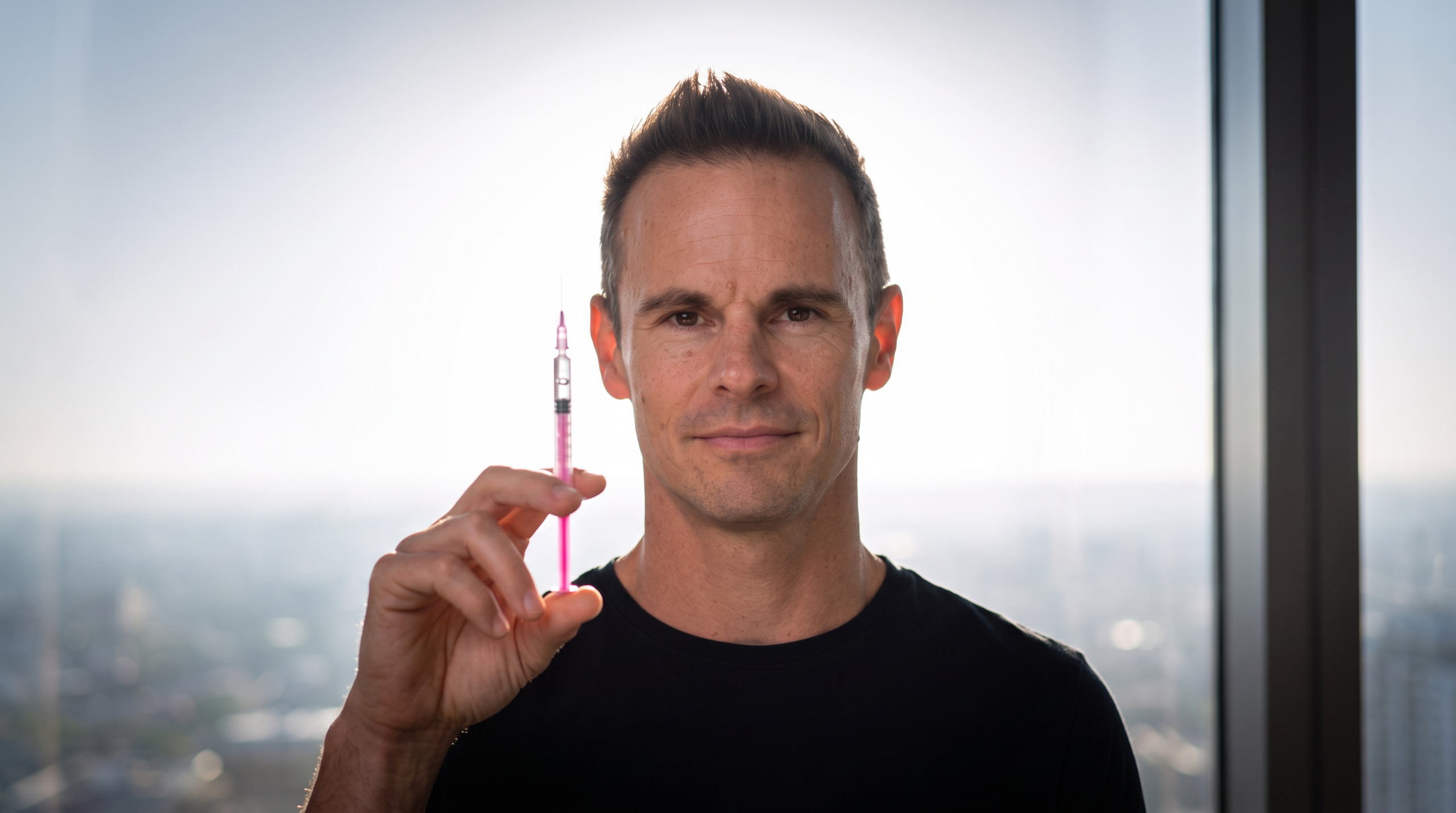
For men considering TRT, his story offers practical insights into what actually happens when testosterone levels shift from 300 to over 1300.
The results might surprise you.
Jump to:
- Why Tyler Started TRT: The Turning Point
- The Rocky Start: 200mg Weekly Dose
- Finding the Sweet Spot: Split Dosing Protocol
- Energy and Motivation: The Immediate Benefits
- Strength and Muscle: Dramatic Physical Changes
- Body Composition: The Visual Transformation
- Libido and Sexual Function Improvements
- Mood, Confidence, and Mental Effects
- The Downsides: Real Consequences of TRT
- Would He Do It Again? The Final Verdict
Why Tyler Started TRT: The Turning Point
Tyler’s decision to pursue testosterone replacement therapy came during a moment of profound fatigue. Lying on his couch, he felt lethargic, unmotivated, and disconnected from his normal self.
Something wasn’t right.
After hearing positive reports from his brother and friends about their TRT experiences, he decided to get his testosterone levels checked at a clinic. The results showed levels just above 300 ng/dL—significantly below optimal ranges for his age.
I remember specifically that I just had no energy. I felt lethargic. I felt slow. I wasn’t fully me, and I wasn’t fully there. I hated that feeling.
That combination of feeling terrible and discovering his low baseline levels convinced him to pull the trigger on treatment.
The Rocky Start: 200mg Weekly Dose
Tyler’s initial protocol called for 200mg of testosterone per week via intramuscular injection. His doctor recommended this dosage to every patient walking through the door.
It was too much, too fast.
All hell broke loose in my body at the very beginning because 200 mg a week is a lot. To this day, I’m still surprised the doctor suggests that for everyone who comes through his doors.
The high dose spiked his testosterone levels to over 1300 ng/dL. While he felt incredible initially—experiencing surges in energy, libido, and mood—serious side effects emerged quickly.
The Back Acne Problem
Tyler’s back acne returned with intensity reminiscent of his teenage years. For someone trying to improve his appearance and confidence, this consequence proved frustrating and persistent.
The skin issues weren’t his only concern. Blood work revealed another alarming change.
Elevated Red Blood Cell Count
A conversation with his nurse practitioner revealed that Tyler’s red blood cell count had spiked dangerously high on the 200mg weekly protocol. Combined with his naturally elevated blood pressure, this created genuine cardiovascular risk.
That’s when he decided to take matters into his own hands and adjust his approach.
Finding the Sweet Spot: Split Dosing Protocol
After recognizing the problems with once-weekly injections, Tyler switched to a twice-weekly protocol: 50mg every Monday and Friday, totaling 100mg per week.
The change proved transformative.
I don’t feel any spikes or crashes or anything throughout the week. Everything is maintained perfectly and my back acne has regressed so much.
By splitting the dose, Tyler achieved more stable testosterone levels throughout the week. This eliminated the hormonal roller coaster of peak-and-trough patterns that occur with less frequent injections.
His back acne improved significantly, though scarring remained. More importantly, his cardiovascular markers returned to safer ranges.
Why Intramuscular Over Creams and Gels
Tyler chose intramuscular injections over topical options after researching absorption rates and stability. Creams and gels can produce unpredictable results due to variable skin absorption.
Injections provided consistent, reliable delivery that he could monitor and adjust with precision.
Energy and Motivation: The Immediate Benefits
Within the first 30 days, Tyler noticed dramatic improvements in energy levels. The change felt almost instantaneous—something not everyone experiences, since testosterone effects typically develop gradually.
I felt like I was 20 years old again. This 41-year-old dude was like, ‘Hell yeah.’ I felt like a college kid.
The renewed energy translated directly into productivity and motivation. Tyler felt sharper mentally and more driven to tackle daily responsibilities.
He wanted to attack life again.
Even on days when he skipped the gym, the baseline energy remained elevated compared to his pre-TRT state.
Strength and Muscle: Dramatic Physical Changes
Tyler follows a traditional bodybuilding-style split routine, training chest-shoulders-triceps, back-biceps, and legs on separate days. He completes 30 minutes of incline treadmill walking after each session.
His typical schedule: two to three days of intense training, one rest day, then repeat.
Strength Gains in 8 Weeks
During his most recent focused training block while on TRT, Tyler experienced remarkable strength progression:
- Pull-ups: From 12 reps to 28 reps in 8-9 weeks
- Bench press: From 130 lbs to repping 205 lbs (previously reached 225 lbs for reps at his peak)
- Recovery: Significantly faster between workouts
The strength gains have been incredible. With muscle memory, it’s much quicker.
Tyler emphasizes that TRT is not a magic solution. When he stopped training due to a back injury, he regained body fat despite remaining on testosterone. The therapy enhances results but doesn’t replace proper training and nutrition.
Body Composition: The Visual Transformation
Perhaps the most visible change has been Tyler’s body composition shift. He developed a V-taper physique with emerging abdominal definition, larger and more defined muscles, and reduced body fat.
His waist circumference decreased while muscle mass increased, creating the aesthetic improvements he sought.
I could not do this without TRT. I’m sure naturally I could get into an okay-looking shape, but nowhere near what I can with TRT, because recovery times are faster.
The key factor? Maintaining a calorie deficit while training intensely. TRT enhanced his ability to preserve muscle while losing fat, something that becomes increasingly difficult with age.
Tyler achieved these results in just eight weeks while traveling and dealing with life obligations—a timeline he attributes directly to testosterone optimization combined with disciplined training.
Libido and Sexual Function Improvements
Before starting TRT, Tyler experienced erectile difficulties and low sexual desire. These symptoms—common in men with testosterone levels around 300 ng/dL—affected his confidence and relationship quality.
After beginning treatment, morning erections returned consistently and sexual function improved dramatically.
Morning wood? That’s a natural thing now. It’s wonderful. It’s like I’m freaking 17. It’s great. It’s there. It stays longer. It stays harder.
Tyler clarifies that TRT isn’t equivalent to medications like Viagra—it doesn’t produce immediate effects on demand. Instead, it restores baseline function when combined with adequate sleep, stress management, and overall health.
The improvement depends on multiple factors working together, with testosterone serving as the foundation.
Mood, Confidence, and Mental Effects
Tyler describes himself as naturally neutral-to-positive in temperament, having consciously shifted from negativity earlier in life. TRT amplified his baseline positive outlook.
The combination of physical transformation, increased energy, and improved sexual function created a powerful confidence boost.
When you actually take control of your life, you challenge your own thoughts, and you actually get so motivated and hyper-focused at creating a better you, nothing can stop you.
Seeing his abs emerge and clothes fitting better reinforced his sense of control and accomplishment. This created a positive feedback loop: better mood drove better habits, which produced better results, which further improved mood.
The only exception? Road rage while driving in Utah—a problem testosterone apparently couldn’t solve.
The Downsides: Real Consequences of TRT
Tyler emphasizes that nothing in life comes without trade-offs. For him, the benefits clearly outweigh the negatives, but the consequences deserve honest discussion.
Persistent Back Acne and Scarring
This remains Tyler’s biggest aesthetic frustration. While switching to split dosing reduced new breakouts significantly, scarring from the initial high-dose period persists.
Acne washes and medications help manage active breakouts, but the scars take considerable time to fade. Tyler has made peace with this trade-off, especially during winter months when his back stays covered.
Lifetime Commitment
Once you start exogenous testosterone, your body’s natural production shuts down. Tyler initially didn’t fully understand this critical point.
You’re going to be on TRT for life. Once you go on synthetics, your body gets used to it. What it was producing naturally before, it won’t do that anymore if you get off.
This represents a serious commitment requiring consistent access to medication, regular injections, and ongoing medical monitoring. Tyler compares it to brushing teeth—simply another necessary part of his daily routine.
But for those uncertain about such a permanent decision, this consequence deserves careful consideration.
Financial Costs
In Utah, Tyler pays approximately $45 monthly for testosterone, plus around $50 for blood work every four months. This totals roughly $690 annually.
He considers this extremely reasonable for the comprehensive benefits he receives. However, costs vary significantly by location, insurance coverage, and clinic choice.
Fertility Concerns
Testosterone replacement typically suppresses sperm production, potentially causing temporary or permanent infertility. Men who want children may need additional medications like HCG (human chorionic gonadotropin) to maintain fertility.
Tyler had already had a vasectomy and doesn’t want children, so this doesn’t affect his decision. But for men still considering fatherhood, this represents a critical factor requiring thorough medical consultation.
Hair Thinning Potential
At 41, Tyler maintains a full head of hair with only minor recession that predated TRT. He believes testosterone doesn’t cause hair loss but rather accelerates genetic predisposition.
It doesn’t make your hair thinner. It just puts you at your genetic predisposition. If at 50 or 60 you are going to thin out, TRT speeds up that process.
Men with strong family histories of male pattern baldness should consider this carefully before starting therapy.
Would He Do It Again? The Final Verdict
Tyler’s answer is unequivocal: absolutely yes.
He plans to continue TRT for life. The energy restoration, strength gains, body composition improvements, enhanced libido, and confidence boost far exceed the manageable downsides of acne scarring and lifetime commitment.
The positives completely outweigh the negatives when it comes to TRT. I feel better. I look better. I’m confident. I have energy. My mood’s up.
His Recommendations for Others
Tyler encourages men experiencing low energy and motivation to at least get baseline blood work. Knowing your testosterone levels provides peace of mind and informs decision-making.
Essential steps before starting:
- Consult with a knowledgeable doctor, not just someone prescribing 200mg to everyone
- Research thoroughly beyond a single source
- Consider your life situation, especially fertility plans
- Understand the lifetime commitment involved
- Ensure you can access consistent treatment
Tyler emphasizes that TRT works best as part of a comprehensive approach: consistent training, eight hours of sleep, proper nutrition, and responsible dosing protocols.
If you’re working out, getting 8 hours of sleep and proper nutrition and you’re on TRT, your life’s only going to improve.
His 16-month journey reveals both the remarkable potential and real challenges of testosterone replacement therapy. For men considering this path, Tyler’s experience offers valuable perspective: dramatic benefits are possible, but only with realistic expectations, medical supervision, and commitment to the lifestyle changes that maximize results.