In a recent YouTube video, Harvard- and Oxford-trained MD PhD Dr. Nick Norwitz revealed that a brownie lowered his blood sugar by accident.
Yes, a brownie.
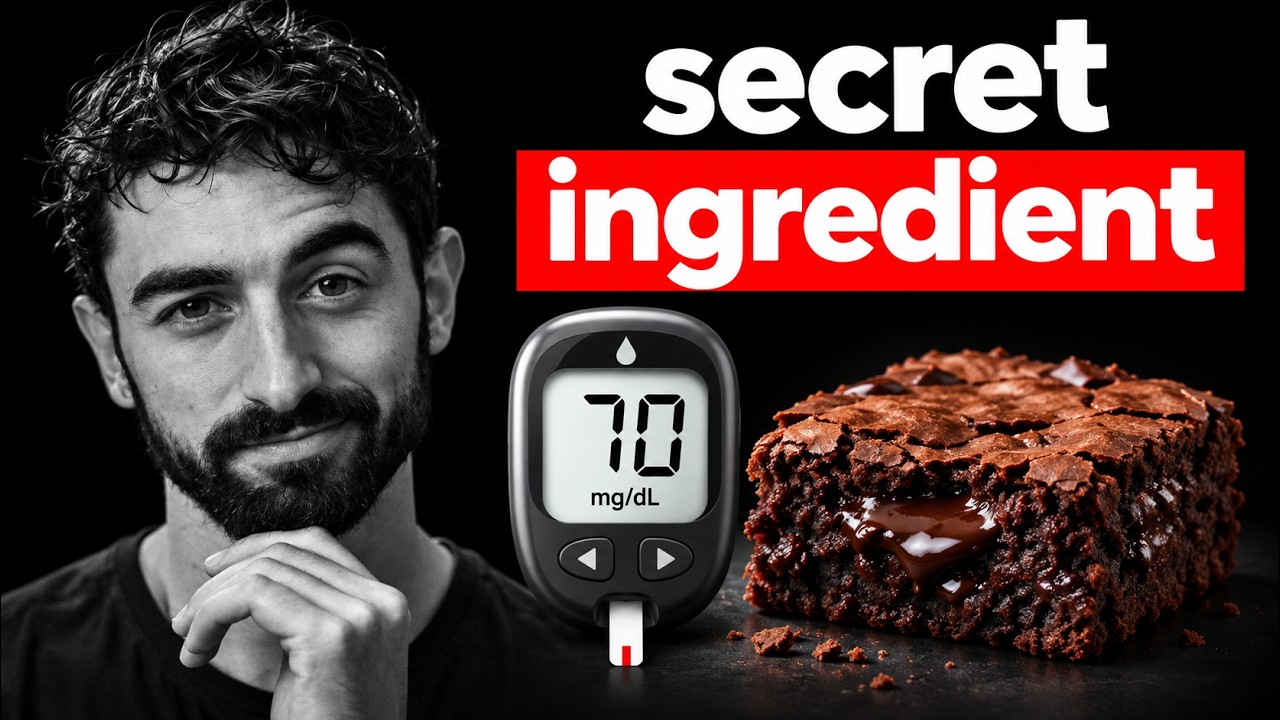
Its secret ingredient is a humble root vegetable most people claim to dislike.
Behind the result sits a surprising chain reaction involving mouth bacteria, muscle cells, and blood vessels.
Norwitz also says the biggest lesson goes far beyond dessert, and the full recipe is waiting below.
Jump to:
The “That’s Odd” Moment
Norwitz originally built this brownie to boost blood flow, not to tame glucose.

If you want something simple that actually works, this is one of the most effective tools I’ve used to build strength, conditioning, and endurance without needing a full gym setup.
- Full-body training with one weight using swings, squats, and presses
- Solid cast iron build that feels stable and lasts for years
- Comfortable grip that makes high-rep workouts easier to handle
Then he checked his blood sugar at 0, 30, and 60 minutes. It dropped by 12 mg/dL.
And then when I tried it again, the effect was even more dramatic.
He compares the moment to Alexander Fleming’s 1928 discovery of penicillin, when mold ruined some petri dishes. Fleming noticed bacteria avoiding the mold, and history changed.
Others though begin by just thinking, oh, that’s odd. And those are usually the best ones.
A quick reality check: this was one person’s self-experiment, not a controlled trial. Norwitz himself frames it as an observation worth exploring, not proof.
How Beets Turn Into a Blood Flow Signal
Beetroot is loaded with dietary nitrate. Bacteria living in the mouth convert that nitrate into nitrite, which the body then turns into nitric oxide.
A critical signaling molecule that improves blood flow and lowers blood pressure.
Human controlled trials, Norwitz notes, link beetroot and dietary nitrates to better vascular function and even improved athletic performance. Cocoa in the brownie adds its own support for blood vessels.
Why Nitrate May Also Affect Blood Sugar
Here is where things get strange. In animals genetically engineered to lack the enzyme that makes nitric oxide in blood vessels, blood sugar climbs and diabetes develops.
If you want something simple that actually works, this is one of the most effective tools I’ve used to build strength, conditioning, and endurance without needing a full gym setup.
- Full-body training with one weight using swings, squats, and presses
- Solid cast iron build that feels stable and lasts for years
- Comfortable grip that makes high-rep workouts easier to handle
Feed those animals high levels of dietary nitrate, and the deficiency can be overcome. Blood sugar improves.
To be clear, I’m not making that claim in a human context, but biologically to me it is just as shocking.
Similar results appear in animals fattened on high-fat, high-sugar diets, where nitrate improves blood sugar control and insulin sensitivity. Worth remembering: most of this work comes from animal models, and human evidence remains smaller and less consistent.
The Exercise-Like Mechanism: AMPK and GLUT4
Norwitz points to a fuel gauge inside cells called AMPK, short for AMP-activated protein kinase.
Exercise burns ATP, producing AMP, which switches AMPK on. That triggers GLUT4 glucose transporters to move from storage pockets inside muscle cells to the surface.
This thing creates a vacuum to pull blood sugar out of the bloodstream and into muscles for them to be burned for more energy.
Per Norwitz, multiple studies show dietary nitrate activating this same protein. Rats show better glucose clearance, and human muscle biopsies reveal increased AMPK activity after nitrate.
The proposed sequence looks like this:
If you want something simple that actually works, this is one of the most effective tools I’ve used to build strength, conditioning, and endurance without needing a full gym setup.
- Full-body training with one weight using swings, squats, and presses
- Solid cast iron build that feels stable and lasts for years
- Comfortable grip that makes high-rep workouts easier to handle
- Beets deliver dietary nitrate.
- Mouth bacteria convert it to nitrite.
- Nitrite becomes nitric oxide.
- Muscle AMPK activates.
- GLUT4 reaches the cell surface and pulls glucose from blood.
Norwitz even draws a parallel with the diabetes drug metformin, citing a Cell Metabolism paper noting similar metabolic effects.
So I guess in theory, instead of taking a pill, you could eat a brownie. Stop. That’s not medical advice. I was mostly joking. Mostly.
Allulose: The Possible Co-Star
Beets may not deserve all the credit. The recipe also uses allulose, a rare, low-calorie natural sugar rather than an artificial sweetener.
Controlled human trials, Norwitz says, show it can blunt glucose spikes after other carbs while lowering insulin levels.
So bottom line, I can’t give all the credit to the beetroot and the dietary nitrate.
His proposed test? Swap allulose for monk fruit or stevia and repeat. Cleaner science, one brownie at a time.
The Virtuous Cycle Hiding Inside the Brownie
Blood vessels have a second route for making nitric oxide. Flowing blood “tickles” vessel walls during exercise, activating the enzyme nitric oxide synthase, a process called mechanotransduction.
That process leans heavily on the glycocalyx, a fuzzy lining inside vessels Norwitz likens to peach fuzz.
If you want something simple that actually works, this is one of the most effective tools I’ve used to build strength, conditioning, and endurance without needing a full gym setup.
- Full-body training with one weight using swings, squats, and presses
- Solid cast iron build that feels stable and lasts for years
- Comfortable grip that makes high-rep workouts easier to handle
Elevated blood sugar can damage the glycocalyx like rust wearing away a metal pipe.
Damage there impairs nitric oxide production. Stable glucose therefore helps preserve this second pathway.
- Pathway one: dietary nitrate and mouth bacteria feed nitric oxide directly.
- Pathway two: steadier glucose protects the vessel lining that makes nitric oxide during movement.
Two pathways, one brownie. Norwitz calls it a virtuous cycle.
Beyond the Brownie: Hunting Confounders
Norwitz admits another variable: he ate the brownie midday while working at a standing desk. Standing and good posture recruit more muscle, which could add to glucose uptake.
Muscle activity after meals generally helps steady blood sugar, though he doubts posture explains the whole effect. His own amplifier: eat, then take a walk outside.
He also suggests sunlight may help, since certain wavelengths could lower glucose. That idea is more speculative than a post-meal stroll, which has far stronger backing.
The compounding effect of small, smart choices beats extreme interventions that you can’t maintain every single time.
No single magic recipe exists, Norwitz stresses. Small nudges stack up.
If you want something simple that actually works, this is one of the most effective tools I’ve used to build strength, conditioning, and endurance without needing a full gym setup.
- Full-body training with one weight using swings, squats, and presses
- Solid cast iron build that feels stable and lasts for years
- Comfortable grip that makes high-rep workouts easier to handle
The Blood Sugar Brownie Recipe
Ingredients (20 servings)
- 2 large beets, finely shredded
- 300 g sugar-free dark chocolate chips
- 1½ cups almond flour
- 1 cup butter
- 1 cup granulated allulose (or similar keto-friendly sweetener)
- 2 large eggs
- 2 tsp vanilla
- 1 tsp cinnamon
- 1 tsp baking powder (optional; skip for fudgier brownies)
- 1 tsp salt
Approximate nutrition per brownie: 19 g fat, 5 g net carbs, 4 g protein.
Instructions
- Preheat oven to 350°F (175°C).
- Melt chocolate chips with butter, stirring until smooth.
- Beat eggs into shredded beets, then add to the chocolate mixture.
- Mix in allulose and cinnamon thoroughly.
- Add almond flour, salt, and optional baking powder. Stir into a thick, gooey batter.
- Pour into an 8 × 8-inch pan.
- Bake about 30 minutes.
- Cool before cutting. Centers stay slightly soft and keep setting.
Lower-Calorie Swaps
- Chocolate: cut chips from 300 g to 200 g and add ¼ cup unsweetened cocoa powder.
- Butter: use ½ cup butter plus ½ cup unsweetened pumpkin purée.
Estimated macros for this version: about 160–175 kcal, 14 g fat, 6 g net carbs, 4 g protein per brownie.
Anyone managing diabetes or taking glucose-lowering medication should talk with a healthcare provider before using food as a blood sugar tool.