A popular fitness YouTuber just put $1,500 worth of smart scales through a brutal accuracy test.
In a recent video on the Iron Oath Fitness channel, the creator pitted two Withings models and the Hume Body Pod against a DEXA scan.
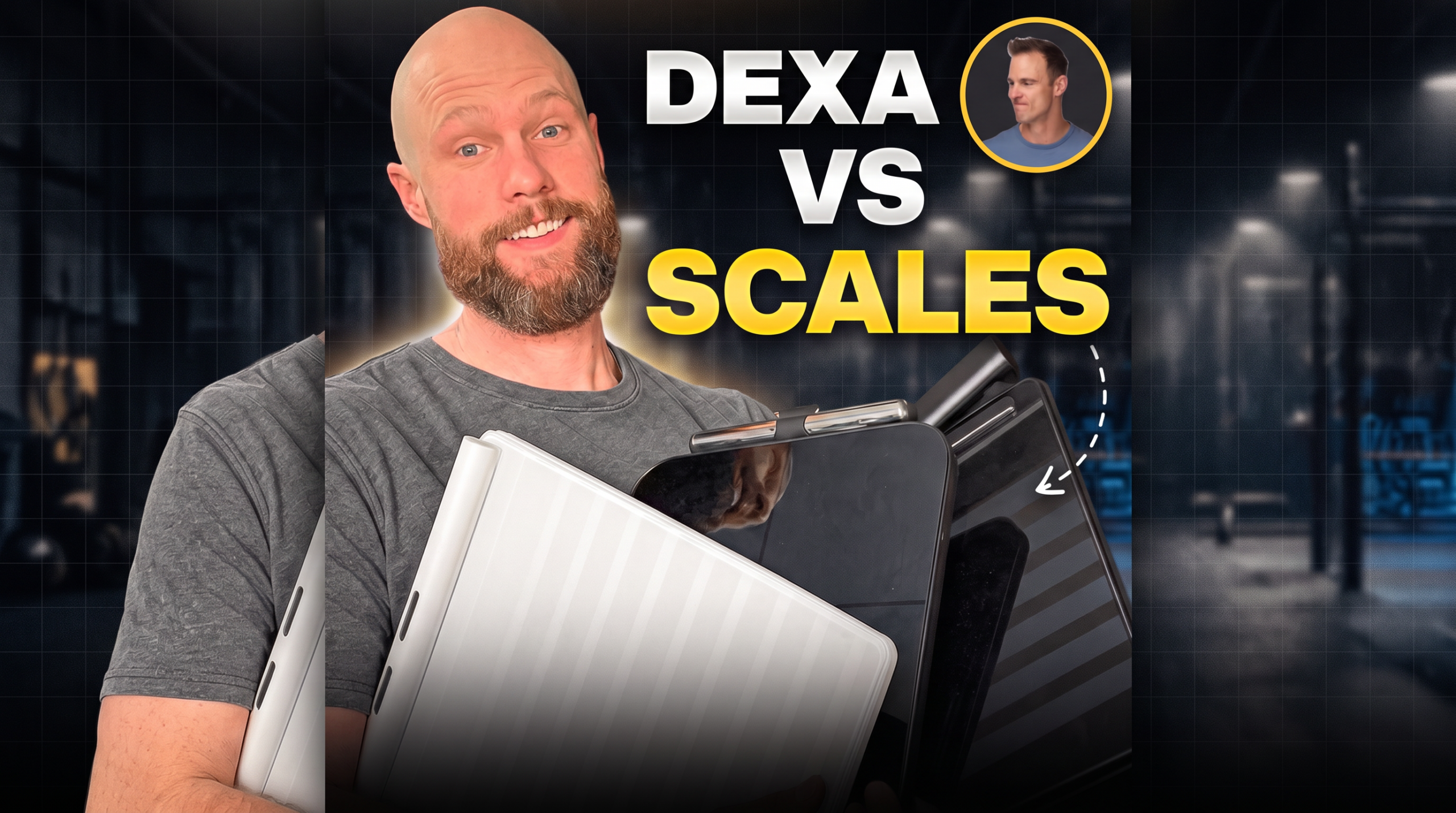
One scale landed almost dead-on.
Another missed by nearly three percentage points.
Which pricey gadget deserves a spot in your bathroom? The answer may surprise anyone who has skimmed the online reviews.
Jump to:
The Scoreboard: Hume Came Closest to DEXA
After tallying every reading, the creator announced a winner without much suspense.

If you want something simple that actually works, this is one of the most effective tools I’ve used to build strength, conditioning, and endurance without needing a full gym setup.
- Full-body training with one weight using swings, squats, and presses
- Solid cast iron build that feels stable and lasts for years
- Comfortable grip that makes high-rep workouts easier to handle
So we have a winner and it is the hum.
Here is how each device estimated his body fat on the same morning:
- DEXA scan (the benchmark): 11.5%
- Hume Body Pod: roughly 11.5% to 11.8%
- Withings Body Scan 1: roughly 13.5% to 13.8%
- Withings Body Scan 2: 14.3%
- InBody machine at a local gym: 8.8%
Hume sat within a few tenths of a point of DEXA. Both Withings units drifted high by two to three points.
Here is the twist: the pricier, newer Withings, which carries double the sensors, strayed furthest among the scales.
How the Test Was Set Up
Consistency was the whole game. The creator visited the same DEXA facility used in an earlier comparison, keeping location variables out of the mix.
I’ve not eaten. I’ve not drank anything.
He wore identical clothing for every test and removed his Whoop band. Each scale was moved to the exact same spot on the floor before he stepped on.
Hume carried one extra hassle: the app must stay open on a phone during the weigh-in, or no body fat reading appears.
If you want something simple that actually works, this is one of the most effective tools I’ve used to build strength, conditioning, and endurance without needing a full gym setup.
- Full-body training with one weight using swings, squats, and presses
- Solid cast iron build that feels stable and lasts for years
- Comfortable grip that makes high-rep workouts easier to handle
Why DEXA Was the Yardstick
DEXA fires X-ray beams at two energy levels. Bone absorbs them differently than soft tissue, so software can separate bone, fat, and lean mass.
It is widely treated as a reference method for body composition, though no single test is flawless. Readings can still vary by machine, operator, and hydration status.
It’s the gold standard for body composition analysis and also bone mineral analysis.
The InBody Wildcard
The InBody uses the same core technology as all three scales: bioelectrical impedance, which sends a low-level current through the body. Its price tag is roughly $15,000.
If a $500 scale is as accurate as a $15,000 InBody or a $100,000 Dexa scan, then that $500 doesn’t seem so bad after all.
Its verdict? 8.8% body fat, far leaner than the creator believes he is.
I’m not 8.8 right now. I’m not 14.8 either, but I’m definitely not 8.8.
Takeaway: a five-figure price tag does not guarantee a spot-on reading.
Weight Matched, Fat Estimates Didn’t
All three scales landed within about a pound of each other on weight, near 177 to 178 lbs. DEXA read a pound and a half to two pounds higher.
If you want something simple that actually works, this is one of the most effective tools I’ve used to build strength, conditioning, and endurance without needing a full gym setup.
- Full-body training with one weight using swings, squats, and presses
- Solid cast iron build that feels stable and lasts for years
- Comfortable grip that makes high-rep workouts easier to handle
The creator argues that matching weights lend credibility to the fat estimates.
How these impedance scales work is if it says you’re a lot heavier, it’s going to add it somewhere, whether that’s your fat mass, muscle mass, it has to find a place for it.
That logic has limits. Two devices can agree on total weight yet split it into fat and lean mass very differently, which is exactly what happened here.
Why One Lucky Match Isn’t a Guarantee
Hume is polarizing. Some commenters rave about it, while others call it a scam and say their DEXA comparisons told another story.
Your unit might not be as accurate as mine.
That caveat matters. This was one person, one morning, and one unit of each device. Hume’s near-perfect match is intriguing, but it doesn’t prove every unit performs the same way.
Impedance-based estimates are also known to shift with hydration, recent meals, and timing. Even a well-calibrated scale can swing from day to day.
What to Do With Your Own Scale
Already own one of these devices? Don’t panic. The creator’s advice shifts the question from “Is it exact?” to “Is it useful?”
If you want something simple that actually works, this is one of the most effective tools I’ve used to build strength, conditioning, and endurance without needing a full gym setup.
- Full-body training with one weight using swings, squats, and presses
- Solid cast iron build that feels stable and lasts for years
- Comfortable grip that makes high-rep workouts easier to handle
It’s a tool in your bag. It’s not the be-all end-all, and it doesn’t have to be that accurate.
Smart Ways to Use Any Scale
- Weigh at the same time daily, ideally under the same conditions.
- Follow trends, not single readings. Direction over weeks beats any one number.
- Verify with a DEXA if you crave a trustworthy baseline, perhaps every six months or once a year.
- Track weekly weight change. Gaining too fast often means fat piling on, while dropping too fast may mean muscle loss.
The creator himself relies on a basic Withings that reports only weight. Stand on it, check the trend, adjust.
Whatever that looks like for you, you can find out your ideal weight gain, ideal weight loss, or if you’re just maintaining. And honestly, you don’t need something like this.