Bigger biceps are often seen as the ultimate sign of strength and aesthetics. But while many gym-goers rely on classic curls to build their arms, not all biceps exercises are equally effective.
Jeff Nippard, a professional bodybuilder and science-backed fitness educator, analyzed the most popular biceps exercises using biomechanics and research-based criteria to determine which ones maximize growth—and which ones might be holding people back.
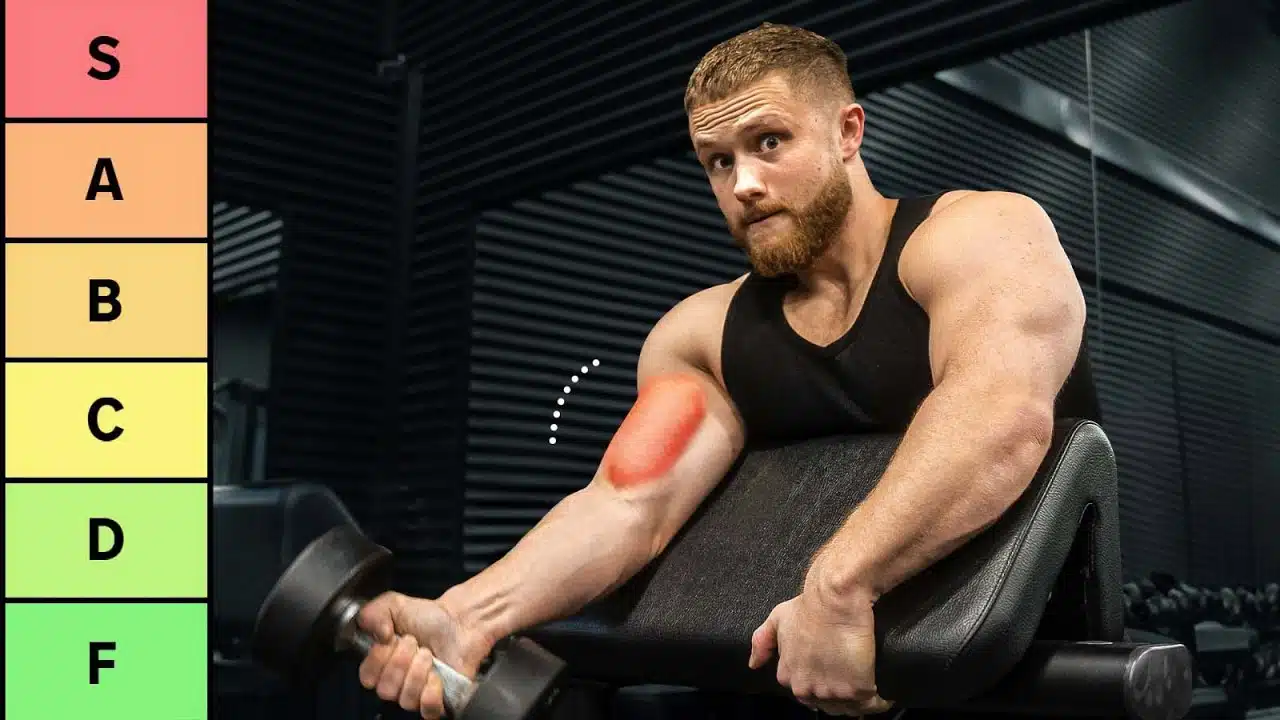
In his analysis, Nippard ranked exercises based on:
✔️ Tension in the stretched position (key for muscle growth)
✔️ Smooth resistance profile (consistent muscle activation)
✔️ Joint comfort (avoiding wrist and elbow strain)
✔️ Ease of progression (adding weight over time)
So, which biceps exercises deserve a spot in a training routine? Here’s a breakdown of the best and worst based on the latest research.
Jump to:
How the Best and Worst Biceps Exercises Were Measured
To determine which exercises maximize biceps growth, Jeff Nippard used a science-based ranking system focused on four key factors:
1️⃣ Tension in the Stretched Position – Exercises that place high mechanical tension on the biceps when fully stretched rank higher, as research suggests this leads to greater muscle growth.
2️⃣ Resistance Profile – Movements with smooth and consistent tension throughout the full range of motion are preferred over those that lose tension at certain points.
3️⃣ Joint Comfort & Injury Risk – Exercises that cause wrist, elbow, or shoulder discomfort are ranked lower, as joint health is crucial for long-term progression.
4️⃣ Ease of Progression – The best exercises allow for steady increases in weight or reps over time, making them more effective for long-term biceps development.
By applying these criteria, Nippard was able to separate the best muscle-building exercises from the ineffective ones—leading to his final rankings.
The Top-Tier Biceps Exercises (S-Tier)
These movements excel at stimulating muscle growth, offering superior tension and range of motion.
Face-Away Bayesian Cable Curl 🏆
- Why it’s great: Keeps constant tension on the biceps and stretches the long head, which contributes to peak development.
- Nippard’s take: “This is an exercise I definitely wouldn’t skip if you’re trying to bring up your peaks.”
- Best for: Overall biceps growth and peak development.
45° Preacher Curl (Dumbbell or Machine)
- Why it’s great: Puts the biceps under high tension in the stretched position and prevents cheating.
- Research says: A 2022 study found that preacher curls led to more growth near the elbow compared to incline curls, likely due to the higher stretch tension.
- Best for: Lower biceps growth and strict muscle activation.
Preacher Hammer Curl
- Why it’s great: Emphasizes the brachialis, a deep muscle that pushes the biceps up, enhancing arm thickness.
- Nippard’s take: “Because of their ability to smash the brachialis, I think I would consider them my number one movement for biceps peak.”
- Best for: Adding arm thickness and improving the biceps peak.
Machine Preacher Curl
- Why it’s great: Keeps the biceps fully engaged without momentum, reducing joint strain.
- Nippard’s take: “I do these every single week. They’re easily going in S-tier.”
- Best for: A joint-friendly way to isolate the biceps.
Strong Contenders (A-Tier)
These exercises are highly effective, but may have minor drawbacks.
EZ Bar Curl
- Why it’s good: More wrist-friendly than a straight bar, but slightly shifts focus to the brachialis.
Standing Dumbbell Curl
- Why it’s good: A staple movement, but loses tension at the bottom of the rep.
- Nippard’s take: “I might have made a bigger stink about this before a new study came out on full range of motion versus lengthened partials.”
Lying Dumbbell Curl
- Why it’s good: Increases biceps stretch, but can strain the shoulders in some individuals.
Inverse Zottman Curl
- Why it’s good: Combines hammer curls (up) and supinated curls (down) to target both the brachialis and biceps.
Cheat Curl (Controlled Form)
- Why it’s good: Allows for heavier loads while controlling the negative (lowering) phase, which is key for muscle growth.
- Nippard’s take: “A properly executed cheat curl can be great for biceps growth.”
Strict Curl
- Why it’s good: Forces strict form, ensuring that all the tension is directed toward the biceps.
Decent But Not Ideal (B-Tier)
These movements still work, but they have notable limitations.
Chin-Ups (Underhand Grip)
- Why it’s decent: Builds overall arm strength, but the biceps aren’t the main limiter.
- Nippard’s take: “Out of all the back exercises, I do think these will grow your biceps the most.”
Barbell Curl
- Why it’s decent: Effective for progressive overload, but lacks full-range tension and can strain the wrists.
Flat Bench Curl
- Why it’s decent: Increases biceps stretch, but hard to progress with heavy weight.
Subpar Exercises (C-Tier)
These movements have noticeable flaws that make them less effective.
Scott Curl (Vertical Preacher Curl)
- Why it’s lacking: Eliminates tension in the stretched position, making it less effective than a 45° preacher curl.
Drag Curl
- Why it’s lacking: Moves the arms backward, reducing effective range of motion.
Spider Curl
- Why it’s lacking: Keeps the biceps too shortened, limiting growth potential.
21s (Traditional Method)
- Why it’s lacking: Inefficient rep sequence—better results could be achieved by reversing the rep order.
- Nippard’s take: “I think it’s a lot smarter to do these short, then full, then long.”
The Worst Biceps Exercises (D & F-Tier)
These exercises offer little benefit and should be avoided.
Standard Cable Curl (D-Tier)
- Why it’s weak: Keeps even tension, but doesn’t stretch the biceps as much as other cable variations.
Waiter Curl (F-Tier – Worst of the Worst) 🚫
- Why it’s useless: Awkward grip, wrist discomfort, and limited progression potential make it ineffective.
- Nippard’s take: “I just use dumbbells instead.”
Final Verdict: The Best and Worst Biceps Exercises
🏆 Best Biceps Exercise: Face-Away Bayesian Cable Curl
🚫 Worst Biceps Exercise: Waiter Curl
For maximum biceps growth, experts recommend prioritizing S-tier and A-tier exercises, particularly preacher curls, hammer curls, and face-away cable curls.