Former Army Ranger and longtime performance coach Judd Lienhard recently shared a comprehensive single-kettlebell workout that proves you don’t need a fully stocked gym to build strength and power.
With over 15 years of coaching experience and a background as a college linebacker, Lienhard knows what works.
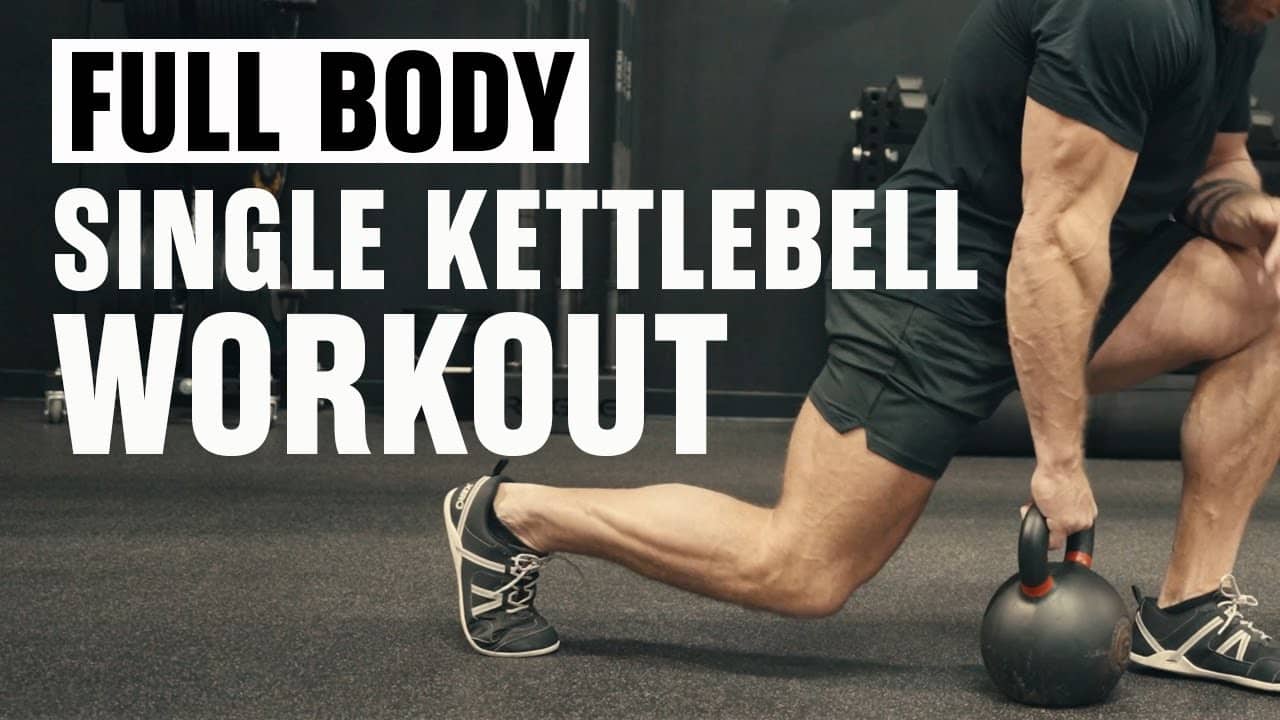
His approach combines functional movement patterns with accessibility, making this workout perfect for home gyms, hotel rooms, or minimalist training setups.
The best part? You only need one piece of equipment.
Jump to:
- Choosing Your Kettlebell Weight
- Why Kettlebells Work
- Starting Strong: Kettlebell Front Swing
- Single-Arm Front Swings
- Figure Eights: Mobility Meets Core Strength
- Overhead Press: Building Pressing Power
- Cossack Squat to Row
- Kettlebell Pass-Through Lunges
- Weighted Split Jumps: Advanced Option
- Single-Arm Kettlebell Snatch
- High Pulls: Safer Alternative
- Over-and-Back Push-Ups
- Close-Grip Push-Ups
- Programming Your Kettlebell Workout
Choosing Your Kettlebell Weight
Before diving into exercises, Lienhard emphasizes selecting appropriate weight. His recommendation is surprisingly specific: choose a kettlebell between 20-30% of your body weight.
The reason I say that is because they’re the most versatile and adaptable weight that you can do the most things with but it’s still heavy enough where you get a good stimulus with most things.
This weight range allows single-arm variations, plyometric movements, and sufficient mechanical tension for muscle growth. For his 250-pound frame, Lienhard uses a 75-pound kettlebell.
Why Kettlebells Work
Kettlebells aren’t just trendy fitness equipment. Their unique design enables curvilinear movements that mirror natural human motion patterns.
They’re affordable, adaptable, and incredibly effective when used correctly. Lienhard points out that simple doesn’t mean ineffective—even advanced athletes benefit from fundamental kettlebell movements.
Starting Strong: Kettlebell Front Swing
The workout begins with front swings, serving double duty as both warm-up and power development. Most people perform this movement incorrectly, either squatting too much or muscling weight upward with arms.
The front swing is a simple hinge movement so what you’re going to do keep the bell about knee height push the bell behind you loading the glutes and at first you’re not going to try to throw it up in front of you with your arms you’re just going to extend your hips and however high it goes is how high the bell goes.
Key execution points:
- Position kettlebell slightly forward
- Drag into hips to load glutes and hamstrings
- Keep bell at knee height throughout bottom position
- Drive through hip extension, not arm pull
- Feel tension in glutes and hamstrings, not lower back
Lienhard recommends 10-20 reps with lighter weights, or 6-8 reps with heavier loads. Adding resistance bands increases difficulty for those using lighter kettlebells.
Single-Arm Front Swings
Progression continues with single-arm variations. This movement adds rotational elements and unilateral strength demands.
Turn the kettlebell backward so your thumb rotates back at the bottom position. Open your palm during upswing and catch at peak height. Switching hands mid-set creates continuous flow between sides.
Lienhard includes a hip shift for comfort and enhanced range of motion, positioning his wrist stacked under the working-side hipbone. Eight to ten reps per side across two sets provides sufficient stimulus.
Figure Eights: Mobility Meets Core Strength
Moving into full-body preparation, figure eights target core stability and multi-joint mobility. Drop into half-squat position and weave the kettlebell in figure-eight patterns between legs.
Momentum comes from hips, not arms—arms simply control trajectory. This movement warms up hips, knees, ankles, shoulders, and back while elevating heart rate. Two sets of eight reps per side completes preparation phase.
Overhead Press: Building Pressing Power
Transitioning into strength work, overhead pressing takes priority while you’re freshest. Unlike barbell or dumbbell pressing, kettlebell technique requires specific positioning.
What you want to do with the kettlebell is you want to get that in the rack position with your thumb with your fist on your sternum your forearm at a 45-degree angle your elbow away from your side a little bit so that kettlebell sits nice and cozy right there in this little cradle that your arm makes.
Proper overhead press mechanics:
- Fist on sternum in rack position
- Forearm at 45-degree angle
- Elbow slightly away from body
- Press in curvilinear path, not straight up
- Lower directly back to sternum cradle
- Keep wrist straight with open hand
Adding kettlebell cleans before each press increases metabolic demand and saves training time. Pull kettlebell back into body using curvilinear movement—not straight upward—then swoop arm underneath for smooth rack position.
Cossack Squat to Row
Supersets maximize efficiency without compromising performance. Lienhard pairs pressing movements with Cossack squat rows, which emphasize different muscle groups.
Assume wide stance and descend into deep lateral squat. Row kettlebell to hip, return to center, then shift to opposite side. Starting with thumb rearward allows natural rotation during rowing motion.
Lean on your thigh for core support when needed. Depth is personal preference—work within comfortable range while maintaining form. Six to eight reps per side builds strength across multiple planes of motion.
Kettlebell Pass-Through Lunges
Lower body focus returns with pass-through lunges, one of Lienhard’s favorite movements. Hold kettlebell in one hand, lunge with opposite leg, descend slowly without letting knee or kettlebell touch ground.
Pass kettlebell through legs, then fluidly transition into lunge on opposite side. Creating wider stance provides space for smooth pass-through. Six to ten reps challenges stability, coordination, and unilateral leg strength.
Weighted Split Jumps: Advanced Option
Advanced athletes craving additional challenge can substitute weighted split jumps. Hold kettlebell by horns and shift upper body over front leg with each descent.
Front shoulder points forward with forearm and thigh forming T or X shape. Jump explosively and switch legs mid-air. This plyometric variation dramatically increases power demands—six to eight reps typically suffices.
Single-Arm Kettlebell Snatch
Total-body power development peaks with single-arm snatches. Begin like front swings but drive upward while punching toward ceiling. Proper technique prevents painful forearm impacts.
If you do it right and go curvilinear and have it go out first and then punch to the ceiling it’s going to come to rest nice and easy on that forearm and feel very comfortable for you.
Start with easy front swings, pull kettlebell back, then arc outward before punching overhead. Curvilinear path ensures smooth forearm landing. Six to eight reps per arm provides substantial cardiovascular and neuromuscular stimulus.
High Pulls: Safer Alternative
Those uncomfortable with full snatches can perform high pulls instead. Pull kettlebell back toward body with elbow staying high, then push away. This movement targets deltoids, lower traps, hips, and posterior chain without overhead demands.
Over-and-Back Push-Ups
Upper body pushing closes the workout. Over-and-back push-ups add instability and explosive elements to traditional push-ups.
Place kettlebell on flat side with handle facing away. Position one hand on kettlebell, keeping majority of weight over that working hand. Explode up and over, transitioning smoothly to opposite side.
Lienhard notes this works excellently as superset with pull-ups or chin-ups if you have access to bars.
Close-Grip Push-Ups
Final pushing variation emphasizes upper chest, triceps, and front deltoids. Place both hands on kettlebell sides and squeeze like crushing an egg—this activates stabilizers.
Descend forward slightly, then press up and back with slight knee bend. Pike position with hips elevated shifts emphasis toward shoulders, creating shoulder-press variation.
Programming Your Kettlebell Workout
Lienhard structures workouts by alternating upper and lower body movements or implementing supersets. This approach maintains intensity while allowing adequate recovery between similar movement patterns.
He emphasizes this isn’t exhaustive—incorporate other kettlebell exercises matching your goals and abilities. No implement is inherently superior; effectiveness depends on application.
There’s no implement that’s better or worse it’s just how you use that implement and what you use it for is it optimal for what you’re trying to achieve.
Kettlebells excel due to movement characteristics their design enables. Understanding these strengths allows strategic programming for strength, power, endurance, and mobility—all from one versatile tool.