Bodyweight exercises often get dismissed as beginner-friendly alternatives to “real” weightlifting.
But according to calisthenics expert and fitness content creator, three specific bodyweight movements don’t just match their weighted counterparts—they actually outperform them.
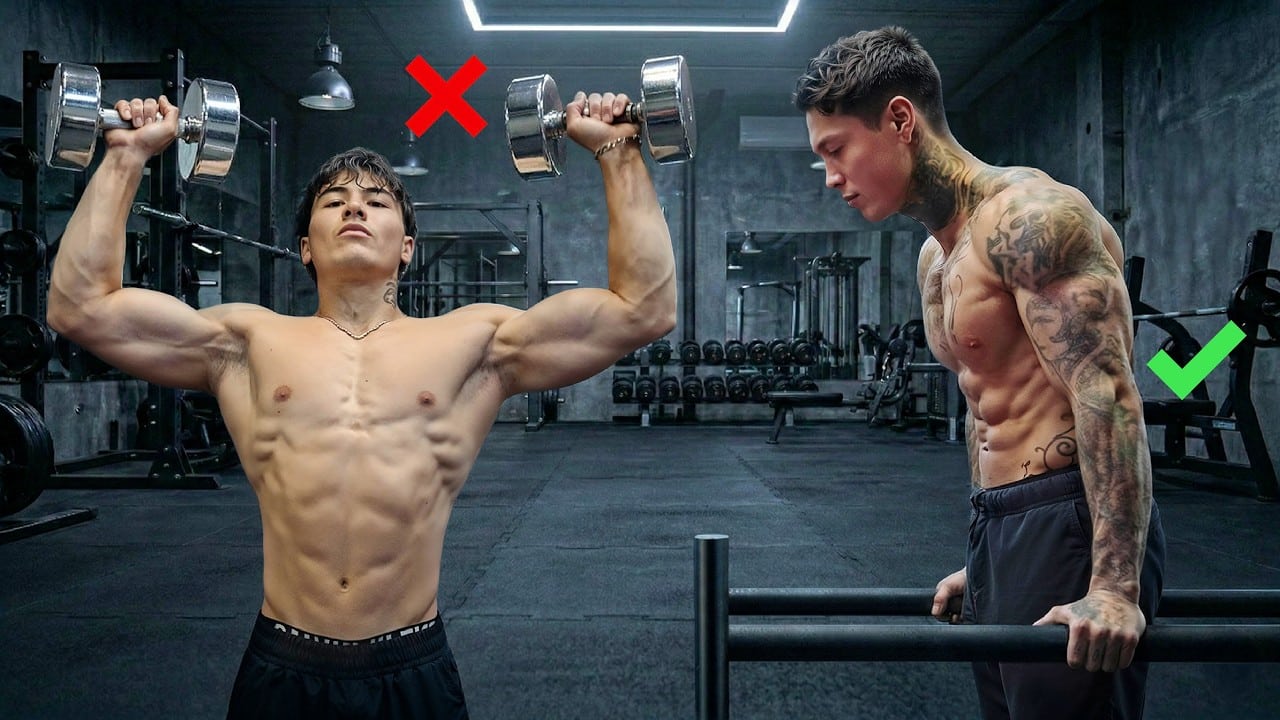
In a recent video breaking down exercise effectiveness, he explained why pull-ups, dips, and handstand push-ups deliver superior results compared to lat pulldowns, decline bench press, and shoulder press.
Here’s why these bodyweight classics deserve a spot in every training program.
Jump to:
Pull-Ups vs. Lat Pulldowns: Why Tension Matters More Than You Think
On paper, pull-ups and lat pulldowns look nearly identical. Both involve pulling movements that engage lats through similar ranges of motion.
But dig deeper and critical differences emerge.
With lat pulldowns, you’re seated with legs locked in and following a fixed bar path. That setup dramatically reduces stability demands compared to free-hanging pull-ups.
Most lifters already know calisthenics movements engage more muscle groups simultaneously than isolated weighted versions. What they might not realize is what happens when lat pulldowns become challenging.
Once it actually becomes challenging, you lean back, press your feet into the floor, and extend through your hips. The movement shifts from a strict vertical pull into something more diagonal.
When fatigue sets in, spinal erectors, glutes, and hip extensors start assisting. That takes resistance away from lats—the exact muscles you’re trying to target.
Constant Tension Creates Superior Strength Development
Pull-ups eliminate these compensatory patterns entirely. No seat, no pad, no guided track means your grip supports full bodyweight throughout every rep.
Core stays engaged preventing swing. Stabilizers work constantly maintaining body position.
Because of that, the tension never leaves your lats from the start of your set to the end of it. Your core, stabilizers, and accessory muscles are working, but not reducing the load.
Pull-ups also develop relative strength—the ability to move your body through space rather than just external loads. That’s why pull-up strength transfers seamlessly to lat pulldowns, but machine strength doesn’t guarantee pull-up ability.
Dips vs. Decline Bench Press: Range of Motion Reveals the Winner
Both dips and decline bench press target chest and triceps effectively. Both can build serious upper body mass.
But when comparing movement quality, dips pull ahead for several reasons.
Decline bench actually offers shorter elbow travel compared to flat bench. Research shows it doesn’t significantly emphasize lower chest more than flat pressing despite popular belief.
Chest stretch at bottom position is also reduced on decline versus flat bench.
Dips Deliver Superior Lower Chest Activation
Dips offer greater range of motion than decline bench. Bottom position creates deeper chest stretch. Most importantly, dips actually target lower chest more effectively than decline bench press.
Beyond chest development, dips train scapular depression, core strength, and numerous stabilizer muscles supporting bodyweight throughout movement.
Progression patterns also differ dramatically between exercises.
When you upscale the bench, nothing really changes other than adding more weight. You go heavier, but the movement stays the same.
Dips open pathways to advanced variations:
- Archer dips for unilateral strength
- Planche push-ups developing horizontal pressing power
- Archer planche variations reaching elite calisthenics levels
Strength built through dips transfers into progressively harder skills, not just heavier reps of identical patterns.
Handstand Push-Ups vs. Shoulder Press: Overhead Strength Meets Total Body Control
Shoulder press—whether barbell, dumbbell, seated, or standing—remains a proven mass-building staple. It works, plain and simple.
Yet handstand push-ups edge ahead despite shoulder press being arguably the best weighted shoulder exercise available.
Scalability From Beginner to Advanced
You don’t need freestanding handstand push-up mastery before starting this progression. Training begins with pike push-ups, advances to elevated pike variations, then wall-assisted handstand push-ups.
Movement remains scalable from novice to expert without altering fundamental vertical pressing pattern.
Once strict handstand push-ups become achievable, progression continues through multiple pathways:
- Increased range of motion using parallettes or elevated hand positions
- Tempo manipulation slowing eccentric phase for greater time under tension
- Pause reps at bottom position
- Explosive variations developing power
- Volume increases building work capacity
Both exercises eventually hit practical ceilings. Most lifters won’t shoulder press 225 pounds, and continuing beyond that weight often compromises joint health more than it builds muscle.
Similarly, most athletes won’t perform 20 strict freestanding handstand push-ups. But both movements already deliver excellent hypertrophy and strength within 6-15 rep ranges.
Full Body Integration Separates Good From Great
Handstand push-ups gain their edge through demanding total body tension alongside overhead pressing strength.
Your core is not just assisting, it’s required. Your glutes must contract to maintain hip alignment. Your scapuli must upwardly rotate and elevate under full body weight without external support.
Entire body must stack and work cohesively just maintaining handstand position. Relative strength gains become exceptional—you’re training with exercises Olympic gymnasts use for strength and conditioning.
Equipment requirements? Zero. No barbell, rack, or plates needed. Just you and ground.
The Verdict: Neither Is “Better” Until You Compare Specific Movements
Weights and bodyweight training both build muscle, increase strength, and develop impressive physiques. Neither category universally outperforms the other.
But when examining pull-ups versus lat pulldowns, dips versus decline bench, and handstand push-ups versus shoulder press, bodyweight versions consistently deliver advantages through constant tension, superior range of motion, enhanced stabilization demands, and practical skill progression.
The takeaway isn’t abandoning weights entirely. It’s recognizing when bodyweight movements offer distinct benefits worth prioritizing in training programs.
For building functional strength that transfers beyond gym walls while developing movement mastery, these three bodyweight exercises earn their reputation as superior choices.