Ever wake up feeling like you did everything right, but still can’t shake stubborn belly fat?
New research reveals a hidden metabolic trap that keeps your body locked in fat-storage mode—even when you’re eating clean and training hard.
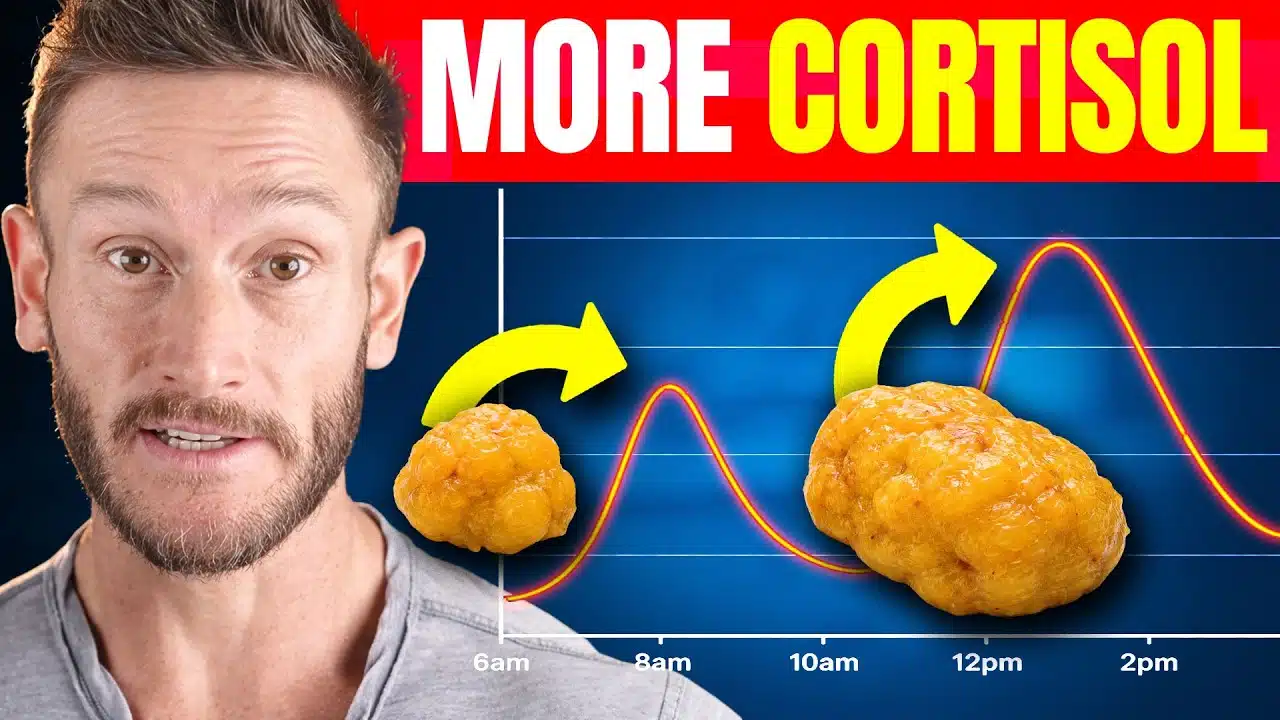
Popular health and fitness content creator Thomas DeLauer recently explained how two specific hormones work together to create what he calls a “survival mode” inside fat cells.
Understanding this mechanism could be the key to finally breaking through that stubborn plateau.
Jump to:
The Hidden Cortisol-Insulin Loop
Most people understand cortisol as a stress hormone and insulin as a blood sugar regulator. But when these two hormones stay elevated together, something unexpected happens.
DeLauer explains that cortisol triggers the liver to produce glucose through a process called gluconeogenesis—even when you haven’t eaten. This newly manufactured glucose spills into the bloodstream, prompting insulin release.
Here’s where things get problematic: cortisol simultaneously blocks muscles from absorbing that glucose by impairing insulin receptor substrate 1 (IRS1) and GLUT4 activity.
The result? Instead of fueling muscle tissue, that glucose gets shuttled directly into fat stores—particularly visceral fat surrounding internal organs.
Cortisol plus insulin does not burn fat. It stores it. It’s like pressing the gas and the brake pedal at the same time.
According to research published in the Journal of Clinical Endocrinology & Metabolism, when human fat cells were exposed to both cortisol and insulin simultaneously, lipoprotein lipase activity—a key fat-storage enzyme—increased over fivefold.
Your Fat Cells Produce Their Own Cortisol
The problem goes deeper than circulating hormones. Fat tissue itself can manufacture cortisol internally through an enzyme called 11-beta-hydroxysteroid dehydrogenase type 1 (11β-HSD1).
This enzyme acts as what DeLauer calls a “cortisol amplifier,” converting inactive cortisone into active cortisol inside fat cells.
Even if blood work shows normal cortisol levels, belly fat could be flooded with locally produced cortisol—creating a vicious cycle that’s nearly invisible to standard testing.
Three Major Problems From Internal Cortisol Production
- Reactivates fat storage: Lipoprotein lipase kicks back into gear, storing even more fat
- Creates new fat cells: Increases adipocyte differentiation, literally manufacturing additional fat tissue
- Worsens insulin resistance: Boosts inflammatory cytokines like IL-6 and TNF-alpha, particularly impairing muscle insulin sensitivity
Research shows that expression of this cortisol-producing enzyme is significantly higher in the visceral fat and livers of obese patients.
The more visceral fat someone carries, the more cortisol their fat produces—and the harder it becomes to lose. Fat tissue transforms into its own hormone-producing organ, feeding the very cycle that created it.
Breaking the Metabolic Loop
The solution isn’t eliminating cortisol or insulin—both serve essential functions. The key is separating their peaks throughout the day.
When Cortisol Is High, Keep Insulin Low
Morning presents an ideal opportunity. Cortisol naturally peaks after waking, while insulin remains low after the overnight fast.
Combining this natural hormone pattern with fasted movement and sunlight exposure amplifies fat oxidation instead of storage. You work with your biology rather than against it.
As the day progresses, the pattern should reverse. Cortisol should decline while insulin rises with meals—a normal circadian rhythm that supports metabolic health.
Training too late, experiencing evening stress, or consuming heavy carbohydrates under pressure stacks cortisol and insulin together. This combination creates prime fat-storage conditions.
Practical Strategy: Avoid Eating Big Meals When Stressed
Make it a firm rule: don’t combine late-day stress with high-carbohydrate meals. If you’re genuinely stressed, skip the carbs for that meal.
This single behavioral change can prevent the cortisol-insulin collision that drives stubborn fat accumulation.
Natural Compounds That Shut Down the Amplifier
Certain nutrients can directly reduce 11β-HSD1 enzyme activity, quieting cortisol production inside fat cells.
Berberine
This common supplement has been shown to reduce the cortisol-amplifying enzyme while activating AMPK and improving insulin sensitivity.
DeLauer suggests 300-500 mg daily, particularly during periods of increased stress or intense training.
EGCG (Green Tea Catechin)
The primary catechin in green tea directly decreases 11β-HSD1 activity. For optimal timing, use decaffeinated green tea or extract in the afternoon.
This provides the enzyme-suppressing benefits without additional caffeine that could interfere with evening cortisol clearance.
Omega-3 Fatty Acids
Quality omega-3s blunt the inflammatory cascade that keeps the cortisol-producing enzyme overactive. Aim for 2-3 grams of EPA and DHA daily.
Together, these compounds restore what researchers call “metabolic flexibility”—your body’s ability to switch efficiently between burning and storing fuel.
Supporting Cortisol Clearance
Reducing cortisol production is only half the equation. Supporting the body’s ability to clear excess cortisol matters equally.
- Prioritize sleep: Three grams of glycine before bed supports deeper sleep and cortisol regulation
- Support liver function: Sulforaphane from cruciferous vegetables (broccoli, sauerkraut, kimchi), milk thistle, and choline from eggs enhance cortisol clearance
- Use TMG (betaine): This compound aids liver detoxification pathways
- Eliminate alcohol: Alcohol impairs the liver’s ability to process and clear hormones
- Cut stimulants after noon: Even if you sleep well, afternoon caffeine affects internal cortisol dynamics
Putting It All Together
Neither cortisol nor insulin is the enemy. Both serve critical biological functions. Problems arise when they spike simultaneously and remain elevated together.
Four actionable steps to break the cycle:
- Time your stress: Leverage morning cortisol with fasted training and sunlight, but avoid chronic stress that depletes the HPA axis
- Separate cortisol from insulin: Never combine high stress with high-carb meals, especially in the evening
- Support clearance: Prioritize sleep, liver health, and eliminate alcohol and late-day stimulants
- Downregulate the enzyme: Use berberine (300-500mg), decaf green tea EGCG, and omega-3s (2-3g EPA/DHA)
Cortisol and insulin are not enemies. They are messengers. But if you let them spike together, they will store fat. That’s what they’re supposed to do.
When timed correctly, these same hormones work for you—mobilizing energy, building muscle, and supporting recovery.
The difference between stubborn fat storage and efficient fat burning often comes down to hormone timing rather than hormone levels. Understanding this hidden metabolic loop—and how to interrupt it—provides a powerful tool for finally breaking through plateaus that seemed impossible to overcome.