

Everyone wants sculpted, photogenic abs—but looking great is only part of the picture.
Your core muscles serve a far greater purpose than vanity, and too often they’re neglected beyond a few half-hearted cable crunches or compound lifts.
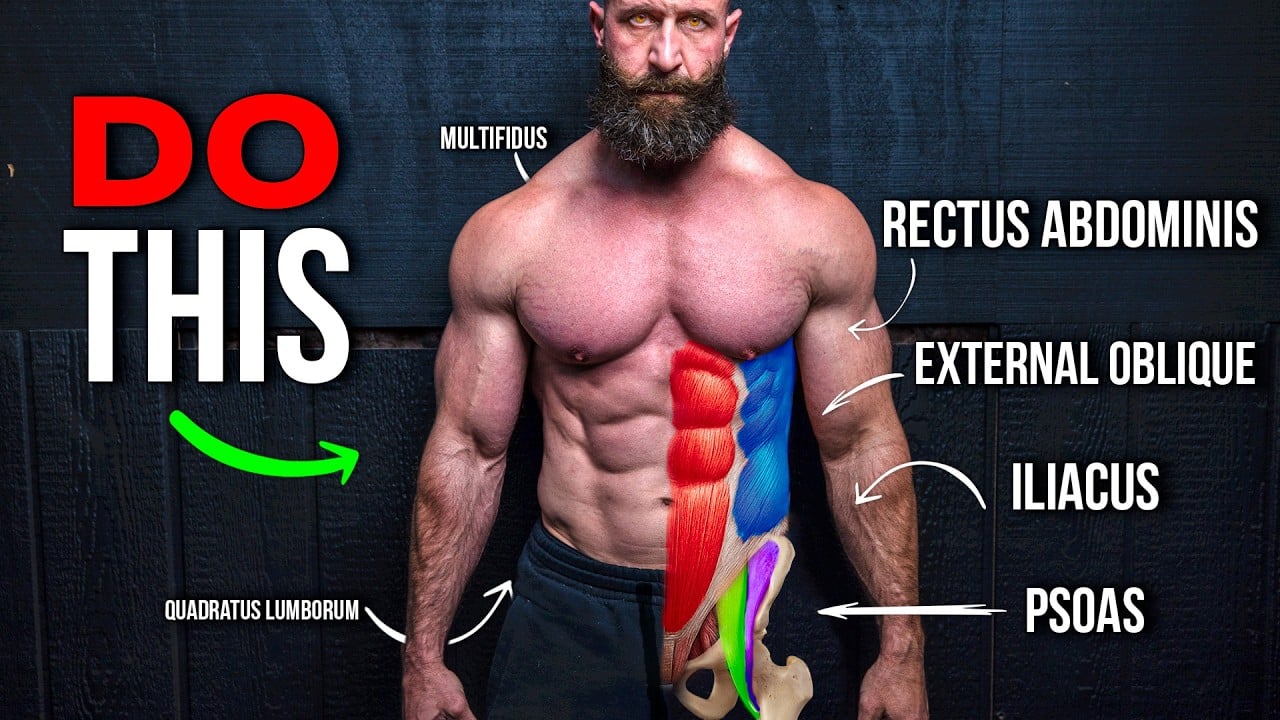
In a comprehensive fitness breakdown, a seasoned strength coach explained how serious back injury led him to redefine his approach to core training—going far beyond what most lifters consider “ab work.”
This article dives deep into the exercises that develop not just your visible six-pack, but also the deeper, stabilizing muscles that keep you pain-free and powerful through every twist, hinge, and lift of life.
We’ll explore effective progressions you’ve never tried, muscles you’ve been ignoring, and most importantly—how to bulletproof your core from back-breaking injuries in both the gym and, unexpectedly, from picking up your dog.
Jump to:
Why Core Isolation Beats Compound Lifts (Sometimes)
Compound lifts like squats and deadlifts do activate the core through abdominal bracing. But that tension happens only in the sagittal plane (forward and backward), leaving your core underprepared for real-world rotational or lateral stress.
Injuries like herniated discs often strike during awkward, off-axis movements—reaching down, twisting sideways, or picking something up while leaning.
“If bracing during squats was enough, we’d all have unbreakable backs by now—from years of crapping aggressively after Taco Bell,” jokes the coach, highlighting how inadequate traditional powerlifting staples are for targeting the full functionality of the core.
Train the Rectus Abdominis for Aesthetic and Function
The rectus abdominis—the classic six-pack muscle—thrives on dynamic contraction, not static holds or full sit-ups that over-engage the hip flexors and obliques.
For hypertrophy, think short, controlled arcs of flexion and extension. One favorite is the modified reverse sit-up, which limits pelvic movement and zeroes in on the upper abs.
This version allows anyone with pre-existing lumbar spine issues to safely stimulate growth without compromising the back.
Another standout is the cable crunch—but only if performed with precision. Don’t curl into a human pretzel. Instead, respect the limited range of the rectus abdominis and work within it.
Upper vs Lower Abs: Can You Target Them?
Though the rectus abdominis is one continuous muscle, studies in elite tennis players show patterns of regional hypertrophy—suggesting some directional bias is possible.
If you anchor the pelvis and tilt the thorax, you’ll shift emphasis to the upper abs. Conversely, keeping the chest still and posteriorly tilting the pelvis targets the lower region.
The best lower ab movement? A backup-supported hanging leg raise, focusing on that all-important pelvic tilt. Done right, it mimics controlled dry humping more than leg swinging—awkward but effective.
Strengthening the Forgotten Deep Core
Beyond surface-level flexors, a host of stabilizers silently hold your spine in check. Ignore them at your own risk.
Quadratus Lumborum (QL)
This muscle is often overlooked until it’s injured—usually during lateral or off-axis movement, as the coach experienced when lifting his dog.
Simple “butt walks” or advanced hyperextensions with a staggered stance target and strengthen the QL. Avoid using your upper back. Instead, hinge and lengthen from the hip for proper engagement.
Ilio Psoas Complex
The psoas and iliacus (together forming the ilio-psoas group) are pivotal hip flexors, especially important past 90 degrees of flexion.
Short, tight psoas muscles can cause anterior pelvic tilt or limit squat depth. The psoas sit-up—anchoring one foot while reclining—provides a unique stretch-strengthen combo to unlock mobility and strength.
Don’t Skip the Obliques—Yes, Even if You’re Vain
Worried that training obliques will make your waist “blocky”? Too bad.
Isometric holds might not thicken the external obliques significantly, but the internal obliques and transversus abdominis absolutely grow. And that’s a good thing—they’re vital to stability.
To train them safely and effectively, start on the ground. Squeeze a medicine ball or Yoga block between your legs, brace your midsection. Lightly twist upward, reaching one hand higher at a time.
Once you’re comfortable, escalate to controlled cable twists. Halve the range of motion to create focused tension. This not only sparks oblique growth but awakens the multipidus—tiny spinal stabilizers critical for long-term back resilience.
A Full Core Routine That Builds and Protects
Forget endless crunches. Build a smart, layered core routine with elements for growth, function, and resilience:
- Modified Reverse Sit-ups: 3 sets of 8–12 (upper abs focus)
- Backup-supported Hanging Leg Raises: 3 sets of 10–15 (lower abs)
- Cable Crunches (Short-ROM): 3 sets of 12
- Psoas Sit-ups: 2–3 sets, slow controlled reps
- QL Hyperextensions (Split Stance): 3 sets each side
- Cable Oblique Twists: 2–3 sets of 8–12 each direction
On rest days or before main lifts, add:
- Banded Bird Dogs: 3 sets of 10–15 (hold each rep 3 secs)
- TRX Heels-Only Bridge Isometric Holds: 3 sets of 30 seconds
Conclusion: Aesthetics Are Nice—But Stability Is Better
A strong, symmetrical core does more than turn heads at the beach. It protects your spine, improves athletic performance, and helps you live pain-free.
Whether you’re recovering from an injury like a disc herniation or just trying to avoid one, committing to smart core training is non-negotiable.
You can absolutely target upper and lower abs, build deeper muscle resilience, and grow that coveted core—one intentional rep at a time.










