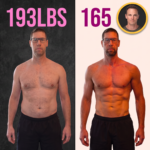
Thomas DeLauer recently shared something that challenges what most people believe about fasting.
It turns out that fasting doesn’t just work because you’re eating less calories.
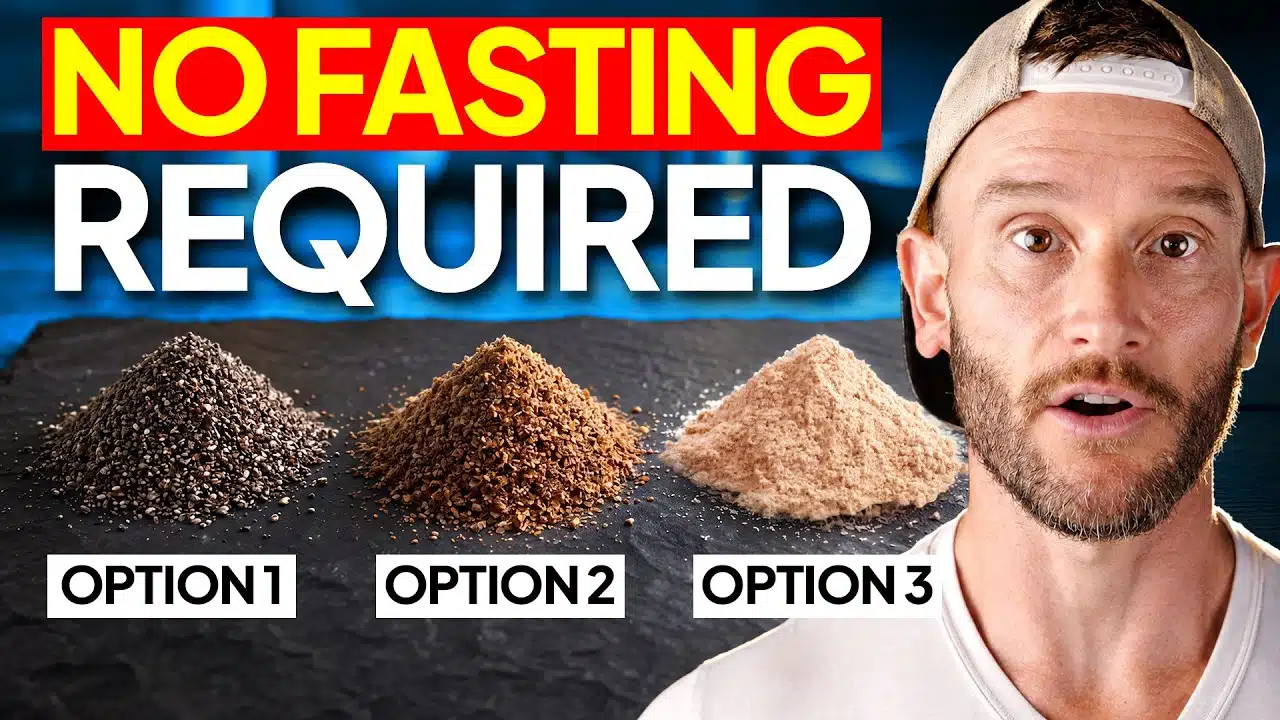
There’s a deeper metabolic mechanism at play—one that can be activated through sources beyond caloric restriction alone.
And surprisingly, gut bacteria might hold the key to unlocking better fat burning, whether you’re fasting or not.
Jump to:
- The Real Reason Fasting Works
- Meet Butyrate: The Gut-Derived Fat Burning Signal
- Animal Studies Show Dramatic Fat Burning Effects
- Stacking Butyrate With Fasting
- The Performance Angle: Elite Athletes and Butyrate
- How to Increase Butyrate Production (The Right Way)
- Why Food Matrix Matters More Than Fiber Counts
- Practical Implementation
The Real Reason Fasting Works
According to DeLauer, most people think fasting burns fat simply because they’re not eating. While caloric restriction plays a role, there’s something more specific happening at the cellular level.
It’s called AMPK, which absolutely gets flipped into caloric deficit. But it’s deeper than that. And when we understand the depth of it, we can actually activate it in different ways.
When AMPK (a cellular energy sensor) increases, fat oxidation increases. Mitochondria start preferentially burning fatty acids for fuel.

If you want something simple that actually works, this is one of the most effective tools I’ve used to build strength, conditioning, and endurance without needing a full gym setup.
- Full-body training with one weight using swings, squats, and presses
- Solid cast iron build that feels stable and lasts for years
- Comfortable grip that makes high-rep workouts easier to handle
But here’s where things get interesting: AMPK can be activated through more than just fasting.
Meet Butyrate: The Gut-Derived Fat Burning Signal
Butyrate is a compound produced by gut bacteria when they ferment fiber. It’s a short-chain fatty acid that most people associate only with digestive health.
DeLauer explains that butyrate does far more than support gut function—it actually mimics ketones.
Structurally, butyrate looks almost identical to beta-hydroxybutyrate, which is the main ketone that your body makes when you’re fasting.
Because of this structural similarity, butyrate shares some of the exact same signaling behavior as ketones. That means gut bacteria play a significant role in determining how efficiently someone burns fat.
How Butyrate Changes Gene Expression
Butyrate acts as an HDAC inhibitor, which allows it to change how accessible DNA is inside cells. This affects gene expression related to metabolism and fat burning.
Research published in Oxidative Medicine and Cellular Longevity examined what happens when liver cells are exposed to butyrate in the presence of insulin.
If you want something simple that actually works, this is one of the most effective tools I’ve used to build strength, conditioning, and endurance without needing a full gym setup.
- Full-body training with one weight using swings, squats, and presses
- Solid cast iron build that feels stable and lasts for years
- Comfortable grip that makes high-rep workouts easier to handle
The findings were remarkable:
- Modulated expression of 54 genes involved in mitochondrial respiration and fat metabolism
- Increased mitochondrial DNA concentration
- Boosted ATP production
- Enhanced fat burning and cellular fuel utilization
- Decreased oxidative stress despite increased metabolic activity
That last point is crucial. More energy output typically means more cellular damage, but butyrate managed to increase metabolism while reducing oxidative stress.
Animal Studies Show Dramatic Fat Burning Effects
Cell culture studies provide valuable insights, but animal research takes things further.
A study published in Diabetes gave butyrate to diabetic mice and measured the metabolic response. Results showed increased AMPK activation and elevated PGC-1α expression—the regulator of mitochondrial biogenesis.
When researchers measured actual fatty acid oxidation, mice receiving butyrate were burning fat significantly faster.
The same study found that butyrate-treated mice had smaller brown fat adipocytes, suggesting higher thermogenic activity. Both PGC-1α and uncoupling protein 1 (UCP1) were elevated.
If you want something simple that actually works, this is one of the most effective tools I’ve used to build strength, conditioning, and endurance without needing a full gym setup.
- Full-body training with one weight using swings, squats, and presses
- Solid cast iron build that feels stable and lasts for years
- Comfortable grip that makes high-rep workouts easier to handle
So butyrate wasn’t just increasing fat oxidation, it was actually activating brown fat. So, it’s like our metabolism was burning hotter.
Another study in Gut confirmed that longer-term butyrate supplementation prevented obesity while promoting fat burning in animal models.
Human Data Points to Similar Effects
While direct human studies on butyrate and fat loss are limited, research on soluble fiber provides compelling correlations.
A study published in Obesity analyzed CT scans from over a thousand people. For every 10-gram increase in soluble fiber intake, visceral fat accumulation decreased by 3.7%.
Since soluble fiber feeds butyrate-producing bacteria, the connection is difficult to dismiss.
Stacking Butyrate With Fasting
DeLauer remains a strong advocate for fasting. He recommends going at least 12 to 16 hours regularly, with occasional longer fasts.
But understanding butyrate opens up a new strategy: priming your body before fasting.
If you want something simple that actually works, this is one of the most effective tools I’ve used to build strength, conditioning, and endurance without needing a full gym setup.
- Full-body training with one weight using swings, squats, and presses
- Solid cast iron build that feels stable and lasts for years
- Comfortable grip that makes high-rep workouts easier to handle
If we get a good amount of like asparagus in or garlic or onions, and we get these fibers in, that means that we are priming our body with more butyrate. So, then when we do go into a fasted state, we’re actually stacking these things.
This approach combines two metabolic signals: the butyrate produced from fiber fermentation and the AMPK activation from caloric restriction.
Maintaining Balance During Fasting
DeLauer emphasizes several important considerations for anyone practicing intermittent fasting:
- Consume adequate calories on non-fasting days to avoid metabolic slowdown
- Maintain electrolyte balance with sodium, magnesium, and potassium
- Consider skipping breakfast a few days per week
- Incorporate occasional longer extended fasts
The Performance Angle: Elite Athletes and Butyrate
The benefits of butyrate extend beyond fat loss into athletic performance territory.
Research shows that Veillonella, a bacterial species that produces short-chain fatty acids from lactate, is highly present in elite athletes.
This suggests that microbiome composition affects not just body composition, but actual performance capacity.
How to Increase Butyrate Production (The Right Way)
DeLauer strongly cautions against simply loading up on massive amounts of fiber.
If you want something simple that actually works, this is one of the most effective tools I’ve used to build strength, conditioning, and endurance without needing a full gym setup.
- Full-body training with one weight using swings, squats, and presses
- Solid cast iron build that feels stable and lasts for years
- Comfortable grip that makes high-rep workouts easier to handle
When you start having too much fiber, this is so important. What happens is you feed a dominant strain, one strain. And then you end up with a dysbiosis in another way.
Instead, he advocates for a food matrix approach—eating whole foods that contain fiber along with their natural companion nutrients.
Best Foods for Butyrate Production
The most effective butyrate-producing foods are rich in inulin, a type of soluble fiber:
- Asparagus
- Artichokes
- Leeks
- Onions
- Garlic
- Unripe bananas (provide both prebiotics and resistant starch)
- Mushrooms (rich in beta-glucans)
The Rotation Strategy
Rather than eating the same fiber sources daily, DeLauer recommends rotating these foods weekly.
One week might focus on asparagus. The next week, artichokes. Then onions, then leeks, and so on.
You need to rotate them because for every slight difference in the soluble fiber, you have a major, major change in the type of bacteria and butyrate producers that you get out of it.
This rotation prevents feeding a single dominant bacterial strain while encouraging diverse butyrate production.
Recommended Amounts
DeLauer suggests specific amounts rather than generic high-fiber recommendations:
If you want something simple that actually works, this is one of the most effective tools I’ve used to build strength, conditioning, and endurance without needing a full gym setup.
- Full-body training with one weight using swings, squats, and presses
- Solid cast iron build that feels stable and lasts for years
- Comfortable grip that makes high-rep workouts easier to handle
- 5-10 grams of inulin-rich fibers from vegetables
- 3 grams of fiber from mushrooms (the amount supported by research on beta-glucans)
These targeted amounts help maintain consistent butyrate production without overwhelming a single bacterial strain.
Why Food Matrix Matters More Than Fiber Counts
DeLauer makes a critical distinction between isolated fiber and whole food sources.
Foods, carbohydrates, fibers, they are signals more than mechanical things. We don’t just take in fiber as a mechanical thing to break down and give roughage. It sends a signal.
A whole apple contains pectin in its natural food matrix. A whole green banana provides inulin alongside other nutrients. Mushrooms deliver beta-glucans in their complete form.
This signaling aspect of food is why isolated fiber supplements can’t replicate the metabolic benefits of whole food sources.
Practical Implementation
To put this information into action, DeLauer recommends focusing on whole food sources rather than supplementation.
Rotating vegetable sources provides more consistent butyrate production compared to taking concentrated supplements or eating massive amounts of one fiber type.
If you want something simple that actually works, this is one of the most effective tools I’ve used to build strength, conditioning, and endurance without needing a full gym setup.
- Full-body training with one weight using swings, squats, and presses
- Solid cast iron build that feels stable and lasts for years
- Comfortable grip that makes high-rep workouts easier to handle
When gut bacteria produce adequate butyrate consistently, metabolic work happens automatically. The key is feeding them the right fiber from properly rotated whole food sources.
This approach transforms fiber from a simple digestive aid into a powerful metabolic tool—one that works synergistically with fasting to enhance fat burning through the same AMPK pathway activated during caloric restriction.